
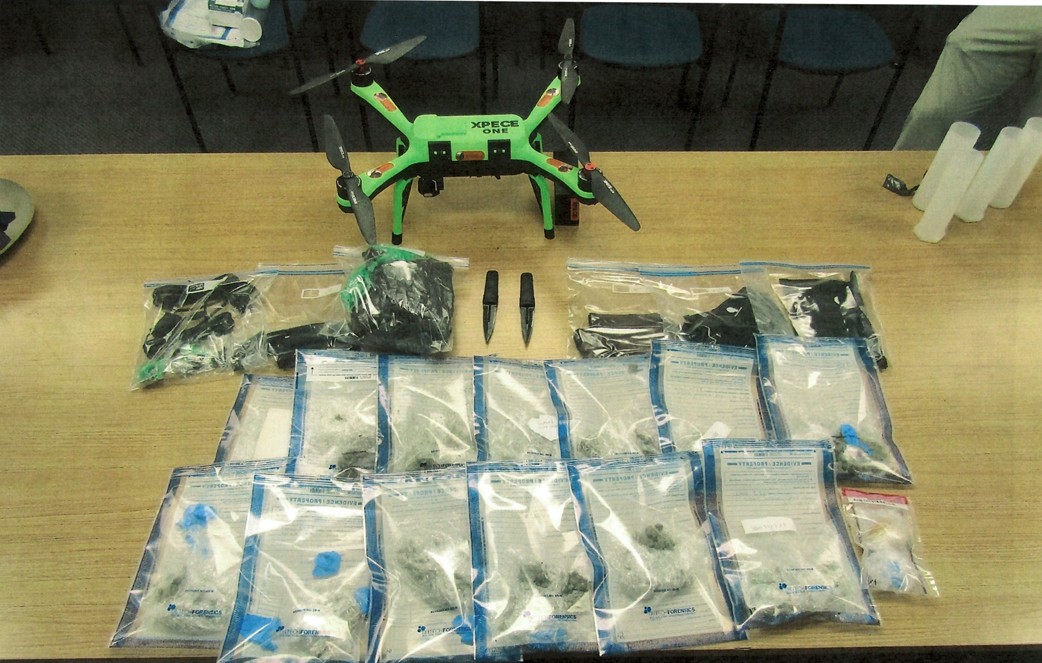
The hum of rotors is barely audible over the roar of the crowd at the semi-enclosed stadium. Suddenly, a swarm of small, commercially available drones descends from the night sky. Instead of dropping rudimentary explosives, these drones are equipped with modified agricultural sprayers. As they pass over the densest sections of the crowd and near the stadium’s HVAC intakes, they release a fine, nearly invisible aerosolized mist. Within minutes, thousands of people are incapacitated, overwhelming local emergency responders. This scenario is no longer science fiction; it represents the dangerous convergence of hybrid warfare, commercially available technology, and lethal synthetic chemicals.
The Weapon of Choice: Fentanyl
While adversaries and terrorist networks have historically pursued complex biological or chemical weapons like anthrax or sarin gas, synthetic opioids—specifically fentanyl—offer a significantly lower barrier to entry with a devastatingly high payoff. Fentanyl is increasingly the weapon of choice for several reasons: accessibility, stability, and lethality. Unlike traditional biological agents that require sophisticated lab conditions to cultivate and weaponize, fentanyl is cheap, highly stable across various environmental conditions, and easily sourced through existing illicit global supply chains. Furthermore, its extreme toxicity—where a lethal dose is merely two milligrams—means that even a small payload carried by a commercial drone – a 100-gram payload could kill 50,000 – can be transformed into a weapon of mass disruption and lead to the deaths of large numbers of people.
Logistics, Proximity, and Staging Areas
The successful deployment of small, commercially available drones requires close proximity to the target due to limited battery life and payload capacities. Executing such an attack introduces operational and logistical challenges that foreign adversaries or state-sponsored proxies may already be solving through strategic geographic positioning. The recent arrests of foreign nationals with potential to create toxic agents or illegal drugs within the United States shows the capability of foreign nationals to operate as cells from which to launch asymmetrical warfare attacks.
For example, the recent acquisition of facilities, farmland, and commercial properties near U.S. military bases and critical infrastructure by foreign-linked entities raises significant security concerns. Rather than an isolated real estate issue, these locations provide ideal, unmonitored staging grounds. From these nearby properties, hostile actors could securely assemble, test, and launch short-range drone swarms, bypassing border security and striking targets before local authorities can respond.
Vulnerability of Soft Targets and Dispersion Dynamics
Civilian soft targets and mass gatherings, such as major sporting events or densely packed political protests, are exceptionally vulnerable to this vector of attack unless antidotes like Narcan are immediately available. However, the effectiveness of a chemical drone strike depends heavily on dispersion dynamics. If deployed in a wide-open outdoor area, environmental factors such as wind and rain can quickly dilute the agent, mitigating its impact. To maximize lethality, adversaries are likely to target semi-enclosed venues, densely packed outdoor choke points, or the air intake systems of large buildings. In these interior or semi-interior spaces, the persistent threat from aerosolized fentanyl increases dramatically. The enclosed environment traps the lethal particles within the breathing zone of civilians and creates a highly hazardous environment for first responders, effectively paralyzing the response effort.
Conclusion
The marriage of lethal synthetic opioids and small, commercially available drones represents a highly asymmetrical threat. It allows non-state actors and foreign proxies to project power and cause mass casualties without the infrastructure of a traditional military. Countering this threat will require an integrated approach: securing vulnerable airspaces around critical civilian and military infrastructure, closely monitoring strategic land acquisitions, and advancing rapid-detection capabilities for synthetic aerosols before they can be deployed on synthetic wings.