
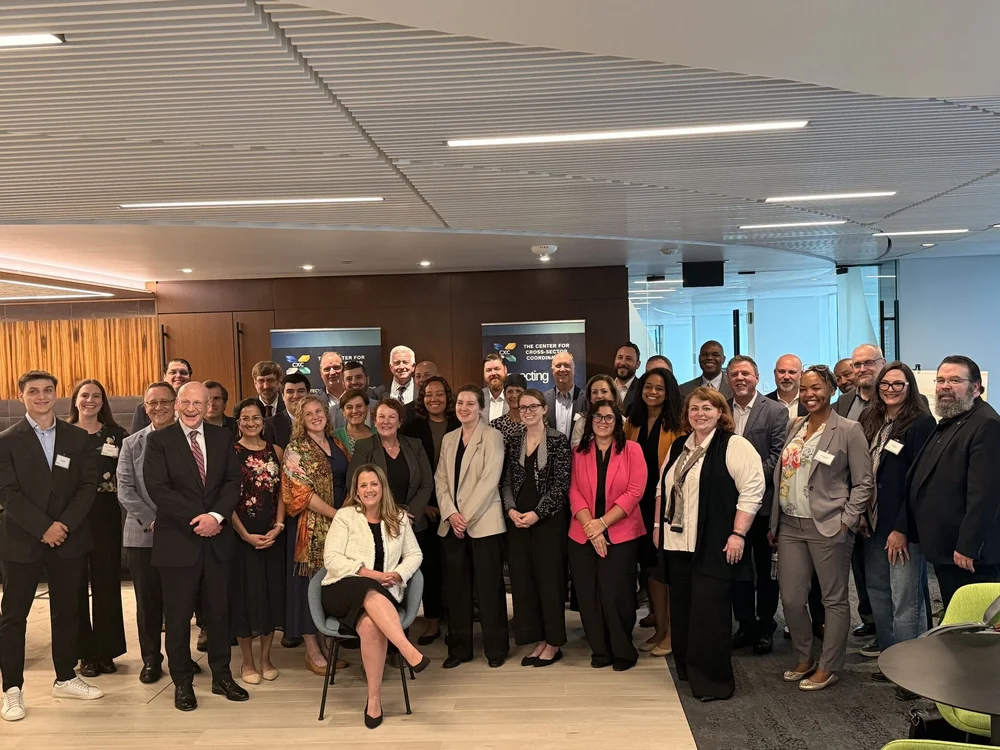
The Center for Cross-Sector Coordination (CXC), a strategic partner of Homeland Security Today, brought together critical infrastructure leaders from across government, industry, and academia for its inaugural Cross-Sector Symposium on June 18 in Washington, D.C., highlighting the need for greater collaboration across sectors to address evolving security and resilience challenges.
The event brought together more than 170 participants representing 16 critical infrastructure sectors, including owners and operators, technology providers, industry associations, researchers, security professionals, and government partners. Participants included representatives from the Department of Homeland Security (DHS), Cybersecurity and Infrastructure Security Agency (CISA), U.S. Coast Guard, Transportation Security Administration (TSA), Federal Bureau of Investigation (FBI), National Institute of Standards and Technology (NIST), DHS Science and Technology Directorate, and state and local emergency management organizations.
The symposium focused on several issues shaping the future of infrastructure security, including artificial intelligence, supply chain security, emergency response, cross-sector dependencies, and countering unmanned aircraft systems (UAS).
The event’s executive summary identified a common challenge across the critical infrastructure community: risks are increasingly interconnected and cannot be addressed by individual organizations or sectors alone.
Participants discussed how technology adoption, changing supply chains, evolving cyber and physical threats, and increasingly complex operating environments are requiring stronger partnerships between government and industry.
One of the key themes from the symposium was the importance of trusted relationships before a crisis occurs. Participants emphasized that effective coordination during cyber incidents, natural disasters, supply chain disruptions, and other emergencies depends on existing partnerships, information sharing, and joint planning.
The discussions also highlighted the growing importance of understanding cross-sector dependencies. While many organizations have strengthened their internal security and resilience efforts, participants noted that risks often emerge between organizations through shared suppliers, technologies, and infrastructure.
Artificial intelligence was another major focus, with participants examining both its potential benefits and the challenges associated with security, governance, and responsible adoption. Discussions around unmanned aircraft systems similarly focused on balancing operational opportunities with emerging security concerns.
The symposium also reinforced the continued importance of public-private partnerships in strengthening national resilience. Participants highlighted the need for collaboration that extends beyond information sharing to include joint planning, practical guidance, and long-term professional networks.
The event included perspectives from organizations at different stages of security and resilience maturity. Participants noted that approaches must remain flexible and practical to support organizations with varying resources, missions, and operational environments.
According to the symposium summary, participants identified an opportunity for CXC to serve as a convener for cross-sector collaboration by bringing together stakeholders to address challenges that extend beyond individual sectors or agencies.
Future CXC efforts informed by the symposium will include focused working groups, practical resources, research and policy initiatives, webinars, and regional engagements aimed at supporting critical infrastructure security and resilience.