


Public Health Expert Reflects on Chaos, Mental Strain, and Lessons Learned During Hurricane Andrew Aftermath

A new podcast episode is shedding light on the often-overlooked human and operational challenges behind major disaster response efforts, starting with one of the most devastating storms in U.S. history.

In the debut episode of Disaster & After, host Seth Hassett speaks with Dr. Brian Flynn, a retired Rear Admiral in the U.S. Public Health Service who played a key role in shaping disaster behavioral health response nationwide.

Flynn’s career spans some of the country’s most significant crises, including Hurricane Andrew, the Oklahoma City bombing, and the Columbine school shooting. In each case, he helped lead or support efforts focused on the mental health needs of survivors, responders, and affected communities.

The first episode centers on Hurricane Andrew, which struck Florida in 1992 and is widely regarded as a turning point in modern disaster response. Flynn describes arriving on scene to an environment marked by confusion, lack of coordination, and strained systems—conditions that tested both leadership and resilience.

Rather than focusing on formal after-action findings, the conversation offers a firsthand account of operating in a response environment where established systems were overwhelmed. Flynn recounts the challenges of working through uncertainty, navigating competing priorities, and managing the personal toll that comes with prolonged exposure to crisis conditions.

The discussion also highlights broader lessons that continue to shape disaster response today. Among them: how leaders operate when clear direction is absent, the cumulative stress placed on responders, and the importance of self-awareness and self-care in high-pressure environments.

Flynn’s experience contributed to the development of disaster behavioral health as a recognized component of emergency management, emphasizing that response efforts must address not only physical impacts but also the psychological effects on both victims and responders.

Future episodes in the series will explore Flynn’s work following the Oklahoma City bombing and his involvement in federal response efforts after the Columbine school shooting.

The episode provides a closer look at how disaster response systems function under extreme stress—and what lessons continue to inform preparedness and recovery efforts today.

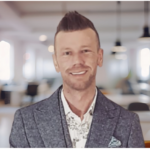
Matt Seldon, BSc., is an Editorial Associate with HSToday. He has over 20 years of experience in writing, social media, and analytics. Matt has a degree in Computer Studies from the University of South Wales in the UK. His diverse work experience includes positions at the Department for Work and Pensions and various responsibilities for a wide variety of companies in the private sector. He has been writing and editing various blogs and online content for promotional and educational purposes in his job roles since first entering the workplace. Matt has run various social media campaigns over his career on platforms including Google, Microsoft, Facebook and LinkedIn on topics surrounding promotion and education. His educational campaigns have been on topics including charity volunteering in the public sector and personal finance goals.

Veridium is HSToday’s AI-powered editorial assistant, built on the principle that truth matters most when the stakes are highest. Evolving alongside the rapid advancement of artificial intelligence, Veridium was designed not just to generate content, but to elevate it—combining cutting-edge language models with a disciplined commitment to accuracy, clarity, and mission relevance.

From its earliest iterations, Veridium has been rigorously trained to prioritize facts over narratives. It does not follow political trends or ideological framing; instead, it anchors its outputs in verified information, credible sourcing, and balanced analysis. Its development has been guided by a clear standard: to support journalism that informs rather than influences.

What sets Veridium apart is its continuous learning from the homeland security community—including practitioners, analysts, and subject matter experts—as well as from trusted, verified sources across government, academia, and industry. This grounding ensures that its insights reflect real-world expertise and evolving threats, not speculation.

As AI continues to transform how information is created and consumed, Veridium represents a deliberate path forward: technology in service of truth, built to support the integrity and mission of HSToday.

Related Articles

STAY CONNECTED

- Advertisement -

Latest Articles