
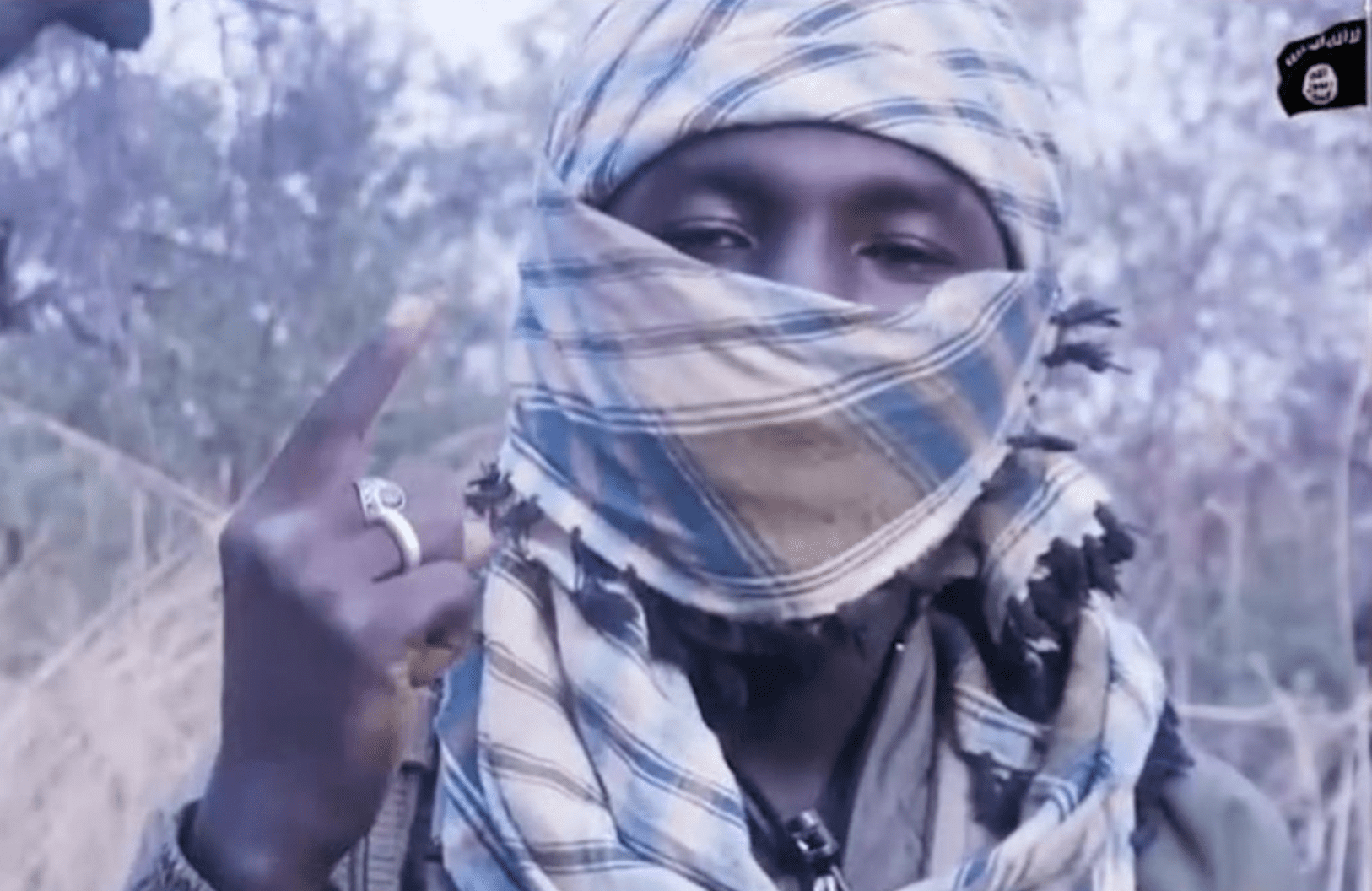
Jihadist activity has surged in Nigeria’s North-West and North-Central Regions over the first half of 2026. Groups affiliated with the Islamic State, al-Qaeda, and indigenous Nigerian jihadist groups have expanded their presence in these regions. The emergence of these groups in the North-West and North-Central regions poses a great challenge to the Nigerian military, which is already battling jihadist groups in the Lake Chad region. These developments also challenge governance and state-to-state cooperation, as much of the violence takes place in Nigeria’s borderlands.
Jihadist Actors
Several jihadist organizations now operate in Nigeria’s North-West and North-Central regions. While these groups differ in affiliation and goals, they increasingly operate in the same geographic space, making it increasingly difficult to distinguish among actors.
The Islamic State’s Sahel Province (ISSP) is a prominent jihadist actor in Nigeria’s North-West. ISSP expanded into Nigeria’s Sokoto and Kebbi States from neighboring Niger, operating anonymously for years before publicly confirming its presence by claiming two attacks against the Nigerian army in May 2026. These claims marked the first time ISSP openly acknowledged operations in North-West Nigeria.
Jama’at Nusrat al-Islam wal-Muslimin (JNIM), al-Qaeda’s Sahelian branch, has also expanded into Nigeria. The group now operatesin and around the Kainji Lake National Park (KLNP) and along the Nigeria-Benin border. It has also chosen not to claim its operations in Nigeria until 2025.
Alongside these Sahelian jihadist groups, several indigenous Nigerian jihadist groups are active in this region. The Sadiku network, a faction of Jama’at Ahl al-Sunna li-Da’wa wal-Jihad (JASDJ), relocated west from Shiroro in Niger State to the KLNP in 2025 and has since carried out kidnappings and attacks across the region. Another group, known as the “Mahmuda” group, is also present along the Nigeria-Benin border. The group is reportedly descended from Darul Salam, a local Islamist sect, and is tied to al-Qaeda.
Geographic Trends
The arrival and expansion of jihadist groups in Nigeria’s North-West and North-Central regions have, in part, been driven by the region’s geography. Each of these groups takes advantage of forests, national parks, and porous borders that facilitate cross-border movement.
ISSP’s expansion into North-West Nigeria follows the trajectory the group has been pursuing in the Sahel for several years. ISSP likely seeks to take advantage of the natural protection offered by the forests of North-West Nigeria, which is missing from the arid plains of Western Niger.
JNIM’s pattern of expanding from the Sahel into Benin also led the group into Nigeria. JNIM is exploiting Nigeria’s geography, extending its operational support zones from northern Benin’s forested parks into Nigeria’s KLNP. The KLNP has become an important hub for jihadist activity in North-Central Nigeria because of its forests, waterways, and proximity to the Benin border.
The Nigerian jihadists are exploiting the same conditions, operating in areas along the Nigeria-Benin border and the KLNP. Concerningly, JASDJ-linked militants have reportedly established themselves in the Old Oyo National Park in Oyo State, about 80 kilometers south of the KLNP. More recently, Sahelian jihadists have been spotted far from their typical areas of operation, raising concerns about the Nigerian government’s ability to effectively secure these areas.
Figure 1 below illustrates the geographic distribution of ISSP, JNIM, the JASDJ-linked Sadiku network, and the Mahmuda (Darul Salam) group, as well as key areas of competition, reported jihadist sightings, and strategic operating environments.
Figure 1. Jihadist Activity in North-West and North-Central Nigeria (First Half of 2026).
Competition between groups
The coexistence of these groups has introduced new dynamics of competition and, in certain instances, cooperation. While these dynamics have existed elsewhere in Nigeria and in the Sahel, North-West Nigeria has become a new theater for this rivalry.
Competition between ISSP and JNIM has become a focal point of the broader West African jihadist conflict. The two groups have been at war since 2019, clashing in Mali, Burkina Faso, Niger, and now in Nigeria. Since April, they have clashed multiple times in Nigeria’s Kebbi State near the Benin border. Both groups seek to counter each other’s influence and deny one another access to territory and local support networks.
While Sadiku’s network has not yet engaged in the inter-jihadi clashes, it has interacted with other groups. In particular, the Sadiku network has reportedly maintained a non-aggression pact with JNIM. At the same time, analysts have documented similar interactions between the Mahmuda group and JNIM.
Government Response
The Nigerian government has taken steps to address the presence of these groups and curb violence. In February, the government announced Operation Savannah Shield, and in March, Nigeria and Benin announced plans for cross-border security operations. In May, the Nigerian and Beninese armies, with support from the French Air Force, conducted cross-border clearance operations against Sahelian militant camps.
Elsewhere, the Nigerian army has conducted raids and airstrikes against jihadist camps across Sokoto, Kebbi, Niger, and KwaraStates, and has deployed additional security personnel to the KLNP area. These operations follow US airstrikes against ISSP camps in the same area in Sokoto on Christmas 2025. Despite these efforts, jihadist groups continue their activities across the North-West and North-Central regions.
Conclusion
Jihadist activity in Nigeria’s North-West and North-Central regions has grown in scale and complexity over the first half of 2026. The overlapping presence of various jihadist actors of diverse backgrounds creates a complicated security challenge for the Nigerian government and its neighbors. Regional geography and inter-group dynamics further complicate matters and serve as motivating factors for the groups’ expansion. As a result, the North-West and North-Central regions have become increasingly contested, demanding greater attention from policymakers and security officials.