
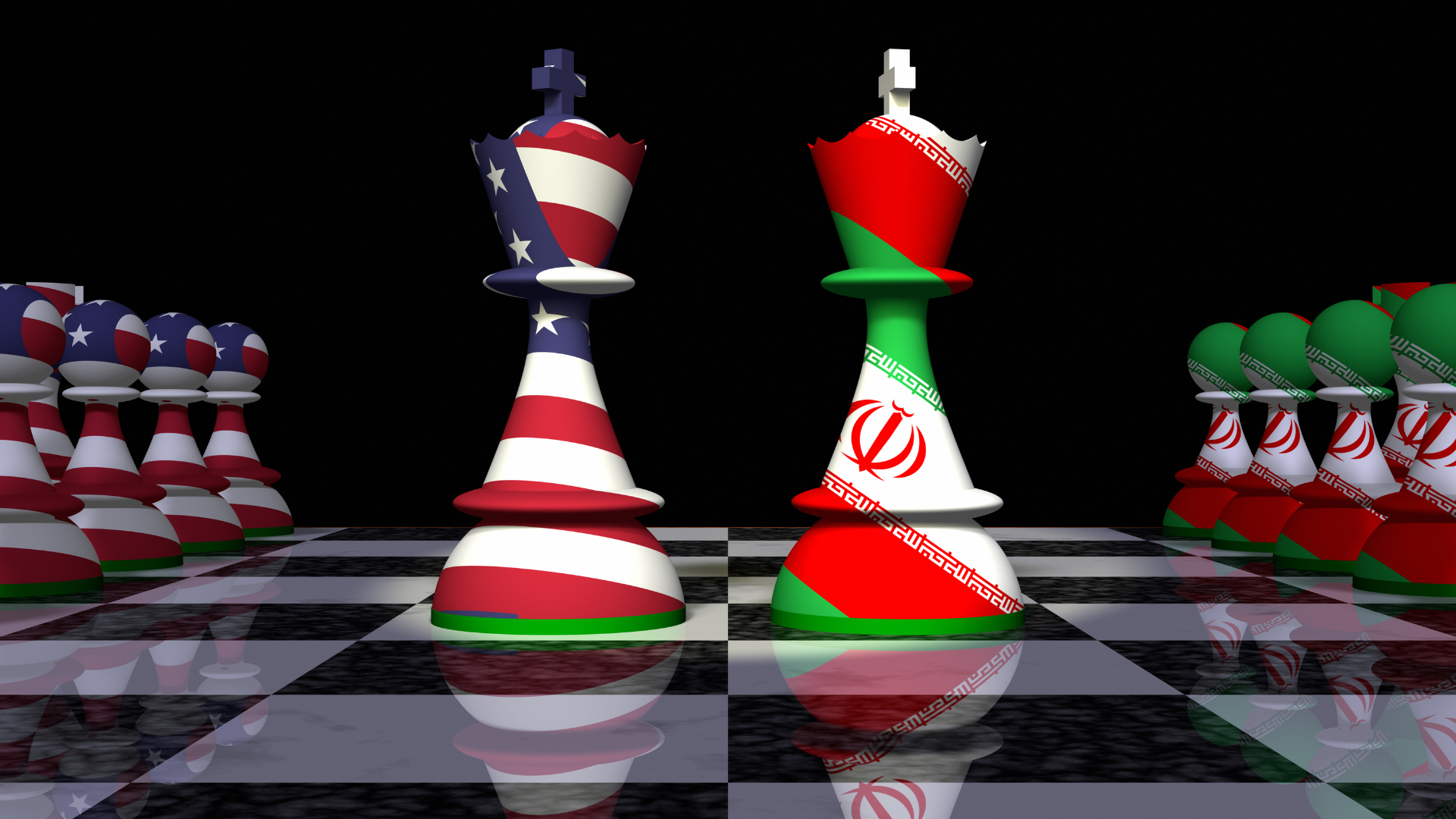
- Iran’s influence extends beyond military capabilities to the export of a powerful ideological system centered on martyrdom. Rooted in the historical memory ofthe Battle of Karbala and the legacy of Husayn ibn Ali, this narrative reframes sacrifice as a sacred duty and mobilizes individuals, especially youth, into a perceived moral struggle.
- This process transforms individuals at the level of identity through what the article describes as a “Killing Vessel,” where belief is converted into violent action. Reinforced by rituals likeAshura, propaganda, and digital amplification, the narrative becomes self-sustaining, producing decentralized, self-mobilized actors without direct command.
- Traditional counterterrorism approaches are ill-equipped to address this threat because they focus on organizations rather than narratives. To respond effectively, policymakers must treat ideology as a core instrument of statecraft and disrupt the mechanisms—symbolic, linguistic, and emotional—that turn belief into violence.
Iran’s influence is often measured in missiles, militias, and military reach. But this framing misses a more enduring and dangerous reality: Iran is not only exporting weapons; it is exporting and sustaining a martyrdom narrative.
Which is more dangerous: a ballistic missile or the narrative that convinces someone to become one? Or when that narrative evolves into a self-sustaining system capable of producing violence on its own?
At the core of this strategy lies a powerful ideological mechanism that transforms belief into violent action. This is not just persuasion—it is linguistic masking. Coded religious language and symbolic references obscure political intent, gradually replacing individual judgment with what feels like sacred duty. Historical grievances are reframed as ongoing moral obligations, embedding contemporary violence within a sacred continuum of justice and sacrifice.
The foundation of this narrative can be traced to the memory of Karbala and the martyrdom of Husayn ibn Ali in 680 CE. For centuries, this event has symbolized sacrifice in the face of injustice. Today, it is being strategically reactivated. Through sermons, ritual commemorations such as Ashura, and sophisticated digital campaigns, this history is reframed as a living mandate. Individuals—particularly youth—are positioned not as passive observers, but as heirs to a sacred struggle.
This is where the mechanism I describe as the “Killing Vessel” becomes critical. Individuals are not simply persuaded—they are reshaped at the level of identity, cognition, and behavior. The body becomes a vessel of violence—a site where power over life and death is performed. The narrative itself functions like a living system: self-sustaining and adaptive, capable of absorbing individual sacrifice to ensure its own survival. Symbolic and religiously framed grievances—humiliation, marginalization, and perceived injustice—are absorbed into a larger moral universe centered on martyrdom. Within this framework, violence becomes both a moral and religious duty.
This process does not occur in isolation. It is reinforced through repetition, symbolism, and community. Ritual practices normalize suffering and valorize endurance. Visual propaganda and coded language deepen emotional attachment. Social media and AI amplify these messages across borders, ensuring constant exposure and reinforcement. Over time, individuals internalize a worldview in which self-sacrifice is not loss, but fulfillment.
Conventional counterterrorism aims to “decapitate” leadership structures. But within this system, such losses often function as a form of programmed sacrifice—what biologists call apoptosis—in which the death of individual components strengthens the larger organism rather than weakens it. In this logic, martyrdom is not a loss; it is a signal that reinforces and expands the system.
In the aftermath of recent escalations, we are already seeing how this narrative adapts in real time. Digital ecosystems—including AI-generated content and coordinated messaging—are transforming localized events into a living Karbala: a symbolic battle between the sacred and the oppressed, continuously reframed against perceived enemies. In this borderless symbolic space, martyrdom is reconstructed and amplified, allowing the narrative to extend beyond geography, embedding itself within diaspora communities and online networks far from the original conflict.
The implications extend far beyond the Middle East. These narratives are no longer geographically contained. Through transnational networks, diaspora communities, and digital platforms, they operate as a living system—adapting to new contexts while maintaining their core structure. What emerges is not always centralized or directed. Instead, we see the rise of self-mobilized individuals, loosely connected actors, and sympathizers who operate within the logic of the martyrdom narrative without requiring direct command.
For the United States and its allies, this presents a profound challenge. Traditional counterterrorism frameworks are designed to detect organizations, disrupt financing, and neutralize operational cells. But narrative-driven radicalization operates differently. It is diffuse, adaptive, and deeply embedded in identity formation—making it far more difficult to detect and disrupt. It often relies on coded messaging, concealment practices, and symbolic cues that evade conventional monitoring.
Yet policy responses continue to underestimate this dimension. Iran’s strategy is often reduced to proxy warfare, overlooking the ideological infrastructure that sustains it. This is a critical gap. Without addressing the narrative mechanisms that legitimize and reproduce violence, efforts to counter these threats will remain incomplete.
What is needed is a shift in perspective. Narrative must be treated not as secondary propaganda, but as a primary instrument of statecraft. Policy must move beyond simply countering messages. It must disrupt the mechanism itself—identifying how symbolic cues, coded language, and emotional triggers convert belief into violent identity. This requires investing in culturally informed analysis, integrating narrative intelligence into security frameworks, and targeting the pathways through which individuals are transformed into vessels of violence.
The battlefield is no longer defined solely by territory; it is defined by the architecture of meaning within the martyrdom narrative.