
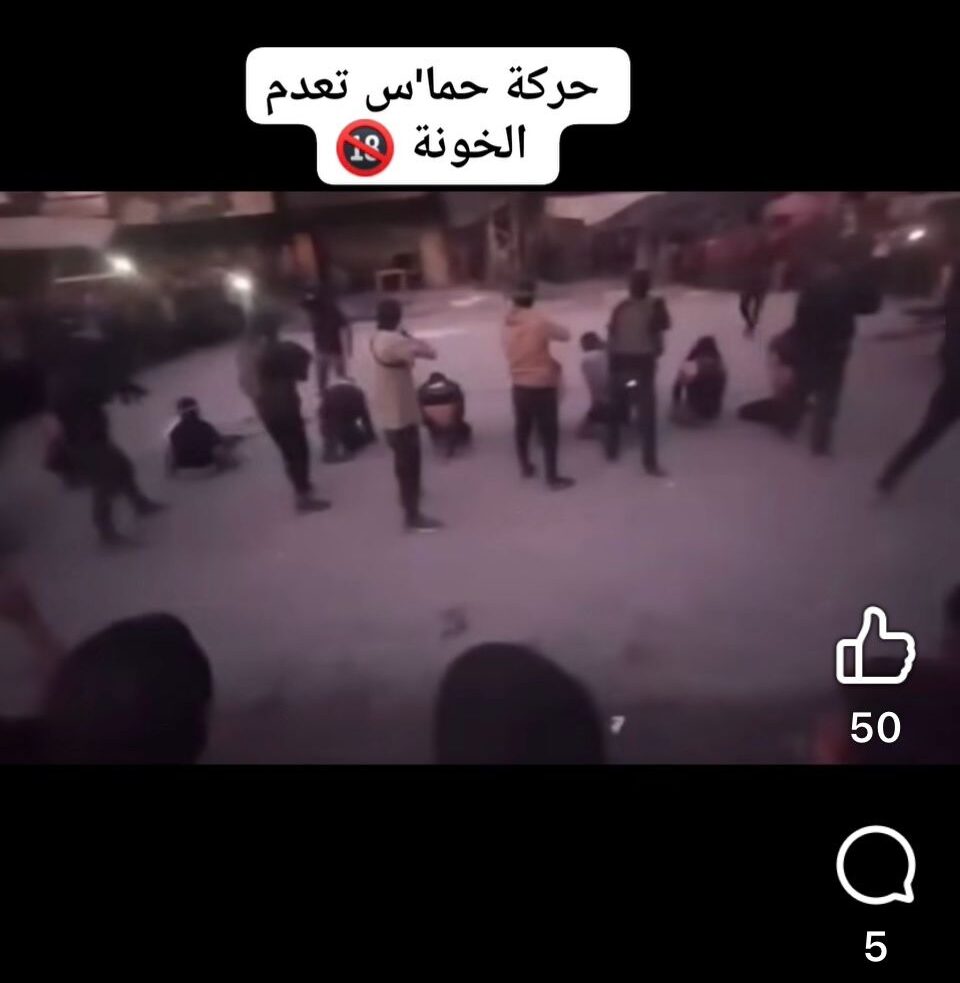
Hamas executed at least seven individuals in a public square in Gaza City on October 13, with BBC-verified footage showing masked gunmen wearing Hamas-affiliated green headbands carrying out the killings amid crowds chanting “Allahu akbar.” The executions, which Hamas claims targeted “criminals and collaborators with Israel,” mark an escalation in internal violence as the militant group attempts to consolidate control following the recent ceasefire.
The executions are part of a broader Hamas campaign to “cleanse” Gaza of perceived rivals. Hamas has recalled up to 7,000 fighters to hunt clan members, resulting in intensified street violence across the territory.
In a press release, the Independent Commission for Human Rights (ICHR) in Palestine “expresses its deep concern over the extrajudicial executions that took place in the Gaza Strip on Monday, October 13, 2025.” The ICHR went on to state: “The wave of summary executions without trial, and incidents of shooting people in the legs that have occurred after the ceasefire in the Gaza Strip, cannot be justified under any circumstances… The ICHR calls on all Palestinian authorities in the Gaza Strip, especially Hamas, to shoulder their national and legal responsibilities in protecting public rights and freedoms, ensuring the right to life and the rule of law, and preventing any abuses or assaults against citizens or property.”
Fighting has intensified between Hamas and rival armed clans, particularly the Doghmush family (at least 27 reported killed in recent clashes) and militias led by Yasser Abu Shabab and Hossam al-Astal. Hamas raided Gaza’s Sabra neighborhood on Sunday, October 12, targeting the Doghmush clan over alleged Israeli cooperation, killing dozens amid ceasefire tensions. Israeli Prime Minister Netanyahu previously admitted to arming these rival groups during military operations, viewing them as potential counterweights to Hamas. Claims of ongoing ties to Western intelligence services and Israel have been asserted, with some clans denying the claims while others back the statements.
“We maintain close ties with several Western countries, with the United States and even with Israel. We want them to support residents who refuse Hamas rule — to disarm them and stop the fear the organization creates,” Hossam al-Astal, commander of the al-Majida clan militia in Khan Younis, told Ynet.
The internal conflict complicates future stabilization efforts and threatens President Trump’s Gaza peace plan, which requires Hamas disarmament and eventual Israeli withdrawal. The transitional plan for governing Gaza includes “a technocratic, apolitical Palestinian committee … made up of qualified Palestinians and international experts, with oversight and supervision by a new international transitional body, the “Board of Peace,” which will be headed and chaired by President Donald J. Trump, with other members and heads of State to be announced, including Former Prime Minister Tony Blair.”
In an interview with WELT, terrorism expert and Senior Director of the Counter Extremism Project Hans-Jakob Schindler warned that the second phase of the ceasefire in the Gaza war is the biggest hurdle. Without the planned Arab-led stabilization force to provide security, the power vacuum will generate – and already is generating – ISIS-style violence and humanitarian concerns. The situation presents risks of prolonged instability, civilian casualties, and potential exploitation by extremist elements, with implications for regional security and U.S. diplomatic initiatives.