
Key Takeaways
- The GAO testified on staffing and operations challenges Customs and Border Protection has faced securing the U.S. northern border.
- Their testimony, given before the House Committee on Homeland Security, Border Security and Enforcement and Counterterrorism and Intelligence Subcommittees, is based on:
- The GAO also discuss recommendations we’ve made.
What GAO Found
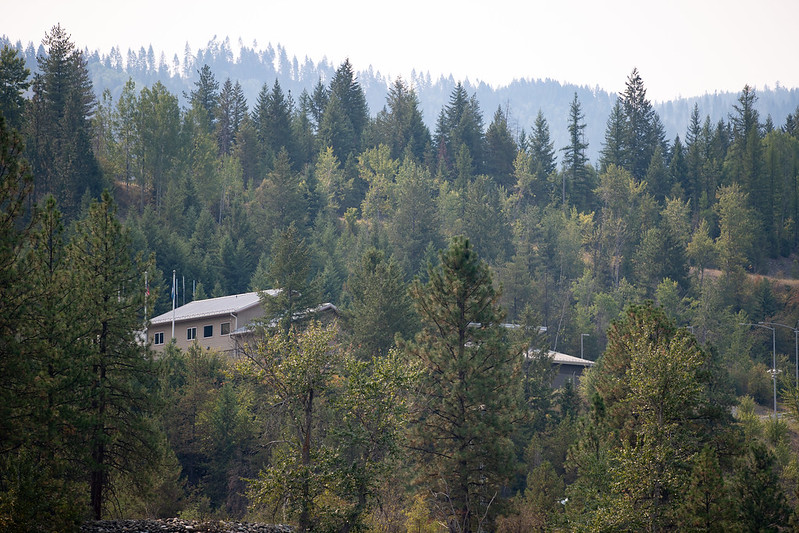
U.S. Border Patrol and Air and Marine Operations (AMO), within U.S. Customs and Border Protection (CBP), are responsible for securing U.S. borders between ports of entry in the land, air, and maritime environments. CBP uses aircraft, vessels, and surveillance technology—such as cameras, radar sites, and sensors—in its efforts to secure the northern border (see figure). CBP also participates in task forces with other agencies such as U.S. Immigration and Customs Enforcement to support its efforts. From fiscal year 2019 through fiscal 2024, Border Patrol apprehensions along the northern border increased, with sharp increases in 2023 and 2024. Apprehensions subsequently decreased in fiscal year 2025 and have generally remained consistent at these reduced levels as of April 2026, according to CBP’s publicly reported data.
GAO previously reported that CBP has faced longstanding challenges addressing staffing gaps. In 2026, GAO found that the number of Border Patrol agents on the northern border decreased from fiscal year 2019 through fiscal year 2024. Although the number of authorized agents increased, the number of agents assigned to and working in these sectors decreased by about 6 percent. There was also a decrease in the staffing rate for Law Enforcement Information Systems Specialists who monitor surveillance technology. GAO recommended that CBP develop and implement a plan to address this staffing gap, which could help the agency better carry out its responsibilities.
In 2019, GAO found that CBP did not have measures to assess its effectiveness at securing the northern border between ports of entry. Border Patrol had performance measures that assessed security in remote areas, but the measures did not include data from maritime border areas. Two AMO measures included data across all border areas and were not specific to the northern border. GAO recommended that Border Patrol and AMO each develop and implement such measures to better assess operations on the northern border.
Why GAO Did This Study
CBP, within the Department of Homeland Security, has primary responsibility for securing the nearly 4,000-mile border between the U.S. and Canada. Key security threats along the northern border include terrorism, contraband smuggling—specifically, the bidirectional flow of illicit drugs—and violations of U.S. immigration law such as migrant smuggling.
CBP received billions of dollars in the 2025 law commonly known as the One Big Beautiful Bill Act and the 2026 Secure America Act to hire and train additional personnel. According to CBP, the One Beautiful Bill Act funding alone will support hiring an additional 5,000 CBP officers, 3,000 Border Patrol agents, and 200 AMO agents.
This statement is based primarily on GAO’s June 2019 and February 2026 reports. It discusses CBP’s (1) resources across the northern border, (2) staffing in the region and related challenges, and (3) performance measures for assessing its effectiveness at securing the northern border.
Recommendations
GAO made a total of three recommendations to CBP in the 2019 and 2026 reports to help address challenges related to staffing gaps and measuring the effectiveness of Border Patrol’s and AMO’s efforts to secure the northern border. The Department of Homeland Security agreed with GAO’s recommendations.
CBP has taken some steps to address the recommendations but has not yet fully implemented them. GAO will continue to monitor CBP’s progress in implementing these recommendations.
Read the full GAO report here.