Download the PDF version of this article here.
Overview
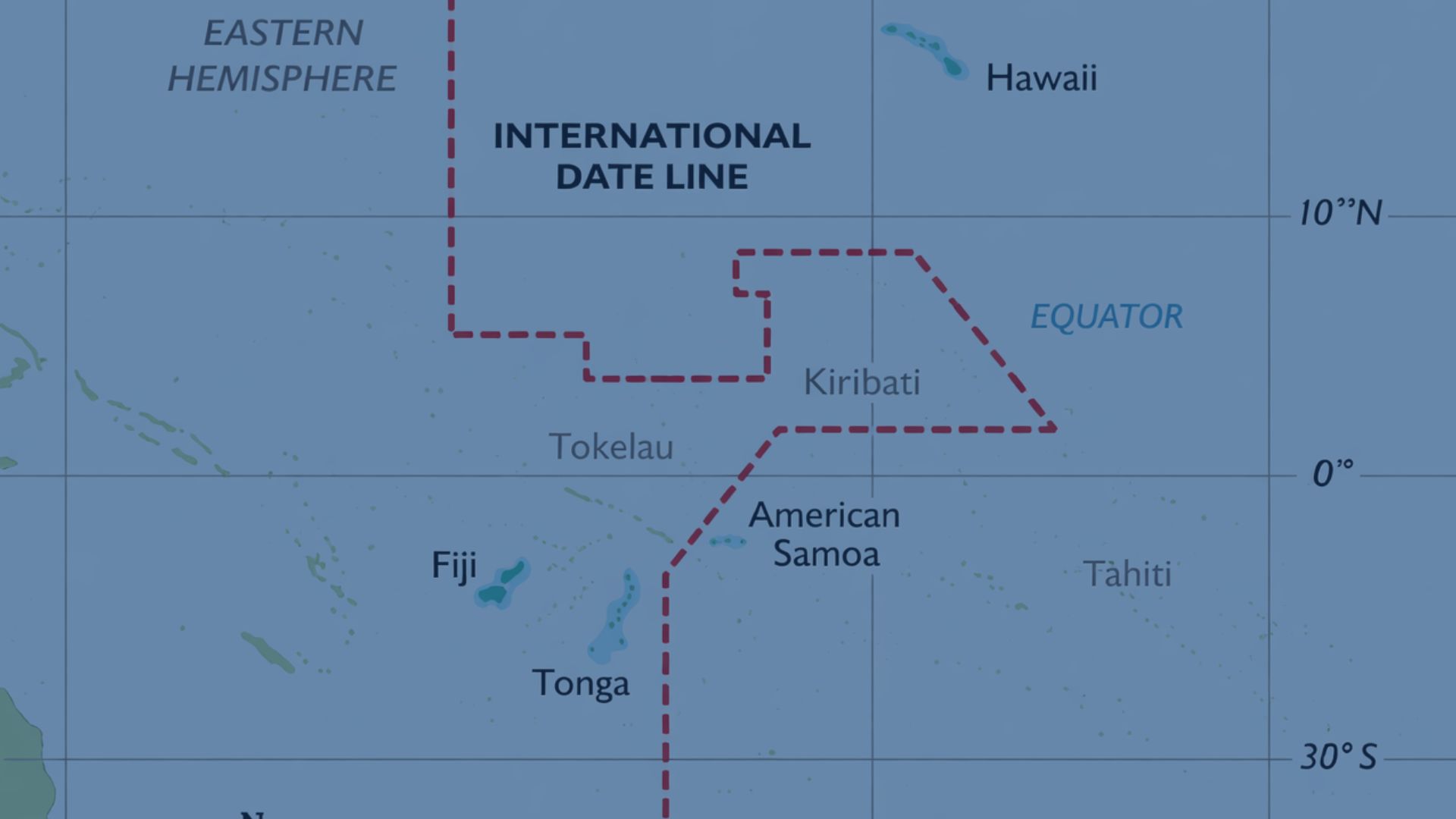
Comprehensive emergency and disaster management in the Pacific has become increasingly paramount for increased preparedness, response, recovery, and mitigation of the impact of natural disasters on local communities west of the International Date Late (IDL). The unique challenges of this region, including threats from emerging infectious diseases, natural hazards, and the long-term impacts of climate change, have led Pacific governments to increase their investment in national emergency and disaster response capacities (Casey et al., 2023).
The purpose of this paper is to discuss the effectiveness of the emergency management framework in the U.S. Pacific geographical area west of the IDL, specifically the area and nations comprising the Compact of Free Association .
The United States has maintained a steady presence in the Pacific since the end of World War II, with America’s Compacts of Free Association (COFA) being the most crucial element of U.S. foreign policy in the region. These unique bilateral agreements with three Pacific Island nations – the Republic of the Marshall Islands (RMI), the Federated States of Micronesia (FSM), and the Republic of Palau (CRS, 2024) – govern various aspects of the relationship between the U.S. and the COFA nations, including defense and emergency management.
RMI, FSM, Palau, and the Northern Mariana Islands were districts of the former U.S.-administered United Nations Trust Territory of the Pacific Islands, established after World War II. In 1978, RMI, FSM, and Palau rejected the option of U.S. territorial or commonwealth status and instead chose the status of free association with the U.S. Located roughly 7,500 miles from the U.S. West Coast, 2,500 miles southwest of Hawaii, and 1,500 miles from Taiwan (Harding, 2023), the COFA states play a crucial role in supporting the U.S. diplomatic and security presence in the Pacific and Southeast Asia region at a time of increasing strategic competition between the U.S. and its allies regarding the threat of an invasion or reunification of Taiwan by the People’s Republic of China (PRC) (CRS, 2024).
The potential loss of exclusive U.S. military access to the COFA area due to a lack of sustained funding for the unique COFA agreements could have significant and far-reaching geopolitical implications, potentially giving the PRC a competitive advantage to expand its influence further in the region (Harding, 2023). This underscores the critical need for effective emergency management in the COFA region, making the research topic both urgent and highly relevant in the current geopolitical context.
This paper identifies three areas of consideration for comprehensive emergency management in the Pacific, west of the IDL: (1) the background, importance, and strategic significance of the COFA region, (2) the emergency management framework for preparedness and response in this geographically isolated region, and (3) the unique challenges and innovations in managing emergencies west of the IDL.
Methodology
The research methodology for this paper included a review of journal articles obtained from academic database searches, an internet search on FEMA.gov for current emergency management actions involving COFA nations, and a search on WhiteHouse.gov to identify any specific executive orders directed at the emergency management community by the current administration. A review of the Center for Excellence in Disaster Management and Humanitarian Assistance, Disaster Management Reference Handbooks, and the World Health Organization also provided context on various disaster management efforts and initiatives across the Pacific. The biggest challenge in researching this paper was the lack of a published U.S. national policy on the future of the Federal Emergency Management Agency (FEMA) and its international activities in the Pacific.
Results and Findings
The area west of the IDL has been both a location of global strategic importance and a region increasingly threatened by natural and artificial emergencies and disasters for generations. The emergency management initiatives established by the United States and its whole-of-government approach continue to create lasting and sustainable preparedness, response, and mitigation for the COFA members. In addition, the international community and regional organizations have also contributed to the development of a stronger framework for emergency management in this remote region. Although many initiatives are in place, there is no comprehensive or synchronized effort to combine the efforts of the initiatives. The situation compounds exponentially as the PRC seeks to establish a foothold in the Pacific’s Third Island Chain and grow influence with the governments of the nations in this region. The goal of all parties involved in this area is to instill local ownership, sustainable programs, and resilient communities within the COFA members. In this region, the United Nations (UN) plays a unifying and trusted role in creating a standardized global emergency management framework, enabling all UN member nations to achieve resilient communities through its efforts.
Background, Importance, and Strategic Significance of the COFA Region
Pacific Island nations face existential challenges and have become increasingly strategically significant to external actors, including the United States and the PRC. The U.S. Department of Defense Indo-Pacific Command’s (USINDOPACOM) region spans from the west coast of the United States to the west coast of India. Despite the tyranny of distance, this geographical area is central to U.S. economic and security interests. Over the past 30 years, the region has experienced remarkable economic growth and rising living standards, partly due to U.S. involvement. The U.S. presence secures vital national interests and strengthens the international system of clear and transparent rules.
The U.S. engagement is primarily related to preparedness and resilience. Given the limited military capabilities of most states in the region, the core tasks associated with preparedness are likely to be carried out by civil authorities. Partnering with countries and regional institutions is a vital component of the U.S. approach. The U.S. vision for the Indo-Pacific is a free and open region comprised of nations that are independent, strong, and prosperous. Advancing a free and open Indo-Pacific is a whole-of-government effort focused on three pillars: economics, governance, and security (DoS, 2025). This vision is built on principles that ensure the freedom of the seas and skies, insulate sovereign nations from external coercion, promote market-based economics, open investment environments, fair and reciprocal trade, and support good governance and respect for individual rights.
Emergency Management Frameworks for Preparedness and Response in the Pacific, West of the IDL
Emergencies and disasters have been a persistent feature in the Pacific for centuries, including world wars, terrorism, and both artificial and natural disasters. Management of these emergencies involves a local and regional response; however, when the emergency persists for an extended duration or requires increased assistance beyond current capabilities and capacity, nations may request international civilian relief, and civil defense and military assets may be requested.
Previously, the Bureau for Humanitarian Assistance of the United States Agency for International Development (USAID) responded as the U.S. federal lead when a host nation requested assistance from the international community, including other countries, non-governmental organizations, international organizations, or regional response mechanisms, such as mutual agreements or compacts. The host nation requests this support through the U.S. Ambassador, who validates the emergency and issues a Declaration of Humanitarian Need. The U.S. military is not the primary instrument for humanitarian response, but it supports civilian relief agencies. The U.S. military may become involved when it provides a unique service, civilian response capacity is overwhelmed, or civilian authorities request assistance (DoD, 2017). A commander in the impacted area can respond immediately to save lives if assigned assets are on hand.
In the event of a major overseas disaster and a U.S. Ambassador disaster declaration prior to dismantling, USAID’s Office of Foreign Disaster Assistance (OFDA) might release up to $50,000 in disaster assistance funds to address immediate humanitarian needs managed by USAID/OFDA. If the disaster required significant international relief support, USAID/OFDA might send a regional advisor or other staff to the region or deploy a Disaster Assistance Response Team (DART). The DART has the lead responsibility in assessing critical unmet needs in the affected area and recommending the nature and extent of the U.S. Government’s response.
A literature review highlights that non-U.S. influence is gaining traction in the COFA region, potentially countering U.S. and international support for the region. While not all members have embraced the PRC’s engagement activities, several have accepted the PRC’s support, with medical teams visiting and training local medical staff, as well as providing treatment. COFA members have also benefited from the PRC’s assistance during exercises focused on response and recovery. The PRC’s presence and engagement may counter any future efforts by the United States to exert influence in the area if the America First policy does not evolve to include the historical and inherent responsibility of the United States to protect COFA members, from blue-sky to black-sky days.
Unique Challenges and Innovations in Managing Emergencies West of the IDL
The tyranny of distance challenge, mentioned earlier, refers to the barrier or obstacle created by physical separation, making communication and leadership more challenging (Satterfield, 2024). Although it was coined explicitly by Geoffrey Blainey in his book on Australian history, referring to the colonial enterprise, the phrase is applicable in identifying the first enduring challenge in the Pacific: remoteness and the need for a comprehensive response.
Secondly, the challenges identified in the Global Risks Report 2025 are based on the Global Risks Perception Survey (GRPS) 2024-2025, which captures insights from over 900 experts worldwide. The report examines global risks across three distinct time horizons to help leaders navigate immediate challenges while also planning for future priorities. Chapter One examines current and near-term risks (2025) as well as short- to medium-term risks (2026-2027). Chapter Two focuses on the risks that emerge in the long term (2028-2035). The COFA area ranks second for extreme weather events, with the highest likelihood of triggering a global-scale crisis in 2025. Extreme weather events may become even more of a concern than they already are, with this risk ranking highest on the 10-year risk list for the second year running.
Lastly, the current presidential administration’s America First policy has become a recent challenge to U.S. external assistance during emergencies. In a March 2025 Executive Order (EO), the administration identified that the U.S. foreign aid industry and bureaucracy often fail to align with American interests and, in many cases, are antithetical to American values (White House, 2025). Section 2 of the EO states, “that it is the policy of the U.S. that no further U.S. foreign assistance disbursement shall be in a manner that is not consistent with the foreign policy of the President of the United States.” Furthermore, the administration determined that FEMA requires a full-scale review by individuals experienced in effective disaster response and recovery, who shall recommend to the President improvements or structural changes to promote the national interest and enable national resilience. The findings and results of this review have not yet been published.
The White House EO 3, “Saving Lives Through Early Preparedness” (White House, 2025), demonstrates that the administration recognizes the need for a population impacted by an emergency to receive prompt, practical assistance when crises arise rather than delays or excuses. The EO emphasizes that the administration will apply risk-informed decisions to make infrastructure, communities, and the economy more resilient to withstand global and dynamic threats and hazards. The key is that local leaders and citizens know their needs best. The EO streamlines procedures and revises key government policies to reduce complexity, enhance effectiveness, and improve the protection and services provided to the American public. It enables state and local governments to understand better, plan for, and address the needs of their citizens.
There is some hope for future engagement of U.S. emergency management efforts in the region, as the EO recognizes that in the face of multidimensional threats and challenges, the United States and its international partners must act in partnership and leverage policies and tools that protect our shared values and economic and national security interests. The United States will cooperate with like-minded partners through international institutions, such as the North Atlantic Treaty Organization (NATO), to address systemic challenges and tackle the escalating and expanding risks resulting from a changing threat environment (White House, 2025).
A stable Pacific and Southeast Asia are in the United States’ national interest. One of the most effective ways to strengthen the region’s governments and communities is to invest in partnerships. The Center for Excellence in Disaster Management and Humanitarian Assistance (CFE-DM) innovates by partnering with nations in remote parts of the region, builds crisis response capacity in U.S. and partner militaries, enhances coordination and collaboration with civilian and foreign partners, and strengthens those relationships to save lives and alleviate human suffering before, during, and after humanitarian crises (CFE-DM, 2022). The CFE-DM is a bridge to understanding between humanitarians, civilians, and military responders. CFE-DM partners with a diverse group of governmental and non-governmental actors, as well as academic institutions, to enhance collaborations and capabilities in humanitarian assistance and disaster response across the Pacific and the western part of the IDL (CFE-DM, 2022). CFE-DM contributes to the effectiveness of emergency management in the region by publishing Disaster Management Reference Handbooks in a timely and comprehensive manner, providing a baseline of information on countries within the COFA member states most prone to disasters. Other valid documents include fact sheets, best practices pamphlets, reports, and case studies.
Lessons Learned
The United States should establish a FEMA Liaison Officer (LNO) position within the COFA states at the U.S. Embassy in Palau, like the NATO FEMA LNO position, to provide a critical forward presence and access between FEMA and COFA members. To accomplish this, the ideal LNO candidate would possess a leadership style that combines the characteristics of both the “Harmonizer,” who focuses on bringing diverse perspectives and personalities together, and the “Benchmarker,” who relies on data, metrics, and goals as drivers of success.
The FEMA COFA LNO, to provide benefits to both COFA members and the United States, would have the authority to coordinate, communicate, share, and synchronize FEMA responses during emergencies that require international collaboration, responsively, across the IDL. The LNO would espouse the principles of emergency management, which consist of being comprehensive, progressive, risk-driven, integrated, collaborative, coordinated, flexible, and professional. A working knowledge of culture is imperative to provide the capabilities required to work in the COFA area. That knowledge begins with empathy and an understanding of culture and cultural differences.
The oversight for the LNO should rest with U.S. Embassy Palau, and the U.S. International Resources Coordination Group (IRCG) to govern and leverage U.S. whole-of-government assets in strengthening the early warning detection and disaster preparedness training capabilities of COFA governments and multilateral organizations, in coordination with the regular IRCG. (FEMA, 2022).
Next should be the creation of an Emergency Management Assistance Compact (EMAC) among COFA members and the United States. The compact would establish a member-to-member system for sharing resources across national lines during an emergency or disaster. A unique mutual aid relationship would enable member nations to mobilize a wide variety of resources to meet the needs of the COFA area prior to the arrival of delayed external support and response.
Lastly, the World Health Organization (WHO) has established an Emergency Medical Team (EMT) program to train and equip local community members in first-response medical care. In the WHO’s EMT 2030 Strategy, there is a call to action for countries to take a proactive approach to build and strengthen their EMT and rapid response capacities by implementing four critical steps: (1) adopt the EMT guiding principles and standards (the EMT Methodology) and adapt to local context; (2) establish a surge system at country level to facilitate rapid mobilization and requests for assistance if and when needed; (3) strengthen technical and operational skills of the health workforce; and (4) document to inform evidence-based strategies and share best practices.
The EMT is a capability that would enable all COFA nations to support the Community Lifeline – Health and Medical, enabling responding international organizations. In addition to the EMT program, developing a comprehensive Community Emergency Response Team (CERT) Program would complement the existing EMT Program, generating a more thorough response across all community lifelines. The United States, in partnership with the COFA nations, could expand CERT programs within local COFA response networks to enhance preparedness and response capabilities. CERT volunteers can be empowered to help their community prepare for disasters and assist community members immediately after a disaster, before the first responders arrive on the scene (CERT, 2022). In addition, the Emergency Management Journal identified 10 actions local emergency managers can take now to prepare for a future with reduced federal support: (1) build financial reserves; (2) strengthen state and regional partnerships; (3) prioritize hazard mitigation; (4) enhance community preparedness; (5) adapt emergency plans for minimal federal aid; (6) private sector and non-governmental organization relationships; (7) track policy changes; (8) advocate for a community program; (9) improve damage assessment and documentation; and (10) prepare for political uncertainty (Green, 2025). These actions apply to the context of COFA to enhance community preparedness. There is a call for the public to be more self-reliant during the first 72 to 96 hours of a disaster, within the capabilities of EMTs and CERT.
Summary
The value of this article lies in its examination of the effectiveness of emergency management in the Pacific. It examines the effectiveness of the emergency and disaster management framework in the Pacific region west of the IDL, of which the COFA members are part. The COFA region has historically, and continues to hold, global importance and strategic significance. The U.S. vision for the Indo-Pacific is a free and open region composed of independent, strong, and prosperous nations.
The article also discussed the existence of an emergency and disaster management framework, which is enhanced through U.S. and international partnerships; however, standardization through a UN global emergency management framework and initiatives would benefit the region and the Pacific.
Finally, this article discussed the unique challenges and innovations in managing emergencies west of the IDL, with the tyranny of disaster being the primary challenge to emergency and disaster response in the COFA region. This region is ranked second in terms of extreme weather frequency, with the highest likelihood of triggering a material global crisis in 2025. Any future effort for U.S. assistance in this area to foster preparedness, response, recovery, and mitigation is uncertain currently, as the current administration further implements its America First policy and the dismantling of USAID and FEMA without a clear national policy for a comprehensive emerging and disaster framework in the COFA region, is at risk. Establishing a FEMA COFA LNO, enhancing the UN EMT program, and implementing a CERT program for the COFA nations may mitigate some risk until the way ahead is solidified.
References
Community Emergency Response Team. (2022, November). Community Emergency Response Team (CERT) Program Guide, (FEMA P-2321).
Congressional Research Service. (2024). The Compacts of free association. https://crsreports.congress.gov
Casey, S. T., Naste, E., Cook, A. T., Larsen, J.-E., Cowie, S., Ferguson, M. M., & Beauchemin, P-Yves. (2023). Localizing health emergency preparedness and response: Emergency medical team development and operations in Pacific Island countries and areas. Western Pacific Surveillance and Response, 14(6). https://ojs.wpro.who.int/
Department of Defense. (2017). Department of Defense directive (DODD) 5100.46, Foreign Disaster Relief.
Department of State. (2025, June 1). The U.S. vision for the Indo-Pacific. U.S. Bureau of East Asian and Pacific Affairs.
Federal Emergency Management Agency. (2022, July). International assistance system concept of operations.
Green, M. (2025, April 10). Ten actions that emergency managers need to take right now.
State of Disaster.
https://stateofdisaster.substack.com/p/ten-actions-that-emergency-managers-807
Harding, A. J. (2023, August 28). A generational opportunity to counter China: Prioritizing the Pacific Islands through the Compacts of Free Association (COFA). https://www.heritage.org/sites/default/files/2023-08/BG3784.pdf
Satterfield, D. (2024, January 24). The tyranny of distance. The Leader Maker. https://www.theleadermaker.com/author/doug-satterfield/
The White House. (2025, January 20). Executive order: Reevaluating and realigning United States foreign aid.
The White House. (2025, January 24). Executive order: Council to assess the Federal Emergency Management Agency.
United Nations Office for Disaster Risk Reduction. (2017). The Sendai framework terminology on disaster risk reduction.
https://www.undrr.org/terminology/disaster-management
Appendix A