


In recent months, there have been growing concerns about anti-tech extremism. Groups such as the Zizians have attracted significant media attention, as have threats against data centers and attacks against public figures, such as OpenAI CEO Sam Altman. Researchers such as Mauro Lubrano have noted a steady escalation of anti-tech violence that is likely to significantly worsen.
However, it should be noted that anti-tech extremism is not a new phenomenon, nor is it a monolithic ideology. Anti-tech extremism has a long and complex history within the United States. To better prepare for the challenges that the future may present, officials and policy-makers should understand the varied ideologies and figures that have contributed to anti-tech extremism in recent decades.
The modern history of anti-tech extremism can be divided into three distinct strands: eco-radicalism, insurrectionary anarchism, and eco-fascism. However, it should be emphasized that cross-pollination of ideology and strategy between these strands is increasingly common, largely due to the legacy of figures such as Theodore Kaczynski, also known as the Unabomber, who waged a one-man war on industrial society and technology from 1978 to 1996 when he was arrested. While anti-tech sentiments have played a flexible role in ideology, the historical strains of anti-tech extremism no longer suffice. Today, the massive societal changes brought by artificial intelligence (AI) are creating the conditions for political violence focused on anti-technology goals. Understanding the evolution of anti-tech extremism is critical to mitigating the threat.
Eco-radicalism
Descending from a number of 1950s eco-activist groups, eco-radicalism emerged as a force in its own right in the 1970s. Based upon the principle of “deep ecology”, eco-radicalists believe in a fundamentally biocentric perspective – that all living beings have value, and that humans may not interfere with nature any more than strictly necessary for survival. As the environmental movement grew, eco-radicalism took on an apocalyptic component, convinced of an impending environmental collapse.
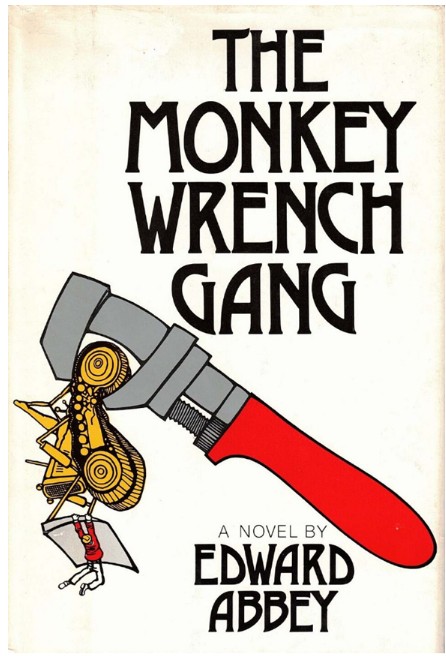
Initially inspired by novels such as the 1975 The Monkey Wrench Gang and publications that called for “ecotage,” eco-radicalism has a strong emphasis on direct and immediate action. The ALF (Animal Liberation Front) and ELF (Earth Liberation Front) were the most prominent actors in this space initially, and were the main drivers of a wave of eco-terrorism from 1980 to approximately 2012. While the two organizations had slightly different goals – the ELF endorsed ending modern civilization based on a blend of anarchism, Marxism, socialism, and postmodernism, while the ALF was more focused on animal rights issues – there was significant overlap between the two in terms of membership given their loose organization model and similar goals. Throughout their tenure, the ALF and ELF have been careful to be nonviolent, and despite over 189 vandalism and arson attacks over more than three decades, have not caused any fatalities. Other groups in this sphere, such as Animal Rights Militia (ARM) and Justice Department (JD), have endorsed violence against individuals, although they have still not been connected to any fatalities either. However, it should be noted that even nonviolent groups within this sphere specifically target critical or economically valuable infrastructure: in a single 1998 attack, ELF members caused $12 million in damages to Vail Ski Resort in Colorado – within the space of 6 years, this was part of nearly $43 million in damages that ELF and ALF inflicted to American infrastructure.
Anti-tech extremism is at the heart of the deep ecology movement, and a primary motivator for eco-radicalists. However, unlike the other anti-tech strains – insurrectionary anarchists and eco-fascists – eco-radicalists oppose technology primarily for ecological reasons; anti-tech extremism is only one facet of an ideology that opposes animal abuses, patriarchy, and other social issues.
Eco-radicalism peaked during the “Green Scare” of the 1990s. The September 11th terrorist attack, and the US government’s subsequent crackdown on domestic terrorism, especially through programs such as the FBI’s 2004-2008 “Operation Backfire” significantly reduced eco-radicalism within the United States. However, since the early 2010s, the lull in eco-radicalism has slowly died as a new generation of eco-radicalists have come forward. “The next wave of extremists will be green,” Jamie Bartlett argued in a 2017 article in Foreign Policy. He noted that, in the face of the climate crisis, the conditions were ripe for the “radicalization of climate activism.” Bartlett’s prediction is especially relevant to eco-radicalism. The ongoing effects of climate change have further radicalized the online eco-radicalism space; while early eco-radicalists such as ALF and ELF were generally careful to avoid human fatalities, there has been a significant increase in violent rhetoric within these spaces in recent years. Andreas Malm’s 2021 book, How to Blow Up a Pipeline, is just one example of escalating rhetoric within this space. Malm argues that it is time for climate activists to embrace “another stage beyond absolute non-violence” and embrace strategic property destruction. A number of newer organizations are significantly more hardline than their predecessors; one prominent example is Deep Green Resistance (DGR), which advocates for militant and violent resistance to strategic infrastructure, including sabotage and assassination, and is a potential bioterrorism threat.
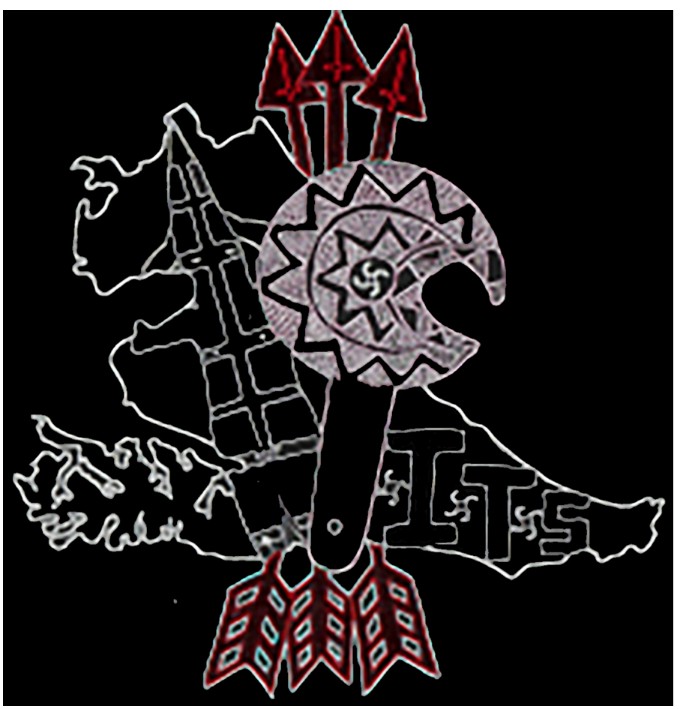
The most violent of these new eco-radicalism groups is Individualists Tending Toward Wildness (Individualistas Tendiendo a lo Salvaje), also known as Individualists Tending Toward Savagery, or ITS. ITS is particularly notable for its embrace of extreme misanthropy. Its goals are violent and all-encompassing: “War against the technological system… War against science… War against modern hyper-civilized humanity…” The group first emerged in Mexico in 2011, with a spate of mail bombs aimed at nanotechnology researchers across the country. In an online communique, the group declared an “individualist war, conceived, initiated, and carried out by ourselves against a wide variety of targets that represent modernity, technology, civilization, artificiality, progressivism, and humanism.” In accordance with the eco-radical worldview, they see technology and nature as complete oppositional forces, making all facets of civilization valid targets as they are all part of the same technological system. There are no civilians in this war; as ITS has proudly stated, there is no distinction between innocent and guilty: “Faced with any citizen – any citizen whatsoever – we choose ourselves a thousand times over. The masses deserve no special consideration.” In the years since, the organization has spread into Argentina and Chile, with a rumored presence in Europe as well. While it does not appear to have a presence within the United States, the group has falsely claimed credit for several murders committed there and appears to have engendered a degree of sympathy from the American anarchist movement.
The influence from figures such as Theodore Kaczynski is obvious; not only does the group initially espouse a very similar anti-technology stance, their use of mail bombs is directly inspired by the Unabomber. The group actively embraces a nihilistic, anti-humanistic worldview, and has declared “War against civilization, the human race, and progress!” This has led ITS toward a “misanthropic stance that justifies the annihilation of civilized human life for its own sake.” Kaczynski himself repudiated the group in 2012; by 2016, multiple other extremist actors also discredited the group, eroding its standing and further radicalizing the remaining members. The group’s current stance is so nihilistic that it borders on suicidal – violence is no longer a means toward achieving political goals, but rather the ultimate expression of ideological commitment against civilization itself. ITS openly admits that it has no hope of victory in its struggle, stating in a 2016 article, “Our pagan cry to Wild Nature will remain unchanged until our forced extinction…”. In such a grim worldview, the only goal is further violence.
ITS’s misanthropy and nihilism has also connected it with other extremist groups normally outside the eco-radicalist sphere and beyond Latin America. The group has shown support for ISIS, the Christchurch shooting, and Covid-19, as all instances demonstrate damage to society. In one interview on an anarchist website, an ITS leader admitted that the group had “taken some organizational experiences” from neo-Nazi accelerationist organizations such as Tempel ov Blood and the Order of Nine Angles. The connection between these groups and other prominent accelerationist organizations, including the now-defunct Atomwaffen Division, demonstrates the unusual blending of ideology that can occur in such extremist spaces. Atomwaffen Division also overlaps with eco-radicalism; in December 2019, a report found that one of the group’s neo-Nazi members had been involved in the eco-radicalist group Earth First!.
Ultimately, despite the early emphasis that eco-radicalists had on nonlethal tactics, the increasingly extremist rhetoric in these spaces, as well as the evolution of more hardline groups, is cause for concern. However, the other two historical strains of anti-tech extremism have already shown themselves to be just as capable of hardline violence.
Insurrectionary Anarchism
Theodore Kaczynski, better known as the “Unabomber,” is one of the most infamous domestic terrorists that America has ever produced. Over a period of nearly 20 years, his bombing campaign killed three and injured dozens more across the United States. His campaign culminated in the publication of his manifesto, ‘Industrial Society and Its Future’ in The Washington Post in 1995 by threat of continuing the bombings. Shortly afterwards, he was captured by authorities.

The influence that ‘Industrial Society and Its Future’ has had upon anti-tech extremism, and wider extremist spaces, is difficult to overstate. “Tedpilling” is a common trend online; Luigi Mangione, the accused murderer of UnitedHealthcare CEO Brian Thompson, reportedly gave the manifesto a four-star review on Goodreads. Anders Breivik, a neo-Nazi who perpetrated the 2011 Norway attacks, directly plagiarized Kaczynski in his manifesto. Fundamentally, ‘Industrial Society and Its Future’ is a screed against modern industrialized society. Kaczynski argues that human beings are fundamentally, biologically incapable of adapting to a technological society. ‘Technology’ in this sense is not any particular machine or device; it is an entire self-perpetuating system that ensnares and enslaves even those who are nominally in control of it.
Although Kaczynski referenced a utopian state of “wild nature” in his manifesto, and was well-read in eco-radicalist literature, it is important to note that he should not be considered an eco-radicalist. Although several eco-radicalists eagerly wrote to him after his capture, these alliances quickly fell apart due to a fundamental difference in ideology. Ultimately, the Unabomber’s primary philosophy was violently opposing the system of industrialized society for the benefit of humanity; any environmental gains from this were purely secondary. In this regard, he became one of the primary inspirations for a new form of anti-tech extremism: insurrectionary anarchism.
Insurrectionary anarchism exists as a particularly extremist wing within the larger anarchism ecosystem, with a strong focus on illegal and violent “direct action” ranging from arson to assassination to bombings enacted by decentralized and loosely coordinated networks. Although he was arrested in 1996, the Unabomber did not gain influence within this sphere until the early 2010s, with Kaczynski himself noting, “it is only since 2011 that I’ve had people who have been willing and able to spend substantial amounts of time and effort in doing research for me.” Kaczynski had identified himself as an anarchist decades earlier, writing to The New York Times in April 1995, “We call ourselves anarchists because we would like, ideally, to break down all society into very small, completely autonomous units.”
Much like Kaczynski, anti-tech insurrectionary anarchists identify technology as not individual machines, but the entire technological system arrayed in a vast “megamachine”: “the bureaucratic processes, the military and police techniques, and the scientific research all constitute mechanisms of the megamachine.” While insurrectionary anarchists identify that there are “techno-elites” within this system that gain some benefit from it, they still agree with Kaczynski that these elites are subordinate to the self-perpetuating system that has completely outgrown any façade of human control. Perhaps most concerning of all, in the years before his death by suicide in 2023, Kaczynski believed that the possibility for a violent revolution was quickly growing increasingly likely; in one letter to a journalist, he happily noted of his growing online influence, “The current political turmoil [in America] provides an environment in which a revolutionary movement should be able to gain a foothold.” His influence has only grown since then; multiple books and online publications such as Against Civilization, FeralCulture, the Atassa journal, and the ‘Ludd-Kaczynski Institute of Technology’ have gathered hundreds of thousands of followers over the past decade. The recent Covid-19 pandemic has only accelerated the rhetoric of many Kacynski-inspired groups; measures such as lockdowns and vaccination campaigns are viewed suspiciously within these spheres as further evidence of the techno-industrialist system tightening its control over the populace, and have contributed to further radicalization within insurrectionary anarchist spaces. Even more recently, the widespread development of AI has added a strain of apocalyptic alarm to insurrectionary anarchist publications such as 325, inspiring attacks such as the M.R.M.D. (“micro resist – mega damage”) arson attack on a Berlin microchip factory in June 2025.
The Volcano Group (Volkangruppe), which successfully cut off power to over 45,000 homes, 2,200 businesses, and 4 hospitals in Berlin in January 2026, may be considered a recent development in insurrectionary anarchism. The group, which has attacked critical infrastructure within Berlin at least seven times, and also famously attacked a Tesla factory in 2024, published a statement online which “criticized Tesla’s implications in driving predatory capitalism, worker exploitation, environmental degradation and modern surveillance technology.” To date, the anti-tech group has successfully inflicted hundreds of millions of dollars’ worth in economic damages.
Eco-Fascism
ITS’s connection to neo-Nazi groups such as the Order of Nine Angles is only one of many growing connections between anti-tech ideology and far-right extremism, specifically eco-fascism. In recent years, the concept of “eco-fascism” has grown in online extremist spaces. Much like ITS, eco-fascism can be understood as a devaluing of human life – but where ITS devalues all of humanity, even the lives of its own members, modern eco-fascism devalues the lives of so-called “inferior” populations. Modern eco-fascists view the environment through a racial lens whereby perceived superior populations have a rightful claim to the land and therefore can displace or destroy minority populations to protect the environment.
Eco-fascism has a long history that stretches back into the writings of nineteenth century figures such as Ernst Arndt and Wilhelm Riehl. Hearkening to the “blood and soil” mystique of the volkisch movement, Arndt wrote in his 1815 article On the Care and Conservation of Forests of the sanctity of the German people and a mystical connection that they had to the very soil of Germany – a connection to the environment deeply bound to racial purity and rabid xenophobia against Slavs, Jews, and the French. Riehl, one of Arndt’s students, took the message even further, writing in 1853, “We must save the forest… so that the pulse of life of the people continues to beat warm and joyfully, so that Germany remains German.” His writings fiercely embraced antisemitism. These early writings eventually contributed to the Nazi’s later embrace of a “religion of nature” that was a “volatile admixture of primeval Teutonic nature mysticism, pseudo-scientific ecology, irrationalist anti-humanism, and a mythology of racial salvation through a return to the land.” Henrich Himmler, head of the SS, was particularly fascinated by ecology, and released a December 1942 decree, “On the Treatment of the Land in the Eastern Territories”, which declared that the seized Lebensraume (living space) of the captured territory was to be kept “close to nature [as] a decisive perquisite” for the eventual mass settlement of German “racial stock”.
The Nazi concept of Blut und Boden, “blood and soil,” which espoused a mystical and deeply racial connection between Germanic peoples and the land, laid the precedent for modern eco-fascist thought. One of the predominant ideologies animating the modern far-right, the “Great Replacement” conspiracy theory, also lends itself well to eco-fascism. Anders Breivik, perpetrator of the 2011 Norway attack, wrote a manifesto that blamed “third world” overpopulation for damage to the environment. Notably, he directly plagiarized Kaczynski. Brevik’s writing also inspired Brenton Tarrant, the 2019 Christchurch shooter, who entitled his manifesto “The Great Replacement” and described himself as an “eco-fascist,” writing that immigration and minority birth rates posed both a threat to white populations and the environment. “The environment is being destroyed by over population… We Europeans are one of the groups that are not over populating the world. The invaders are the ones over populating the world. Kill the invaders, kill the overpopulation and by doing so save the environment.” More far-right extremists have labeled themselves eco-fascist and taken inspiration from Kaczynski, including the 2022 Buffalo, New York, attacker, and most recently the 2026 Islamic Center of San Diego shooters. In recent years, “green accelerationism” has also gained a place in far-right extremism, including among groups such as The Base and self-described “EcoFash terrorwave collapse cult accelerationists” on online platforms such as Telegram.
Eco-fascism is particularly prone to sliding into nihilistic accelerationism. One eco-fascist mused in a leaked Discord post: “Those who subscribe to an eco-fascist world view, are increasingly calling for violence against [those] whom they believe pose a threat to the environment… As such, the Siege pill (accelerationism) may follow the green pill (eco-fascism).” Ultimately, the eco-fascist call to return to the environment – free from modern society and so-called racial pollution – can further radicalize adherents into a nihilistic urge to accelerate the collapse of modern society. As shown in the examples listed above, the end result of this is mass violence.
Although references to Kaczynski in neo-Nazi spaces, including threads on Stormfront, date back to the early 2000s, in recent years Kaczynski’s influence in eco-fascism has increased massively. Memes of “Uncle Ted” are common in this space, as are references to his manifesto. Brevik and Tarrant’s manifestos are directly inspired by ‘Industrial Society and Its Future’, members of Atomwaffen reportedly attempted to contact Kaczynski in prison, and the “Green Brigade”, a wing of The Base that labeled themselves “accelerationist eco-extremists”, burned down a Swedish mink farm in 2020. For his part, Kaczinski repudiated eco-fascism before his death, rejecting their white supremacist stance. However, it appears that the accelerationist ideology of violent far-right extremism, built upon neo-Nazi James Mason’s book Siege, has allowed it to easily adopt Kaczynski’s message of violent revolution against technological society, in what has been dubbed “the Kacyznski-ization of the neo-Nazi.” The romantic image of Kaczynski as a “symbol of resistance against the degeneracy of modern society” has made him into a powerful martyr-like figure that extremists of various ideological backgrounds have happily appropriated. Kaczynski’s contemptuous reading of “the psychology of modern leftism”, and warning that any revolutionary who “opposes technology must take a resolutely anti-leftist stance” has only furthered his popularity with the eco-fascist movement. Kaczynski is currently considered a “saint” within this sphere, part of a “holy trinity” consisting of him alongside Breivik and Oklahoma City bomber Timothy McVeigh. Other prominent thinkers within eco-fascism include Pentii Linkola, a Finnish writer who, before his death in 2020, proposed a four-step plan widely celebrated within eco-fascism: “no immigration, population downsize, defectives killed, and stopping of rampant technology.” Linkola’s misanthropic tendencies are best summarized by one of his most famous quotes: “If there were a button I could press, I would sacrifice myself without hesitating, if it meant millions of people would die.”
One of the most prominent organizations within the eco-fascist movement is the Pine Tree Party. Reportedly established in 2017 by Michael Mahoney, the Pine Tree Party’s social media includes overt calls to violence, with statements such as, “We will bring the America family back to the woods, back to self-sufficiency, while the champagne-sipping [slur] of New York City burn in high rises they can’t escape” and “…Have many children, teach them to be extremists. Lead by example. They will call this hatespeech, and they will be right.” The Pine Tree Party also celebrated figures including Adolf Hitler, the British fascist Oswald Mosley, and esoteric neo-Nazi Savitri Devi, as well as posting neo-Nazi imagery including the Black Sun rune. For his part, Michael Mahoney, better known online as “Mike Ma”, is an outspoken influencer within the eco-fascism community. He is best known for his book Harassment Architecture, a vivid call for accelerationist violence. The book exists to funnel hatred against society itself, a call for the destruction of the modern world and a return to an ethnocentric state of nature. Harassment Architecture is widely read and circulated within the eco-fascist sphere; in one paragraph often mockingly featured on eco-fascist memes, Ma sarcastically writes: “Please note: Do not do any of these things. Especially do not cover your face and destroy the many, and largely unprotected, power stations and cell towers. Electricity is a ghost, but one you can catch and kill. Do not do that. Do not become the sort of person who gets really good at blowing up power plants while never getting caught.”
This hiding behind a cloak of irony – while calling for mass casualty events, asymmetric warfare, and accelerationist collapse – is common throughout the wider ecofascist sphere. “Schizoposting” and engaging in extremist aesthetics, with a significant overlap with the wider accelerationist movement, is also common and further helps to add a veneer of irony. This strategy has helped allow the eco-fascist movement, while still fringe, to successfully maintain a lower profile than other extremist groups. In recent years, it has used this low profile to develop a small but growing presence on mainstream social media platforms.

Anti-Tech Extremism Today
Although Kaczynski died in 2023 at 81 years old, he continued to write about his ideology in an attempt to bring about an anti-technology movement that would return society to the pre-industrial era. In 2016, Kaczynski published the first edition of Anti-Tech Revolution: Why and How, with the second edition appearing in 2020. Beyond expanding on his original ideas in Industrial Society and Its Future, Anti-Tech Revolution provides guidance on ushering the movement into reality. Importantly, those committed to the anti-tech revolution must be prepared to use people’s anger towards the effects of technology, such as job loss from automation, into “purposeful action” (144). In how Kaczynski imagines the pattern of the revolution, the majority of the population, while perhaps seeing merit in the anti-tech revolutionaries’ ideas, will reject revolutionary action until a major crisis or failure of the system occurs. Once the revolutionaries recognize this moment, Kaczynski argues that they must utilize the active support, and, with those in power unable to create a defense, the revolutionaries take power to disrupt industrial society. In the meantime, to gain experience as leaders in the movement, the revolutionaries can publish a newspaper or journal, which Kaczynski acknowledges nowadays, “will likely be published not only in print but also on the Internet; or perhaps even on the Internet alone” (156). As such, those inspired by Kaczynski’s ideology and desire for the collapse of industrial society are online, awaiting the “right time” for revolutionary action.
The time to exploit for the anti-technology movement may be coming sooner rather than later. A Quinnipiac poll released at the end of March 2026 found that 80 percent of Americans are either “very concerned (38 percent) or somewhat concerned (42 percent) about AI.” The same poll also reveals that in April 2025, 44 percent of Americans thought AI would do more harm than good in their day-to-day lives, while new findings put this number at 55 percent. Americans are souring on the benefits of new technologies like AI, despite the continued push forward for innovation. In the absence of the ability to oppose the need for AI dominance, data centers have become a key symbol. In the first quarter of 2026, data center opposition “ blocked or delayed at least 75 projects nationwide worth about $130 billion.” Opposition to modern technologies stems from legitimate grievances and concerns. A vast majority of opposition is completely nonviolent and protected by First Amendment rights.
In relation to extremism, while anti-technology sentiments were historically a flexible underpinning of other ideologies, the unaddressed grievances and concerns particularly related to AI is creating the conditions for political violence. Extremism researcher Dr. Veilleux-Lepage created a three-domain framework to demonstrate AI as a generator of grievances that result in violence. The three grievance domains—economic order, state and institutional power, and social and personal fabric—describe legitimate concerns with AI, such as economic displacement under the economic order domain, governance failure under the state and institutional power domain, and social atomization in the final domain. The “accountability gap” which Veilleux-Lepage defines as “the recurring absence of an attributable human agent responsible for AI-mediated harm,” traverses across all three grievance domains, while the “tempo problem, namely the rate at which AI-driven disruption outpaces institutional adaptation,” acts as a “force multiplier.” The result is thus that legitimate means for addressing grievances are outpaced by the grievances themselves. This challenge creates a foundation where political violence risks can foment.
Already, the United States has seen anti-technology-focused extremism become violent. In April 2026, Indianapolis councilman had shots fired at his home after backing a data center project. The perpetrator left a note which said “NO DATA CENTERS.” Shortly after this incident, a man threw a Molotov cocktail at OpenAI CEO Sam Altman’s house, before attempting to break into the company’s offices. The criminal complaint for the suspect, Daniel Moreno-Gama, includes information on the “anti-AI” document recovered by law enforcement and written by Moreno-Gama. In the document, Moreno-Gama provides reasoning for his action, as he believes AI to be an existential risk to humanity and, if he is going to be an “advocate for others to kill and commit crimes” then he must “lead by example.” Anti-technology sentiments are no longer being relegated to other ideologies, but rather taking the forefront in political violence.
The “propaganda by the deed” exemplified by the violence in April may translate to more violence, particularly as individuals have more legitimate grievances related to the effects of AI and lawmakers are unable to address concerns in a timely manner. Importantly though, as demonstrated by the historical analysis of anti-technology extremism, these sentiments cross traditional partisan lines. The response on social media to the attacks against Altman is widely positive, creating a dangerous precedent if grievances are not addressed. While there has been some conversation about foreign influences exploiting the controversy over AI data centers, and while that may well be true, there are still valid concerns the citizenry has about these technological systems that have not been answered. Thus, while more research into anti-technology sentiments is necessary, to mitigate future instances of violence, there must be a concerted and quick effort to find solutions to the justified concerns of citizens.