

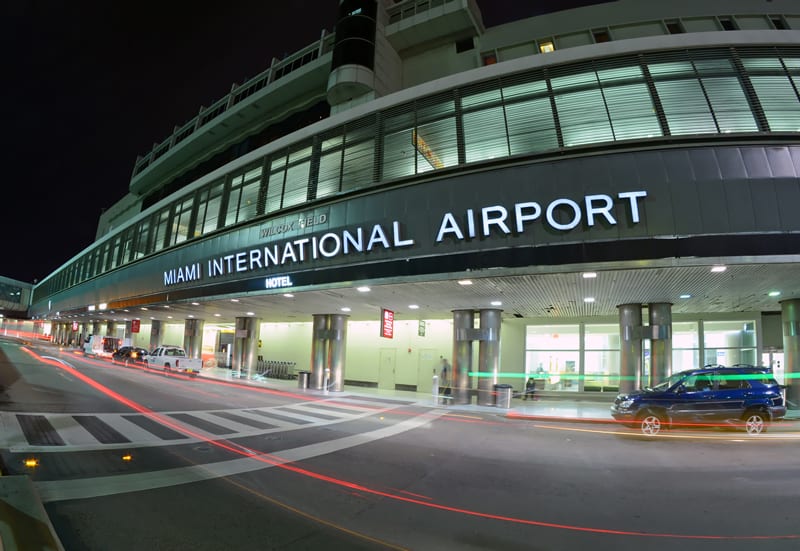
A passenger’s reported experience at Miami International Airport, where he said he passed through multiple airport checkpoints using another traveler’s boarding pass, has raised questions about how airline check-in errors, biometric systems, and airport security processes interact.
The incident was first reported by the New York Post, which detailed how the passenger, identified only by his initials B.R., said the issue began during a Delta Air Lines check-in process on July 7 when an error involving his service dog reservation and seat assignment led to him receiving an incorrect boarding pass.
According to the report, B.R. noticed his printed boarding pass showed a different seat assignment but accepted the change after the airline agent updated his service dog information. He later discovered the boarding pass belonged to another passenger after noticing the departure time did not match his scheduled flight.
B.R. told the New York Post that he was surprised the incorrect boarding pass was accepted during parts of the airport screening process.
The passenger also said Delta representatives were surprised by the circumstances and that the airline later apologized and provided 40,000 SkyMiles.
The New York Post consulted Keith Jeffries, a former Federal Security Director at Los Angeles International Airport and Vice President at K2 Security Screening Group, a member of the Government Technology & Services Coalition (GTSC), to examine the security implications of the incident.
Jeffries said the situation represented a process issue rather than a security threat.
“I would put it at a one for a security or safety risk,” Jeffries told the New York Post.
Jeffries explained that airline boarding systems and TSA security screening serve different purposes. TSA’s role is focused on determining a traveler’s identity and applying the appropriate level of screening, while airlines primarily verify that passengers have a valid reservation and are able to board a flight.
He also explained that TSA security processes include existing vetting procedures conducted before passengers arrive at the airport, allowing the agency to identify travelers and determine screening requirements.
The incident also involved CLEAR, a private biometric identity verification service separate from TSA. According to the New York Post report, B.R.’s initial CLEAR check did not work because the boarding pass did not match his information.
CLEAR said its biometric verification process functioned as designed and that the traveler was not cleared through its system because the name on the boarding pass did not match the individual attempting to use it.
“Name match is part of CLEAR’s multi-factor authentication system,” CLEAR told the New York Post. “Whether physical or digital, the name on the boarding pass must match the person, which we verify with biometrics.”
Jeffries said the situation highlights the different roles played by airlines, TSA, and private-sector screening providers, while emphasizing that multiple layers of security are designed to identify issues at different points in the travel process.
Delta told the New York Post that it was investigating the incident and had contacted the customer directly.
“Nothing is more important than the safety and security of our customers and we are investigating internally to understand what occurred,” Delta said.