
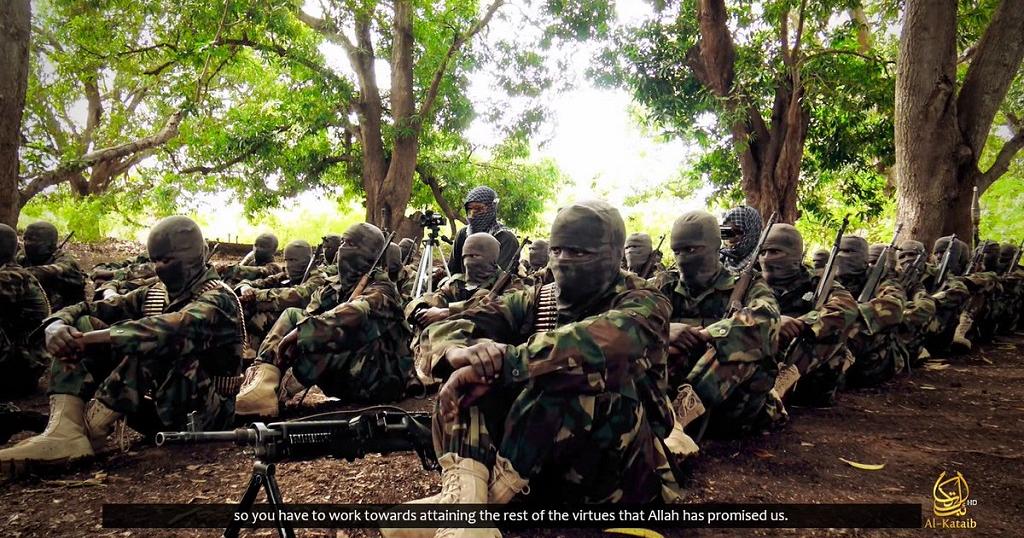
A renewed wave of military operations has drawn fresh global attention to the enduring threat posed by Al-Shabaab in East Africa. Air Command data highlights a dramatic escalation in counterterrorism efforts: the United States conducted more than 125 airstrikes in Somalia in 2025, including 50-plus specifically targeting Al-Shabaab, surpassing the administration’s previous multi-year totals. That momentum has continued into 2026, with dozens of additional strikes already recorded.
Yet despite being degraded by sustained aerial pressure from both Washington and Ankara, Al-Qaeda’s wealthiest and most dangerous African affiliate is adapting. Rather than confronting its adversaries solely on the battlefield, Al-Shabaab is running a sophisticated propaganda campaign to undermine the very partnerships seeking to dismantle it.
In its recent Eid al-Adha address, delivered by official spokesman Ali Mohamud Rage, better known as Ali Dheere, Al-Shabaab launched a targeted rhetorical offensive against the United States and Turkey. The group accused Washington of killing civilians near Kismayo and Buq Aqable and condemned Turkey for allegedly “exploiting” Somali natural resources through recent maritime security and energy agreements. While these civilian casualty claims remain unverified by independent sources, the strategic intent is unmistakable. Faced with an unprecedented military campaign, Al-Shabaab is attempting to exploit domestic political grievances, portray the federal government as a proxy for foreign powers, and position itself as the sole defender of Somali sovereignty.
For U.S. policymakers, the lesson is clear: defeating Al-Shabaab requires looking beyond the immediate tactical successes of airstrikes and addressing the political and structural vulnerabilities that the group exploits.
State-building in Somalia remains an exceptionally fragile process. Although President Hassan Sheikh Mohamud’s government has expanded international security partnerships and strengthened cooperation with foreign allies, it continues to grapple with deep-seated political divisions. The president’s term expired on May 15, yet key questions about the electoral model and election timeline remain unresolved. Mogadishu is also locked in political disputes with key Federal Member States, most notably Jubaland and Puntland, and stability in Southwest State remains uncertain.
Al-Shabaab does not operate in a vacuum; it thrives in precisely these governance gaps. By portraying the federal government as a corrupt elite sheltered behind the concrete T-walls of Mogadishu’s Halane compound, the group seeks to delegitimize state institutions and persuade frustrated local actors to resist federal authority.
At the same time, Al-Shabaab is increasingly weaponizing Somalia’s economic future. When Mogadishu and Ankara signed a landmark defense and economic cooperation agreement granting Turkey expanded roles in maritime security, offshore exploration, and coastal protection, Somali officials defended the deal as a critical step toward generating long-term revenue and strengthening state institutions. Al-Shabaab, however, has aggressively reframed the agreement, telling rural communities that the federal government is surrendering national assets to foreign neo-colonial interests.
As the United States maintains its aggressive counterterrorism posture through the latter half of 2026, Washington must recognize that military pressure alone is not a strategy for lasting success. Tactical degradation may weaken the group’s operations, but it does little to address the underlying conditions that allow Al-Shabaab to regenerate.
To undermine the group’s resilience, U.S. policy should adopt a genuine whole-of-government approach that combines military pressure with sustained diplomatic and political engagement. First, U.S. diplomacy should prioritize resolving the constitutional and electoral deadlock among Mogadishu, Somali opposition leaders, and the Federal Member States. Al-Shabaab’s shadow courts, taxation networks, and governance structures flourish when local populations feel neglected, marginalized, or disconnected from the state. The State Department should use its diplomatic leverage to encourage measurable progress toward a unified federal framework, thereby reducing the political fractures that militants continue to exploit.
Second, Washington and Ankara must significantly improve transparency and strategic communications about their operations in Somalia. Al-Shabaab’s most effective response to military pressure is often not a battlefield maneuver but a narrative one. Claims of civilian casualties, whether accurate or not, can quickly become powerful recruitment tools if left unaddressed. U.S. Africa Command (AFRICOM), working alongside Somali and Turkish partners, should conduct rapid-response battle damage assessments and proactively communicate the measures taken to minimize civilian harm. Winning the information battle is increasingly as important as winning the military one.
The surge in counterterrorism strikes shows that the United States and its allies can keep Al-Shabaab on the defensive. But if Washington hopes to prevent Al-Qaeda’s East African affiliate from turning military pressure into a propaganda victory, it must adapt its strategy. By helping bridge Somalia’s political divides, countering economic disinformation, and competing more effectively in the information space, the United States can ensure that tactical gains on the battlefield translate into lasting stability.
The ultimate challenge in Somalia is not merely eliminating militants. It is building a political environment in which their message no longer resonates.