
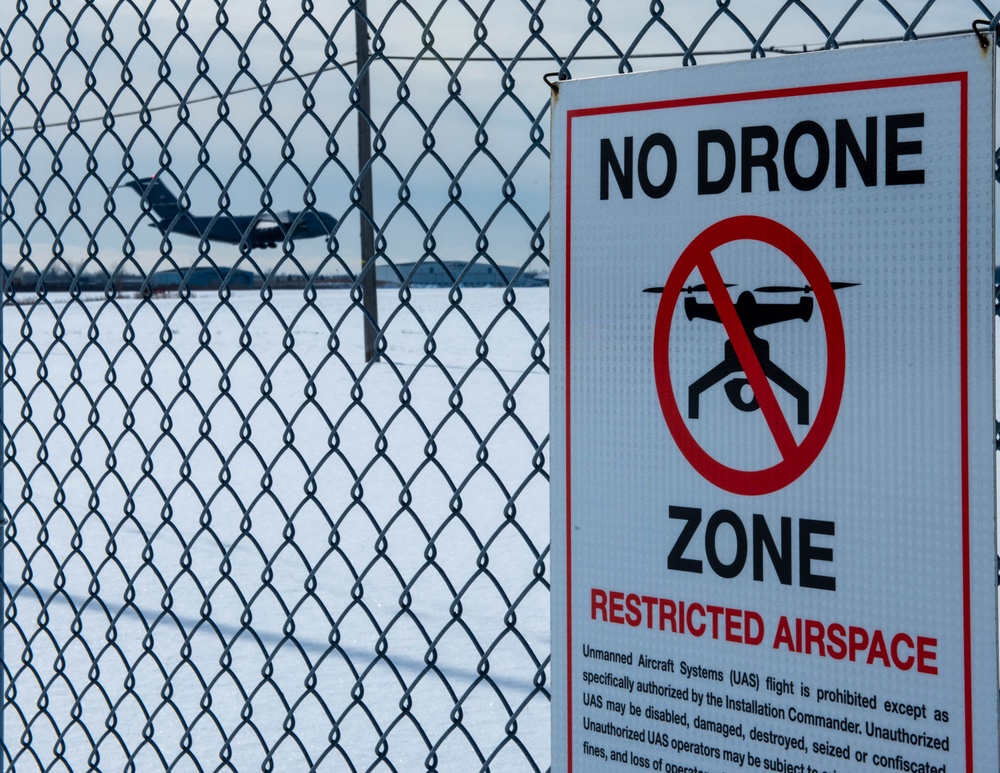
The Department of Transportation’s Federal Aviation Administration (FAA) has issued a
proposed rule that would allow specific categories of critical infrastructure sites to apply for restrictions on drone operations around their facilities. Restrictions–which would be submitted and approved via a new FAA web portal–will be approved based on safety or security criteria. Sixteen sectors would be eligible for restrictions including energy production, transportation systems, chemical facilities, water treatment plants, and defense industrial complexes.
“Restoring airspace sovereignty in America means protecting sensitive locations from aerial threats while providing clear guidance to drone pilots so they can operate with confidence. This rule does just that,” said U.S. Transportation Secretary Sean P. Duffy. “Under President Trump’s leadership, we will continue to fight to ensure our skies are secure and unleash the next wave of transportation innovation.”
“This rule is essential to safeguarding America’s critical infrastructure and upholding the President’s directive on restoring airspace sovereignty,” said FAA Administrator Bryan Bedford. “It gives law enforcement a clear, effective tool to deter unauthorized drone activity around sensitive sites that could pose serious risks to public safety and national security.”
The rule would establish two types of restrictions:
- Standard Unmanned Aircraft Flight Restriction (UAFR): This general restriction bars unmanned aircraft operations within a specific boundary except operators who have previously met rigorous safety and security standards.
- Special Unmanned Aircraft Flight Restriction (UAF: This much more severe restriction bars unmanned aircraft operations within a specific boundary for all operators unless they have the express, prior approval from both the FAA and the sponsoring agency (ex: Dept. of Homeland Security).
The restricted area would have clearly defined horizontal and vertical boundaries and violators could face civil or criminal penalties. The rule would also allow site operator to contact law enforcement if a drone flew in a restricted area, after which authorities can use Remote ID to locate the control station or operator. Pilots could face license suspensions, revocations, fines, and criminal charges for entering these no fly zones.
Drone operators are encouraged to check B4UFLY for the latest breakdown on where pilots can and cannot fl y.
Additional Information:
Restriction criteria includes impacts to aviation safety, protecting people and property on the ground, national security, or homeland security.
The full list of eligible site categories are:
- Chemical
- Commercial
- Communications
- Critical manufacturing
- Dams
- Defense industrial base
- Emergency services
- Energy
- Financial services
- Food and agriculture
- Government services and facilities
- Healthcare and public health
- Information technology
- Nuclear reactors, materials, and waste
- Transportation systems
- Water and wastewater
The comment period on the proposed rule will run until July 5, 2026.
For additional information, see this fact sheet.
The original announcement can be found here.