
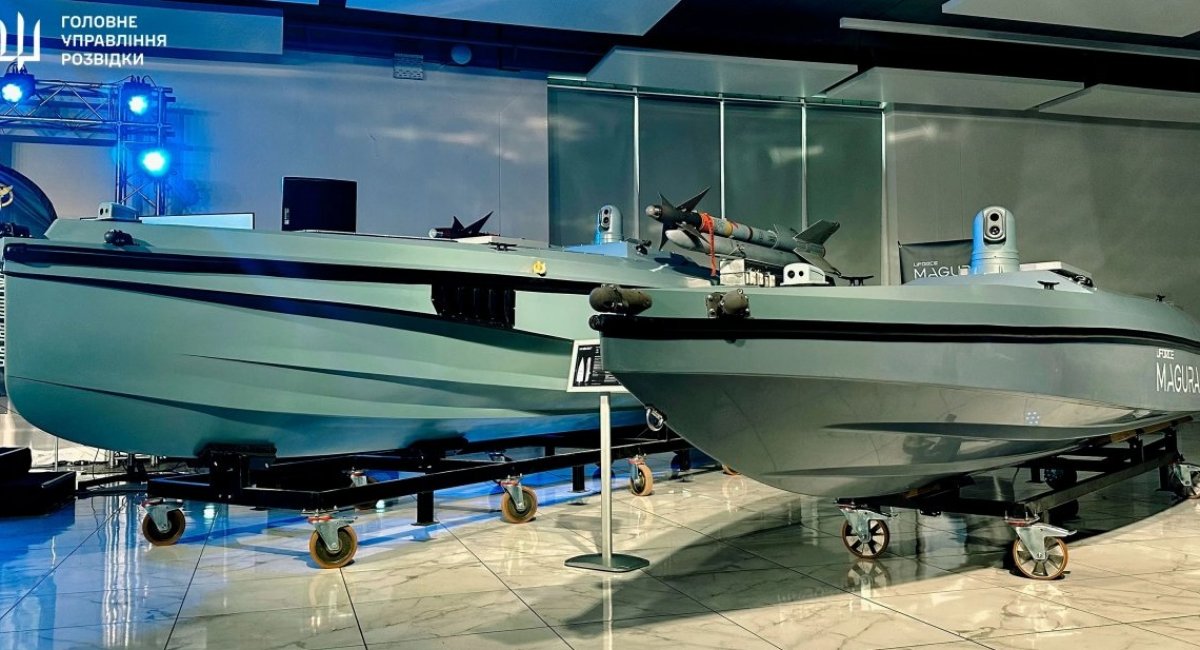
The United States and Ukraine have signed a bilateral statement of intent establishing a framework for Ukrainian combat drones to be sent to the United States for military testing and evaluation, according to officials familiar with the matter. The document is described as the first agreement of its kind between the two countries and comes after months of negotiation over deeper defense-industrial ties.
The arrangement would let the U.S. military request specific Ukrainian drone platforms – covering land, air, and maritime systems – for assessment rather than for immediate operational use. It stops short of a production contract, but officials characterize it as a first step toward broader cooperation, potentially including manufacturing of Ukrainian-designed drones inside the United States. Findings from the testing could feed into future Pentagon procurement decisions.
The deal reflects the Pentagon’s interest in Ukraine’s rapid, wartime development of low-cost unmanned systems – including interceptor drones, electronic-warfare platforms, and maritime attack drones – after more than four years of full-scale conflict with Russia. Defense analysts have framed the agreement as an opportunity for the U.S. to draw on battlefield lessons developed under high-intensity combat conditions that would be difficult to replicate domestically.

A related industrial deal was announced a day earlier, on July 21, when the Ukrainian Embassy in Washington confirmed a memorandum of understanding between Ukrainian autonomous-systems developer UFORCE and Oregon-based shipbuilder ReconCraft. That agreement is intended to bring UFORCE’s Magura family of maritime drones into U.S. production, with output eventually envisioned to scale into the thousands of vessels for possible U.S. Navy purchase, alongside broader cooperation on aerial and ground unmanned systems. The partnership follows the first combat use of unmanned surface vessels by U.S. forces earlier this month, during strikes on Iranian naval targets.
Part of a Broader Pentagon Push
The Ukraine agreements arrive as the Department of War pursues its own large-scale drone procurement effort, known as Drone Dominance, announced on December 2, 2025. The initiative is a $1 billion, roughly two-year plan to buy small, lethal drones at scale, with Secretary of War Pete Hegseth describing the goal as accelerating the domestic drone industrial base and rapidly equipping combat units with low-cost, expendable systems. Hegseth has said the effort draws on funding tied to recent budget legislation and reflects a “fight tonight” approach to fielding new technology.
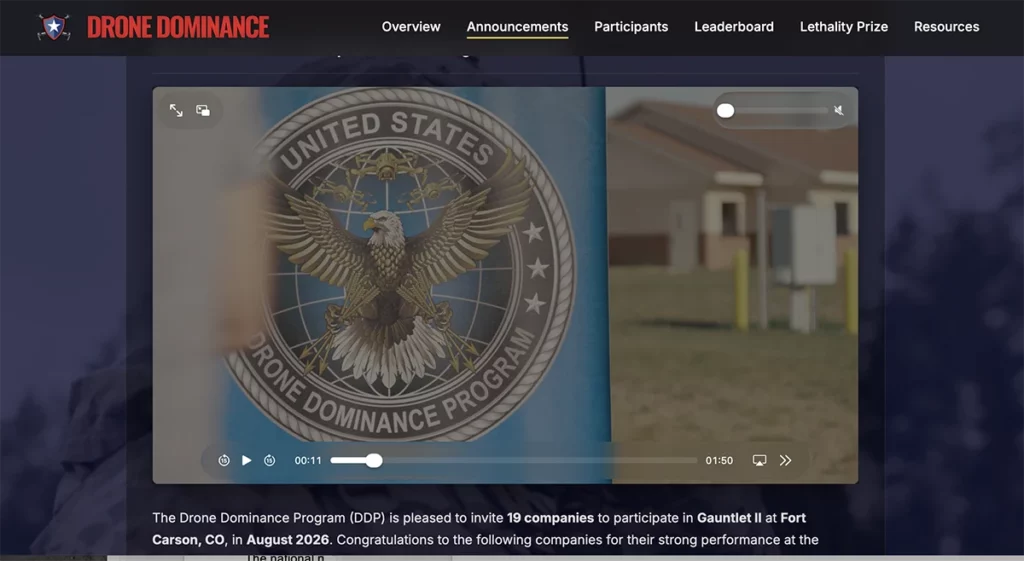
The program is built around recurring “Gauntlet” competitions, in which vendors’ small unmanned aircraft systems are flown by military operators and judged on their ability to complete mission scenarios; winners receive production orders rather than being locked in through a single down-select. Drone Dominance is sponsored by the Office of the Secretary of War, with the Test Resource Management Center running test-range execution and the Defense Innovation Unit overseeing industry engagement. Naval Surface Warfare Center Crane holds contracting authority and issues delivery orders based on Gauntlet results.
By the program’s own timeline, a request for solutions was published December 17, 2025; the first Gauntlet competition concluded February 17, 2026, resulting in an order for 30,000 drones; a second Gauntlet consisting of 19 companies will take place in August 2026; and a follow-on competition focused on a bomber platform mission is anticipated around October 2026. The Pentagon has set a goal of purchasing more than 200,000 drones capable of producing lethal effects in demanding battlefield conditions by 2027, with dates subject to change as the program progresses.
Taken together, the Ukraine testing framework and the Drone Dominance procurement drive point to a broader U.S. effort to shorten the gap between combat-tested unmanned technology – much of it developed under wartime pressure in Ukraine – and adoption by American forces and industry.