Introduction
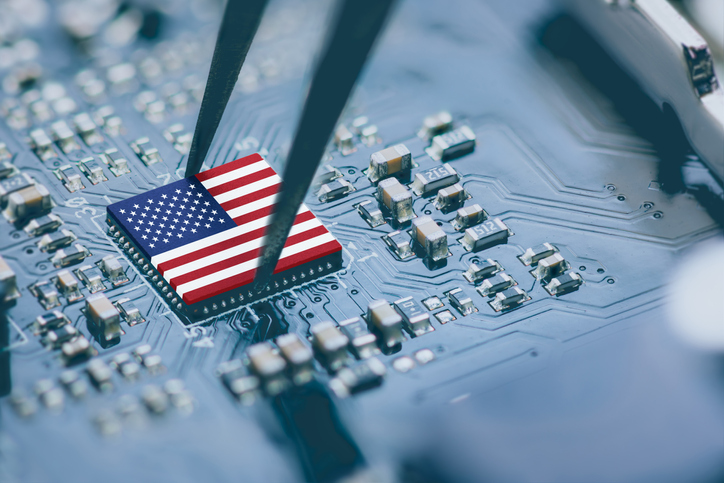
The next war will not be fought over oil, it will be fought over silicon. Semiconductors, the invisible engines behind modern technology, are the heart of everything from smartphones and satellites to missiles systems and electrical vehicles. Yet the US, a global leader in innovation, finds itself dangerously dependent on foreign manufacturing, particularly in Taiwan and South Korea, for over ninety percent of the world’s advanced semiconductor production.i As geopolitical tensions rise, particularly with China’s aggressive posture toward Taiwan, the fragility of this supply chain reveals a glaring vulnerability in American national security and economic resilience. Thus the US dependence on foreign semiconductor manufacturing constitutes a critical infrastructure vulnerability with the potential to paralyze defense, economic, and technological sectors. Without immediate and strategic investment in domestic semiconductor production, workforce training, and diversified global partnerships, the US risks ceding both military advantage and economic leadership in the 21st century.
Strategic Importance of Semiconductors
Semiconductors are not just commercial commodities; they are foundational to US critical infrastructure. The US Department of Homeland Security officially categorizes the semiconductor industry under the Critical Manufacturing Sector due to its importance to defense, telecommunications, energy, transportation, and finance. Semiconductors, often referred to as microchips, power fighter jets, missile guidance systems, Global Positioning System (GPS) satellites, medical devices, artificial intelligence (AI) systems, and national command and control networks, just to name a few. In an era defined by digital interdependence and technological escalation, semiconductors are the linchpin of American power. Semiconductor disruption would have cascading effects across sectors that cannot function without reliable access to chips, making them one of the most strategically sensitive components of the global economy.ii
Taiwan Dependency and Risk of Disruption
The most acute vulnerability lies in America’s reliance on Taiwan, specifically the Taiwan Semiconductor Manufacturing Company (TSMC), which alone produces over ninety percent of the world’s most advanced logic chips.iii TSMC’s fabrication facilities, clustered around Hsinchu and Tainan, form a geographic chokepoint. If China were to invade, blockade, or destabilize Taiwan, semiconductor production could be disrupted or stopped which would, send global markets into a spiral. The US has no immediate domestic substitute capable of filling this production gap besides a TSMC fabrication facility currently under construction in Phoenix Arizona. In this sense, TSMC is not just a business, the microchip company is a strategic asset of similar resemblance to a single oil refinery supplying most of the world’s fuel. The US dependence on Taiwan semiconductor production represents a single point of failure in the global digital infrastructure.
Rise of Foreign Dependency
Over the past three decades, the US outsourced semiconductor fabrication to Asia in pursuit of lower costs and higher profit margins. While US companies like Intel, NVIDIA, and Qualcomm lead in design, they still lack sufficient domestic fabrication capacity to produce advanced nodes below ten nanometers. Meanwhile, China is aggressively investing in its own semiconductor ecosystem, aiming to reach self-sufficiency by 2030.iv Chinese firms, supported by extensive state subsidies, have also acquired, or attempted to acquire foreign semiconductor assets, triggering alarm in Washington and Veldhoven Netherlands which is where Advanced Semiconductor Materials Lithography (ASML) corporation headquarters is located. US policymakers increasingly view China’s industrial strategy as a form of “chip warfare,” where controlling supply chains serves both economic leverage and military deterrence. RAND notes that the PLA already incorporate supply chain targeting into PLA doctrine for “hybrid warfare,” leveraging both cyberattacks and kinetic threats against infrastructure.v In this view, a cyberattack on Taiwan’s chip facilities could be as damaging to US power projection as missile strike on an aircraft carrier.
Policy Response of The Chips Act and Limitations
Recognizing the strategic vulnerability, Congress passed the Creating Helpful Incentives to Produce Semiconductors (CHIPS) for America Act in 2022, which allocates $52 billion to incentivize domestic semiconductor production, research, and workforce development.vi The law offers subsidies and tax credits to companies like Intel, Samsung, and TSMC to build fabrication plants in Arizona, Texas, and Ohio. While the vital first step, the CHIPS Act does not fully close the gap. Building leading edge fabrication facilities takes three to five years and costs over $10 billion per facility which also require a highly trained workforce that the US currently lacks.vii
According to the Semiconductor Industry Association, the US will face a shortage of 67,000 semiconductor technicians and engineers by 2030.viii Additionally, the upstream and downstream supply chains, such as, rare earth materials, high purity gases, and ultraviolet lithography machines, remains vulnerable to chokepoints in countries like Japan and the Netherlands.ix For example, ASML in the Netherlands is the only company in the world that currently produces extreme ultraviolet lithography machines, which are essential for five nanometer and below nodes. A single supply disruption at ASML could delay global chip production for months around the world.
Semiconductors as a Theater of Great Power Competition
In assessing the strategic implication, it is useful to consider the semiconductor supply chain as a battlefield for great power competition. China’s military doctrine explicitly incorporates supply chain warfare, which is the notion that disrupting an adversary’s access to essential inputs can be more effective than direct kinetic strikes. In this context, a cyberattack against Taiwan’s foundries could inflict the same level of disruption as a missile attack on a US aircraft carrier and often without direct attribution. A chip shortage halts missile assembly lines, delays major US military acquisition programs like the F-35, F-47, B-21, and other combat collaborative aircraft production, while also impairing the function of advanced surveillance platforms being developed.x
Economic Impacts of Semiconductor Vulnerability
The economic stakes of semiconductor insecurity are immense. Semiconductors are embedded in products that represent more than 12 percent of US Gross Domestic Product, including automotive, aerospace, telecommunications, and consumer electronics.xi The 2021 global chip shortage, which emerged from COVID-19 supply disruptions, caused estimated losses of $210 billion across industries worldwide, illustrating the fragility of existing supply chains.xii General Motors, for instance, had to idle assembly lines for months, while Apple delayed product launches due to limited chip supply. Unlike traditional commodities, semiconductors lack substitutes, if a specific chip is unavailable, the entire product assembly may halt. A prolonged disruption, whether through military conflict, natural disaster, cyberattack, or even espionage would cause not only inconvenience but also systemic economic damage to the US economy.
Beyond product delays, semiconductor dependency also increases inflationary pressure limits innovation. According to the Brookings Institution, tight supply conditions have led to sharp price increases for electronic components, contributing to inflation in downstream goods such as vehicles, computers, and medical devices.xiii Moreover, limited access to advanced chips slows the adoption of next generation technologies like electric vehicles, quantum computing, and 5G infrastructure. These are sectors projected to drive trillions in economic value over the next decade in which the semiconductor infrastructure will be the backbone of AI.xiv Therefore, the economic impact of supply chain vulnerability is not only immediate in terms of production losses, but also long term in terms of global competitiveness and innovation.
Semiconductors, AI leadership, and National Security
Semiconductors are the foundation of AI, which is a domain increasingly seen as the future of global military and economic power. Advanced AI applications, including natural language processing, computer vision, autonomous systems, and predictive analytics, all depend on high performance chips knows as Graphics Processing Units and AI accelerators. Without control over semiconductor production, the US risks falling behind in AI research and deployment. As of 2025, the most capable AI chips, which is NVIDIA’s Grace Blackwell, required advanced five nanometer manufacturing nodes, which only Taiwan’s TSMC and South Korea’s Samsung can currently fabricate.xv
Losing access to these chips or having the vulnerabilities within the supply chain exploited would impair the development of US defense-relevant AI, including drone swarms, cyber defense automation, intelligence analysis, and command decision support. The National Security Commission on AI has warned that China could surpass the US in AI capabilities by 2030 if China secures greater access to cutting edge semiconductors. xvi Furthermore, AI’s integration into the global economy such as powering logistics, financial forecasting, language translation, precision medicine, makes chip access a core issue for economic security. If the US cannot guarantee their own semiconductor supply, the US cannot lead the AI race as semiconductor independence becomes not only a defense priority but a civilizational imperative.
Global Interdependence and Need for Supply Chain Resilience
The interdependence of global semiconductor production, requiring components and expertise from the US, European Union (EU), Japan, Taiwan, and South Korea, makes the system inherently fragile. The Brookings Institute highlights that even “friendly” supply chains are susceptible to shocks from natural disasters, economic sanctions, or political instability.xvii In 2011, the Tohoku earthquake in Japan disrupted specialty chemical supplies essential to chip fabrication, affecting manufacturers worldwide. Moreover, the semiconductor crisis underscores a broader lesson about critical infrastructure as interdependence is both a strength and a vulnerability. The globalized nature of chip production, requiring contributions from Japan who provide photoresists, the Netherlands who provide lithography equipment through ASML, the US design from NVIDIA, and Taiwan manufacturing displays that a disruption in any node paralyzes the entire system. The US must not only increase domestic fabrication, but also harden leveraging strategic partnerships with Japan, South Korea, and the EU to share fabrication and technology development across secure channels.
Cybersecurity
Another critical layer of vulnerability lies in cyber security. Semiconductor fabrication facilities are highly automated and reliant on industrial control systems and remote monitoring just like much of the other critical infrastructure such as water, telecommunications, oil, electrical, and transportation. A successful cyberattack could alter chip production tolerance, corrupt design files, or physically damage machines through logic manipulation, just like the Stuxnet attack on overspun Iranian centrifuges.xviii In a wartime scenario, these vulnerabilities become prime targets. China has previously conducted cyber intrusions against US semiconductor firms including AMD, and Micron, for intellectual property theft and espionage.xix The threat extends beyond Taiwan, and future domestic US fabrication facilities must be hardened against cyber threats, incorporating zero-trust architectures, redundant backup systems, and real time anomaly detection. Failing to do so risks turning strategic investments into high-tech liabilities.
America’s Challenge
A core challenge in developing a domestic semiconductor base is talent. Fabrication requires not just machines, but a workforce trained in electrical engineering concepts, cleanroom protocols, chemical handling, and photonics. The US has experienced a decline in STEM education output relative to China, threatening long term competitiveness. Without skilled and sustainable pipeline, investment in fabs may lead to underutilized infrastructure. The US must pair financial incentives with immigration reform to attract foreign semiconductor engineers and invest in advanced technical education to rebuild a robust, long term semiconductor work force.xx
How the U.S. can Protect Semiconductor Infrastructure
To mitigate the risks associated with semiconductor dependency, the US must implement a multi-pronged national strategy centered around domestic capacity, allied coordination, and resilience investments. First, accelerating the construction of fabrication plants through the CHIPS Act must be matched by investment in packaging, testing, and materials sourcing, all these steps that currently occur abroad. According to the Semiconductor Industry Association, the US share of global packaging and testing capacity is less than five percent, creating back-end vulnerabilities even with new fabrication facilities.xxi Vertical integration or at least national coordination of these stages is required to eliminate new choke points.
Second the US must institutionalize global partnerships with trusted allies such as Japan, the Netherlands, South Korea, and the EU. Formalizing a “Semiconductor Security Alliance” or supply chain NATO could safeguard the linkages discussed throughout this paper from economic coercion or diplomatic fallout. These partnerships should include joint research and development funding, export controls, and mutual defense agreements covering cyberattacks or kinetic strikes against fabrication centers.
Third, the physical and digital security fabrication facilities must be prioritized. Fabrication plants require 24/7 around the clock uptime, are extremely sensitive to contamination and vibration, and run on tightly choreographed logistics. Cyberattacks, as seen in 2021 ransomware strike on TSMC suppliers, could shut down operations for weeks. Fabrication facilities must work in conjunction with the Department of Homeland Security and the Department of Defense to ensure that the semiconductor critical infrastructure is protected here in the US. The White House should also designate major fabrication facilities as “national critical infrastructure nodes” subject to continuity of government planning.
Finally, the workforce gap must be addressed through sustained investment in STEM vocational training, and immigration reform. The US should expand scholarship programs, incentivize university industry partnerships, and streamline visas as seemed fit for chip sector talent. Without human capital, no amount of fabrication capacity will secure semiconductor independence.
Conclusion
The vulnerability of the US semiconductor supply chain is not a future problem, it is a present strategic liability. Taiwan’s geopolitical instability, China’s ambition for chip supremacy, and America’s limited domestic capacity create a perfect storm of risk. While the CHIPS Act marks an important beginning, it is insufficient on its own. National strategy must prioritize not just the financial but the structural and human elements of rebuilding semiconductor independence. Without securing this digital backbone, the US risks losing not only its economic edge but its ability to defend itself in the next era of conflict, one fought not over oil, but over silicon.
(The author is responsible for the content of this article. The views expressed do not reflect the official policy or position of the National Intelligence University, the Office of the Director of National Intelligence, the U.S. Intelligence Community, the Department of Defense, or the U.S. Government.)
Endnotes
i U.S. Department of Homeland Security, “Critical Manufacturing Sector: Supply Chain Security and Gray Market,” Cybersecurity & Infrastructure Security Agency (CISA), https://www.cisa.gov/sites/default/files/2024-08/Critical_Manufacturing_Sector_Supply_Chain_Security_and_the_Gray_Market_508c.pdf
ii Ibid
iii Center for Strategic and International Studies (CSIS), Silicon Island: Assessing Taiwan’s Importance to U.S. Economic Growth and Security, 2023, https://www.csis.org/analysis/silicon-island-assessing-taiwans-importance-us-economic-growth-and-security.
iv Bradley, Martin, et al. “Supply Chain Interdependence and Geopolitical Vulnerability.” RAND, RAND, March 13, 2023, https://www.rand.org/pubs/research_reports/RRA2354-1.html.
v Ibid.
vi Michelle, Kurrilla. “What Is the CHIPS Act? Council on Foreign Relations.” Council on Foreign Relations, Council on Foreign Relations, April 29, 2024, https://www.cfr.org/in-brief/what-chips-act.
vii Ibid.
viii Semiconductor Industry Association, “Winning the Chip Race,” https://www.semiconductors.org/winning-the-chip-race/
ix Thakur-Weigold, B. and S. Miroudot, “Promoting resilience and preparedness in supply chains”, OECD Trade Policy Papers, No. 286, OECD Publishing, Paris, https://doi.org/10.1787/be692d01-en.
x US, Taiwan & Semiconductors: A Critical Supply Chain Partnership.” US-Taiwan Business Council, US-Taiwan Business Council, June 21, 2023, https://www.us-taiwan.org/resources/us-taiwan-and-semiconductors-a-critical-supply-chain-partnership/. 9-14.
xi Akhil, Thadani, and Allen, Gregory. “Mapping the Semiconductor Supply Chain: The Critical Role of the Indo-Pacific Region.” CSIS, Center for Strategic and International Studies, May 30, 2023, https://www.csis.org/analysis/mapping-semiconductor-supply-chain-critical-role-indo-pacific-region.
xii Michael, Wayland. “Chip Shortage Expected to Cost Auto Industry $210 Billion in 2021.” CNBC, CNBC, September 23, 2021, https://www.cnbc.com/2021/09/23/chip-shortage-expected-to-cost-auto-industry-210-billion-in-2021.html.
xiii John, Hazen. “Improving Global Supply Chains, Brookings.” Brookings, June 14, 2022, https://www.brookings.edu/events/improving-global-supply-chains/.
xiv “The Semiconductor Industry in the AI Era.” Capgemini Research Institute, 2025, https://www.capgemini.com/wp-content/uploads/2025/01/CRI_Semiconductors_Final_WEB_updated.pdf.
xv “NVIDIA to Manufacture American-Made AI Supercomputers in US for First Time | NVIDIA Blog.” NVIDIA Blog, April 14, 2025, https://blogs.nvidia.com/blog/nvidia-manufacture-american-made-ai-supercomputers-us/.
xvi Eric, Schmidt, and Hon. Robert Work. “NSCAI Final Report.” Table of Contents – NSCAI Final Report, National Security Council, 2024, https://reports.nscai.gov/final-report/. 7-30.
xviiJohn, Hazen. “Improving Global Supply Chains, Brookings.” Brookings, June 14, 2022, https://www.brookings.edu/events/improving-global-supply-chains/. bnmghjk
xviii Michael, Holloway. “Stuxnet Worm Attack on Iranian Nuclear Facilities.” Professor Robert B. Laughlin, Department of Physics, Stanford University, Stanford University, June 16, 2015, http://large.stanford.edu/courses/2015/ph241/holloway1/.
xix Paul Mozur, “Inside a Heist of American Chip Designs, as China Bids for Tech Power,” The New York Times, June 22, 2018, https://www.nytimes.com/2018/06/22/technology/china-micron-chips-theft.html.
xx US, Taiwan & Semiconductors: A Critical Supply Chain Partnership.” US-Taiwan Business Council, US-Taiwan Business Council, June 21, 2023, https://www.us-taiwan.org/resources/us-taiwan-and-semiconductors-a-critical-supply-chain-partnership/. 51-55.
xxi STATE OF THE U.S.SEMICONDUCTORINDUSTRY 2024.” Semiconductor Industry Association, Semiconductor Industry Association, 2024, https://www.semiconductors.org/wp-content/uploads/2024/09/SIA_State-of-Industry-Report_2024_final_091124.pdf.
BIBLIOGRAPHY
Atlantic Council. The United States–China Semiconductor Standoff: A Supply Chain Under Stress. 2023. https://www.atlanticcouncil.org/in-depth-research-reports/issue-brief/united-states-china- semiconductor-standoff-a-supply-chain-under-stress/.
Center for Strategic and International Studies. Silicon Island: Assessing Taiwan’s Importance to U.S. Economic Growth and Security, 2023. https://www.csis.org/analysis/silicon-island-assessing- taiwans-importance-us-economic-growth-and-security.
Hazen, John. “Improving Global Supply Chains, Brookings.” Brookings, June 14, 2022, https://www.brookings.edu/events/improving-global-supply-chains/.
Holloway, Michael. “Stuxnet Worm Attack on Iranian Nuclear Facilities.” Professor Robert B. Laughlin, Department of Physics, Stanford University, Stanford University, June 16, 2015, http://large.stanford.edu/courses/2015/ph241/holloway1/.
Kurilla, Michelle. “What Is the CHIPS Act? Council on Foreign Relations.” Council on Foreign Relations, Council on Foreign Relations, April 29, 2024, https://www.cfr.org/in-brief/what-chips- act.
Martin, Bradley, et al. “Supply Chain Interdependence and Geopolitical Vulnerability.” RAND, RAND, March 13, 2023, https://www.rand.org/pubs/research_reports/RRA2354-1.html.
Mozur, Paul. “Inside a Heist of American Chip Designs, as China Bids for Tech Power.” The New York Times, June 22, 2018. https://www.nytimes.com/2018/06/22/technology/china-micron-chips- theft.html.
“NVIDIA to Manufacture American-Made AI Supercomputers in US for First Time | NVIDIA Blog.” NVIDIA Blog, April 14, 2025, https://blogs.nvidia.com/blog/nvidia-manufacture- american-made-ai-supercomputers-us/.
Schmidt, Eric and Hon. Work, Robert. “NSCAI Final Report.” Table of Contents – NSCAI Final Report, National Security Council, 2024, https://reports.nscai.gov/final-report/.
Semiconductor Industry Association, “Winning the Chip Race,” https://www.semiconductors.org/winning-the-chip-race/
STATE OF THE U.S.SEMICONDUCTORINDUSTRY 2024.” Semiconductor Industry Association, Semiconductor Industry Association, 2024, https://www.semiconductors.org/wp- content/uploads/2024/09/SIA_State-of-Industry-Report_2024_final_091124.pdf.
Thadani, Akhil, and Gregory Allen. “Mapping the Semiconductor Supply Chain: The Critical Role of the Indo-Pacific Region.” CSIS, Center for Strategic and International Studies, May 30, 2023, https://www.csis.org/analysis/mapping-semiconductor-supply-chain-critical-role-indo-pacific- region.
Thakur-Weigold, B. and S. Miroudot (2024), “Promoting resilience and preparedness in supply chains”, OECD Trade Policy Papers, No. 286, OECD Publishing, Paris, https://doi.org/10.1787/be692d01-en.
“The Semiconductor Industry in the AI Era.” Capgemini Research Institute, 2025, https://www.capgemini.com/wp- content/uploads/2025/01/CRI_Semiconductors_Final_WEB_updated.pdf.
U.S. Department of Homeland Security, “Critical Manufacturing Sector: Supply Chain Security and Gray Market,” Cybersecurity & Infrastructure Security Agency (CISA), https://www.cisa.gov/sites/default/files/2024- 08/Critical_Manufacturing_Sector_Supply_Chain_Security_and_the_Gray_Market_508c.pdf
US, Taiwan & Semiconductors: A Critical Supply Chain Partnership.” US-Taiwan Business Council, US- Taiwan Business Council, June 21, 2023, https://www.us-taiwan.org/resources/us-taiwan-and- semiconductors-a-critical-supply-chain-partnership/.
Wayland, Michael. “Chip Shortage Expected to Cost Auto Industry $210 Billion in 2021.” CNBC, CNBC, September 23, 2021, https://www.cnbc.com/2021/09/23/chip-shortage-expected-to-cost- auto-industry-210-billion-in-2021.html. S