

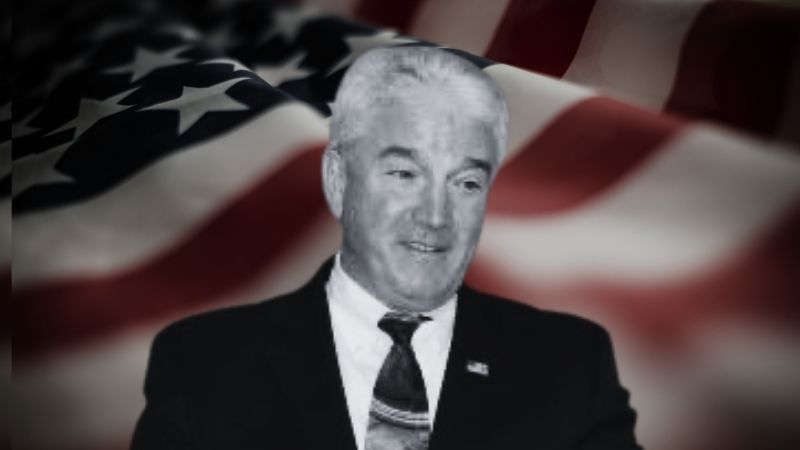
James Flyzik, a longtime federal technology leader whose career spanned the U.S. Secret Service, Department of the Treasury, and the White House Office of Homeland Security, has died at the age of 72.
Flyzik passed away peacefully at his home in Myrtle Beach, South Carolina, on June 4, 2026, with his wife and daughter by his side.
Over a federal career that lasted more than 27 years, Flyzik played a significant role in shaping government information technology and cybersecurity initiatives during a period of rapid digital transformation across federal agencies. His work placed him at the center of efforts to modernize government technology, strengthen critical infrastructure protection, and improve interagency coordination.
Flyzik served as Senior Advisor to former Pennsylvania Governor Tom Ridge in the White House Office of Homeland Security, where he provided guidance on national strategy and information management issues supporting homeland security priorities. He was also a member of the President’s Critical Infrastructure Protection Board and served as Vice Chair of the Federal CIO Council from 1998 to 2002, helping oversee government-wide information technology initiatives.
Before joining the White House Office of Homeland Security, Flyzik served as Deputy Assistant Secretary for Information Systems and Chief Information Officer for the Department of the Treasury. In that role, he provided oversight and strategic direction for more than $3 billion in annual information technology and infrastructure programs across Treasury and its 14 bureaus. He later served as Acting Assistant Secretary for Management, overseeing internal management functions across the department.
Earlier in his career, Flyzik spent 18 years with the U.S. Secret Service, where he held several technology leadership positions, including Chief of the Communications and ADP Operations Division. His work supported telecommunications and operational systems critical to the agency’s protective and investigative missions.
Beyond government service, Flyzik remained active in education and consulting. He co-owned The Flyzik Group with his wife and taught graduate-level cybersecurity courses at the University of Maryland. In 1998, he received the university’s Stanley J. Drazek Excellence in Teaching Award.
Throughout his career, Flyzik received numerous honors recognizing his contributions to government technology and public service. Among them were the Eagle Award as Government Information Technology Executive of the Year, the AFFIRM Executive of the Year Award, the Distinguished Rank Executive Award presented by President Bill Clinton, and the Federal CIO Council’s Azimuth Award for Government Executive of the Year. In 2007, he was inducted into the CIO Magazine Hall of Fame, becoming the first career government chief information officer to receive the distinction.
Born in Lansdale, Pennsylvania, Flyzik earned a degree in Business Administration with a minor in Computer Science and later received an MBA with a concentration in Information Systems Management from the University of Maryland.