

As artificial intelligence continues to transform economies, militaries, and societies, a new scholarly chapter argues that the future of AI may depend less on who builds the most advanced systems and more on who shapes the rules governing them.
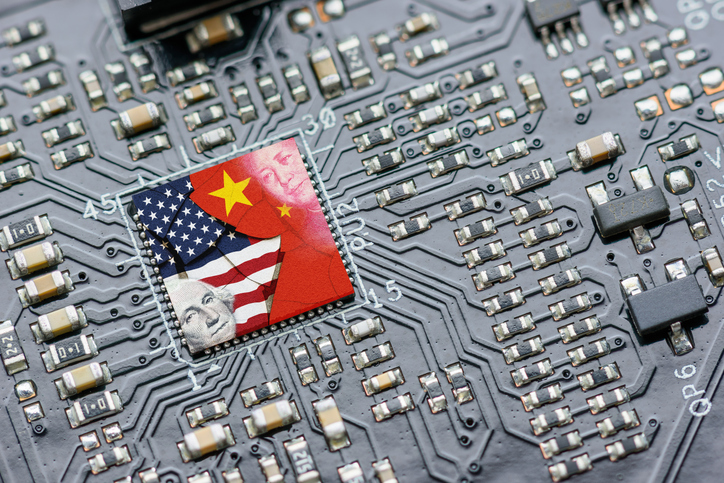
In Chapter 12 of the Handbook on the Global Governance of Artificial Intelligence, authors Lance Y. Hunter, HSToday author Craig Albert, and Rose Antilla examine how the United States and China are approaching AI governance at home and abroad—and what those competing approaches could mean for the future of global AI governance.
The chapter, titled The United States, China, and Global AI Governance, explores an area that has received less attention than the ongoing race to develop increasingly powerful AI systems. While much of the public discussion surrounding AI has focused on economic competitiveness, technological leadership, and military applications, the authors argue that governance frameworks may ultimately prove just as consequential.
The analysis compares the domestic and international AI policies pursued by both Washington and Beijing, assessing how each country’s regulatory philosophy, strategic priorities, and international engagement efforts could influence emerging global standards. The chapter also evaluates where opportunities for cooperation may exist and where competing interests could drive friction between the world’s two largest powers.
According to the authors, understanding the governance dimension of AI is becoming increasingly important as governments, international organizations, and private-sector stakeholders grapple with questions surrounding transparency, accountability, safety, security, and the responsible deployment of advanced AI systems.
The chapter suggests that the evolution of global AI governance could follow multiple paths. In some areas, the United States and China may find common ground on issues such as technical standards, risk management, and international coordination. In others, differing political systems, strategic interests, and regulatory models could contribute to fragmentation, creating competing governance frameworks that shape how AI is developed and deployed around the world.
As AI becomes more deeply embedded in critical infrastructure, national security, economic systems, and daily life, the authors argue that the debate over governance will increasingly influence the technology’s long-term trajectory.
The chapter is part of the broader Handbook on the Global Governance of Artificial Intelligence, which examines the challenges and opportunities associated with governing AI in an increasingly interconnected world.
Readers interested in accessing the full handbook can do so through their academic institution or by purchasing access through the publisher.