
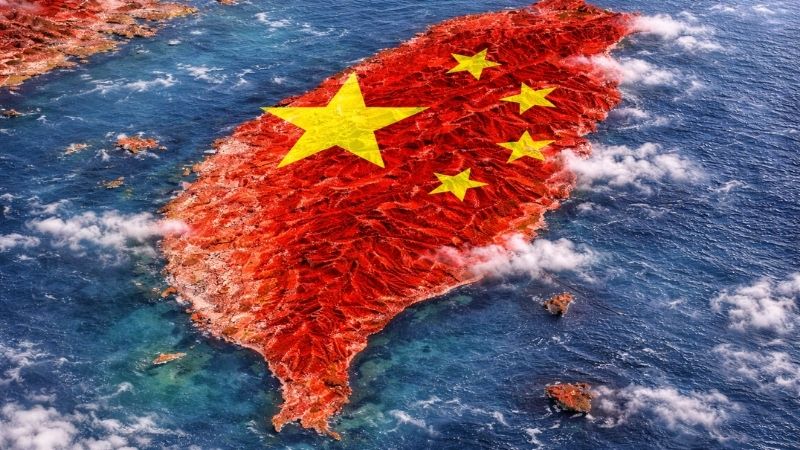
What happens the day after a potential seizure of Taiwan? A new research paper from the Irregular Warfare Center explores that question, arguing that the groundwork for occupation would likely begin long before any military action.
The report, “China’s Way of Occupation: Implications for Taiwan,” authored by Jan K. Gleiman with Jocelyn Garcia, Troy Acevedo, and Lee Thurman, examines how the People’s Republic of China (PRC) has historically consolidated control over contested territories. Using structured case studies of Tibet, Xinjiang, and Hong Kong, the authors identify patterns that together form what they describe as a consistent “PRC way of occupation.”
Rather than focusing solely on invasion scenarios, the study analyzes the long-term methods used to establish control, stabilize authority, and integrate territories politically and socially over time. According to the research, these strategies often begin with shaping operations designed to influence the political and psychological environment well before any formal takeover occurs.
The report identifies several recurring elements in this approach. These include framing restrictive policies as lawful governance measures, embedding surveillance technologies into everyday life, and manipulating political space in ways that divide or weaken opposition. Over time, the study suggests, these mechanisms are paired with efforts to influence cultural identity and social norms across generations.
Another key factor highlighted in the research is the role of time as a strategic tool, allowing authorities to gradually consolidate power while outlasting resistance and reshaping institutions.
At the same time, the authors note that Taiwan presents a far more complex environment than previous cases. Its democratic system, advanced economy, and deep global connections could complicate attempts to apply similar models of governance.
The study concludes that the competition over Taiwan’s future is already unfolding in political, informational, and strategic arenas. It also emphasizes the importance of planning for resilience and resistance before a crisis emerges, offering insights intended for policymakers, defense planners, and security leaders focused on stability in the Indo-Pacific region.
Read the full research paper here.
(AI was used in part to facilitate this article.)