
Part I of this series established that maritime chokepoints, from the Strait of Hormuz to the Bab el-Mandeb and the Strait of Malacca, concentrate global trade and energy into passages where limited disruption produces outsized strategic consequences. The same logic operates with equal force on land.
Land Corridors
Land chokepoints attract less attention than maritime ones, but operate on the same logic. Their disruption is typically harder to engineer from outside, but when it occurs the consequences for regional stability are immediate and often irreversible on the timescales that matter.
The Siliguri Corridor, seventeen miles wide at its narrowest, connects India’s northeastern states to the rest of the country. Known colloquially as the Chicken’s Neck, it is flanked by Bangladesh to the south, Nepal to the north, Bhutan further north still and China’s Chumbi Valley pressing toward it from the Tibetan Plateau. Chinese infrastructure development in the Chumbi Valley has elevated the corridor’s salience considerably in recent years. Its severance, even temporarily, would isolate eight Indian states with a combined population of over fifty million people. This is among the most acute single-point vulnerabilities in South Asian security.
The Suwałki Gap, roughly sixty miles of land between Poland and Lithuania, flanked by Russia’s Kaliningrad exclave to the west and Belarus to the east, is NATO’s equivalent. Its closure would sever the Baltic states from the Alliance entirely, making land reinforcement extraordinarily difficult. NATO’s Enhanced Forward Presence, and the more recent decisions to increase permanent basing in the region, reflect a direct reckoning with what that geography means in practice.
The Khyber Pass has shaped the strategic geometry of South and Central Asia for millennia. Every external power that has attempted to project force into the Afghan interior has had to reckon with it. Control of the pass and its surrounding terrain defines what is possible for any actor seeking influence over Afghanistan’s connectivity with the wider region. The lesson has been taught repeatedly; it has not always been learned.
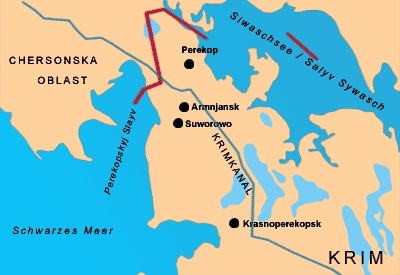
Other land chokepoints include the Perekop Isthmus linking Crimea to mainland Ukraine, the corridors of the South Caucasus between Armenia and Azerbaijan, the Fulda Gap that once anchored NATO’s armoured defence of West Germany. Each represent the same principle: strategic consequence concentrated in confined geographic space.
The Levelling Effect
The most consequential implication of chokepoints, on land as at sea, is what they do to the relationship between stronger and weaker actors. By compressing space, they reduce the utility of advanced systems that depend on manoeuvre, standoff range and logistical depth. In their place, simpler tools become effective: mines, short-range missiles, improvised obstacles, unmanned systems. The cost of forcing passage rises while the cost of denial stays relatively low. That asymmetry is the foundation of anti-access/area denial (A2/AD) strategy.
For weaker actors, a chokepoint is not a limitation but is an opportunity. The objective is not to defeat a stronger adversary in open battle but to make entry costly, operations uncertain and escalation unattractive. Iran has developed this logic into a coherent strategic posture across the Persian Gulf. Fast-attack craft, anti-ship missiles, mines and proxies operating across the Hormuz and Bab el-Mandeb axis, constitute a credible denial capability that shapes the behaviour of far more capable naval forces. Not by defeating them but by making the price of intervention a live political question in Washington, Riyadh and allied capitals.
China’s A2/AD architecture in the Western Pacific operates on the same principle at a qualitatively different scale. Anti-ship ballistic missiles, submarine forces and island-based air defence are designed to make the approaches to the Chinese coast, including the Taiwan Strait and the First Island Chain, progressively more dangerous for any intervening force.
Ukraine’s use of naval drones and anti-ship missiles in the Black Sea since 2022 may be the most instructive contemporary case. A state with no meaningful surface fleet effectively denied Russia freedom of action in waters it had long treated as a strategic preserve. The Black Sea’s confined geometry – closed sea with exits only through the Turkish Straits – amplified every asymmetric tactic. Russia’s Black Sea Fleet lost its flagship and was eventually pushed from its main base at Sevastopol. Geography was the force-multiplier that no procurement budget could substitute for.
Technological superiority does not confer operational freedom. It confers options — and chokepoints constrain options.
Hybrid Warfare and the Uses of Ambiguity
The economic significance, high visibility and constrained geography of chokepoints make them natural environments for hybrid action with the deliberate combination of military and non-military pressure below the threshold of open conflict.
Disruption in a chokepoint can be intermittent, deniable and difficult to attribute with the certainty that justifies a formal response. GPS jamming in the Baltic approaches, ambiguous incidents in the Gulf, detention of commercial vessels on technical pretexts – none of these individually triggers collective retaliation. But each individually imposes costs on shipping companies, on insurers, on governments that must explain to allied partners why the passage remains unsafe.
The target is not solely the adversary’s military establishment but also the commercial sector, whose risk calculus differs from government’s; the public, whose tolerance for economic disruption has political consequences; and coalition partners, each with their own thresholds and interests. Hybrid action in chokepoints exploits all three simultaneously.
The objective in such settings is strategic conditioning: shaping behaviour, influencing decision-making, and imposing cumulative costs over time rather than resolving anything in a single engagement. Information operations accompany physical disruption, amplifying uncertainty and magnifying the perceived costs of resistance. The chokepoint becomes not merely a geographic feature but a persistent instrument of pressure.
What hybrid warfare in physical chokepoints has demonstrated with increasing clarity since 2022 is that the same logic of calibrated, deniable disruption applies with even greater force to a domain that is largely invisible, poorly defended and almost entirely taken for granted.
This is the second article in a three-part series. Part I is available here. Part III — The New Chokepoints — examines digital infrastructure, undersea cables, data centres, and what states are beginning to do about a vulnerability most decision-makers have yet to fully reckon with.