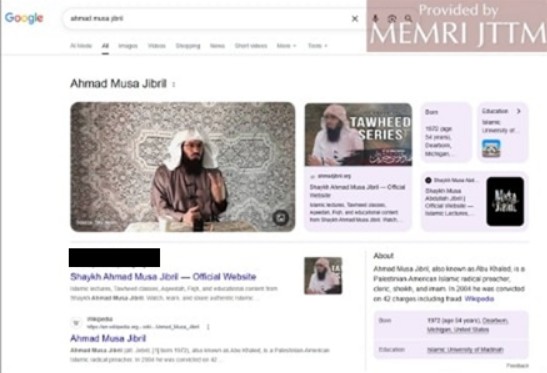

The Middle East Media Research Institute (MEMRI) Cyber & Jihad Lab published a new report on August 12, 2026, about an English-language media outlet thanking a “dear brother” for his SEO work boosting the website of Michigan-based pro-ISIS preacher Ahmad Musa Jibril.
Ahmad Musa Jibril, the Salafi cleric from Dearborn, Michigan, who some followers claim is sympathetic to the Islamic State, has a formidable online presence. This is all the more notable because following his release from prison in 2012, after serving an eight-year sentence, he was banned from using the Internet for three years because of a probation violation; since the ban ended, he has disseminated no new content online.
Jibril, who preaches in English, is extremely popular among Western jihadis and ISIS supporters and militants, and he appears to have gained some traction in Africa as well. When Jibril’s official Twitter and Facebook accounts were still active, he was found to be the most popular cleric amongst Western jihadis.
On August 8, 2026, an English-language media outlet associated with Michigan-based pro-Islamic State (ISIS) preacher Ahmad Musa Jibril, published a Telegram post thanking a “dear brother who’s been working tirelessly in the background” for helping with the search engine optimization (SEO) of Jibril’s official website. PGL credited the man’s efforts with pushing the website to second place in Google search results for ”Ahmad Musa Jibril,” immediately below the cleric’s Wikipedia entry.
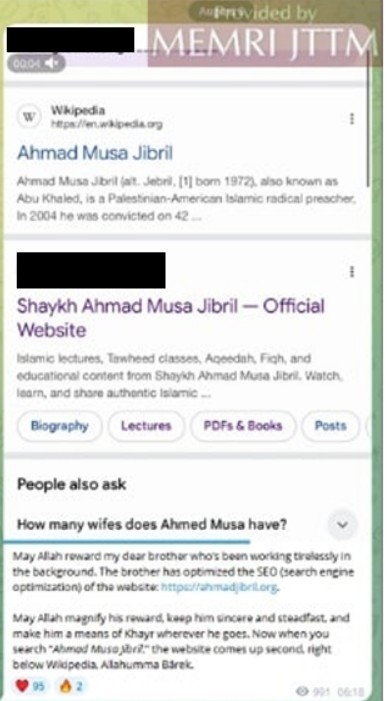
The post included a ten-second video clip demonstrating how a Google search for Jibril’s name displayed his official website.
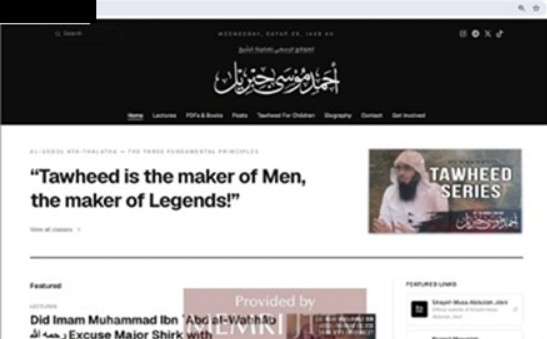
Ahmad Musa Jibril’s official website
As of August 12, the site appears as the first result in a Google search for Jibril’s name, followed by the Wikipedia article and reports on Jibril by counterterrorism researchers. Other websites promoting Jibril’s preaching also appear on the first page of results, as do the cleric’s official Instagram account and YouTube videos of some of his lectures.