
Syria, under the Assad regime, was an important conduit for arms from Iran to Hezbollah. Support of Hezbollah for the Syrian Regime has caused Syrians to view Iran as a major threat. Syrian efforts to deal with Iran-backed groups and smuggling operations along the Lebanese border have put significant strain on Hezbollah, whose position has weakened after the protected conflict with Israel. The US should, in concordance with the December 2025 NSS, facilitate increased cooperation between Israel and Syria with the goal of empowering Syria to take the lead on enforcement within its territory.
Iran and Syria
Assadist Syria was an important part of the Iranian Axis of Resistance, primarily for geographic reasons. The Assad regime facilitated the transport of arms, manpower, and other materials between Iran and Lebanon. As a result, no matter how successfully Israel was able to degrade Hezbollah’s capabilities, so long as the Assad regime remained in power, the group could spring back and reform to pose a continued threat. This status quo was a key component of Iran’s strategy. The strategic depth Hezbollah offers Iran is contingent on a Syria that allows the group’s continued rearmament.
As a result, Iran-backed militias and Hezbollah played active roles in supporting the Assad regime during the civil war. Hezbollah and aligned militias shifted the momentum of the early Syrian revolutions against the rebels, significantly extending the conflict. These groups, along with regime forces, participated in the brutal repression of enemies of the regime and broader communities considered disloyal, actions that constituted war crimes.
As a result of Hezbollah’s support for their long-time oppressor, the Syrian public has widespread animosity towards Iran-backed groups in general and Hezbollah specifically. Al Sharaa has shown himself to be a highly pragmatic leader, seeking to maintain relations with Russia despite the fact that the nation was a longtime supporter of the regime and currently hosts the exiled Bashar al-Assad.
Iran, however, is not Russia. Al Sharaa only stands to lose from Iranian operations within Syria, which would invite Israeli strikes and US outrage. As Iran becomes increasingly weak and isolated, Syria benefits from sharing a common enemy with the rest of the region. Syrian actions against Iran demonstrate security capabilities that boost both its domestic legitimacy and its regional standing.
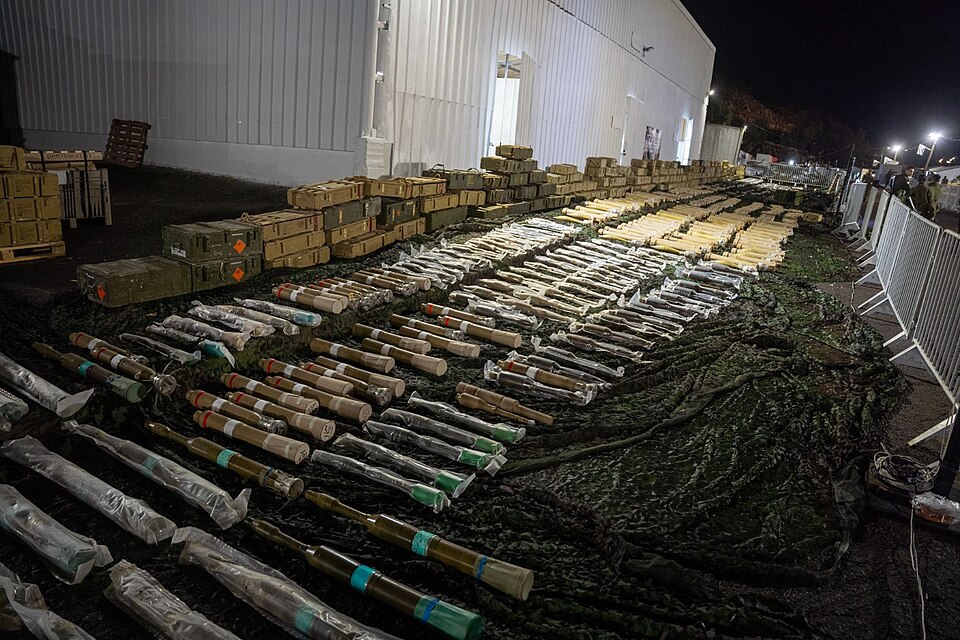
For these reasons, the new Syrian government wasted no time cracking down on smuggling operations along the Lebanese border. The government quickly started identifying and shutting down smuggling routes, seizing large quantities of weapons in the process. As the new Syrian government has strengthened its authority and capacity, these operations have continued to increase. Although border enforcement hasn’t been perfect, it has significantly reduced Iran’s ability to rearm Hezbollah.
It is important to note that pro-Iran groups operating along the Lebanon border are often linked to, or are themselves, Assadist groups involved in insurgency against the new Syrian government. For Iran, supporting pro-Iranian opposition to the new government and strengthening supply lines to Hezbollah are closely connected. Conversely, for the Syrian government, suppressing remnants of the Assadist regime is directly related to preventing cross-border smuggling.
Recent Developments
Hezbollah is the key part of Iran’s regional plans. The group is the most loyal and capable of Iran’s proxies. Its location allows Iran to threaten Israel while using Lebanon as leverage for Israeli responses. Hezbollah has also embedded itself in Lebanese society and government, blending into military, social, and political spheres. Although most of Lebanon’s population is even more resentful of Hezbollah than Syrians for using their country as a sacrifice for Iranian interests, it still maintains a strong base of supporters in the Shiite north and receives enough money and weapons from Iran to pose a threat to the Lebanese government.
The nearly constant strikes on Hezbollah targets by Israel since the October 7 attacks in 2023 and the Sixth Israeli Invasion of Lebanon in 2024 have severely weakened Hezbollah’s military capabilities. The group, which once operated as a significant conventional military force and a ‘state within a state,’ has been reduced to an embattled, non-conventional guerrilla organization. With the threat posed by Hezbollah greatly diminished, Israel has been encouraged to directly attack Iran in both the Twelve-Day War in 2025 and the ongoing conflict alongside the US.
The current weakened state of Hezbollah is made possible by the new Syrian government’s commitment to stopping cross-border smuggling. No matter how successful Israel is in destroying Hezbollah’s weapons, Iran would simply resupply the group as it had for decades if the Assad regime had not fallen. The current situation presents a rare chance to defeat the usually resilient Hezbollah. In this conflict, al-Sharaa has strengthened the Syrian military along the Lebanese border to further crack down on Iran-linked smuggling at a crucial moment for Hezbollah. More recently, al-Sharaa has announced support for Hezbollah’s disarmament. Hezbollah, for its part, has shelled Syrian positions across the border.
Policy Recommendations
Syria has proven to be both motivated and capable of undermining Iran-backed groups within its territory. Iran and its proxies pose a threat to Syrian stability both inside and outside the country. A self-motivated partner is a trustworthy one.
Iran and its proxies are currently unable to dislodge the new Syrian Government. However, Israel undoubtedly has the capability to destabilize Syria if it chooses to do so. So far, Israel has seen the new Syrian Government as a threat, targeting Syria with air strikes, occupying border regions, and fomenting separatism among the Druze minority. This approach only serves to strengthen Iran, which relies on Israel to do the heavy lifting of destabilizing the new government to increase its influence in Syria. The rise of a pragmatic, security-focused administration in Syria was a stroke of good luck for Israel and the region as a whole. It is highly unlikely that a more stable status quo will emerge if the current Syrian Government collapses.
The 2026 US-backed Paris Negotiations between Israel and Syria offer a good starting point. More effort is necessary. Israel must shift from seeing Damascus as a threat to recognizing it as an emerging security partner. Following the integration agreements between the SDF and the new Syrian Government, Israel holds the key to the final phase of Syrian reunification. Israel needs to facilitate an integration deal between the Suwayda and the new Government, just as the United States did with the SDF. Along with that deal, Israel must withdraw its forces from Syrian territory and allow the Syrian government to take control of its side of the border.
The December 2025 NSS indicated that the United States would aim to empower allies to “assume primary responsibility for their regions.” Syria is a prime location to implement this doctrine. The US and Israel could assist in training the new Syrian Government in border enforcement while leaving most of the daily enforcement duties to the Syrians. This approach would strengthen regional cohesion, enhance Syrian stability, and improve border security while reducing the US’s direct presence in Syria. However, this strategy would require Israeli buy-in, which the US would need to promote.
Including Syria in the regional anti-Iran framework would put pressure on Iran while allowing US and Israeli attention to be diverted elsewhere. Syria considers Iran a threat and is motivated to counter Iran-backed groups within its borders. With US leadership and Israeli support, the new Syrian government could play a crucial role in permanently dismantling the Iranian axis of resistance and fostering a more stable and peaceful region.