

The House of Representatives voted Thursday, April 30, to reopen the majority of the Department of Homeland Security (DHS), ending the longest agency shutdown in U.S. history at 76 days. President Trump swiftly signed the bipartisan legislation shortly after the measure won final approval through a voice vote in the House.
The bill provides funding for 20 of DHS’s 22 agencies, including the Transportation Security Administration (TSA), Federal Emergency Management Agency (FEMA), U.S. Coast Guard, U.S. Secret Service, and the Cybersecurity and Infrastructure Security Agency (CISA), through the end of the fiscal year on September 30.
However, Immigration and Customs Enforcement (ICE) and Customs and Border Protection (CBP) – the only two DHS agencies excluded from the measure – remain without appropriations as House Republicans work to enact tens of billions of dollars in funding for these agencies over the next three years through a separate budget reconciliation process.

The Senate had passed the partial DHS funding bill weeks ago in late March, but House Republicans delayed approval while seeking assurances that ICE would eventually receive funding. The advancement of the reconciliation process, which began when the Senate adopted a budget resolution April 23, provided that guarantee. The reconciliation process allows Republicans to bypass the Senate’s 60-vote filibuster requirement and pass ICE and CBP funding with a simple majority. Democrats have refused to vote for funding these agencies without restrictions on immigration enforcement operations.
With passage of the partial funding bill, most DHS operations can now resume normal appropriations while ICE and CBP continue operating through OBBBA reconciliation funds as Congress works toward a long-term funding solution expected by early June.
DHS Shutdown: Secretary Warns of Final Paycheck As Correspondents’ Dinner Attack Renews Calls For Funding Deal
April 26, 2026 at 12:40 PM
An attack during the White House Correspondents’ Dinner Saturday night, April 26, renewed calls for lawmakers to pass funding for the Department of Homeland Security (DHS), now in its 73rd day without appropriations since the shutdown began February 14.
“I hope this is a wake-up call to Congress,” said Acting Attorney General Todd Blanche. “I hope that this is the wake-up call that the games that they’ve been playing, really with the lives of the men and women protecting them, should end. And I do hope that they get to work now and get a deal done.”
The Secret Service, charged with guarding the president, administration officials, and foreign dignitaries, has been part of DHS since being transferred from the Treasury Department in 2003.
The attack came as Senate Republicans advanced a budget resolution early Thursday morning, April 23, in a 50-48 vote, moving forward with a plan to allocate up to $140 billion to Immigration and Customs Enforcement (ICE) and Customs and Border Protection (CBP) through the budget reconciliation process. All Democrats opposed the measure, along with Republican Sens. Lisa Murkowski (Alaska) and Rand Paul (Kentucky).
“We have a multi-step process ahead of us, but at the end Republicans will have helped ensure that America’s borders are secure and prevented Democrats from defunding these important agencies,” Senate Majority Leader John Thune (R-SD) said.
The budget resolution must now pass the House before committees can draft legislation to unlock up to $140 billion for ICE and CBP. Republicans are using reconciliation to bypass a Democratic filibuster over immigration enforcement restrictions.
Thune said passage of the budget resolution demonstrates he has the votes for a reconciliation package next month, which should clear the way for the House to approve the Senate’s bipartisan bill funding TSA, Coast Guard, FEMA, and other DHS components passed in late March.
However, Johnson, facing pressure from the conservative House Freedom Caucus, has said he won’t move the bipartisan bill until after the reconciliation package passes, a delay Senate Republicans warn could cause tens of thousands of federal workers to miss May paychecks.
The standoff has created urgency around DHS’s ability to continue paying workers. DHS Secretary Markwayne Mullin warned Tuesday, April 21, that the department has access to enough money to pay workers for only one more pay period under President Trump’s emergency order directing payment of essential workers despite the funding shutdown.
“I’ve got one payroll left and there is no more emergency funds, so the president can’t do another executive order because there’s no more money there,” Mullin said.
President Trump signed the emergency order earlier in April directing DHS to use available funds from the One Big Beautiful Bill Act to pay all DHS employees despite the appropriations lapse. However, those funds are nearing depletion.
The reconciliation bill, if passed, would fund only ICE and CBP, leaving other DHS components – including TSA, FEMA, Coast Guard, CISA, and Secret Service – dependent on the separate bipartisan funding measure currently stalled in the House.
DHS Shutdown: Longest in U.S. History as Agencies Warn of ‘Disintegrating’ Operations
April 19, 2026, at 8:40 PM
The DHS shutdown reached 65 days Sunday, April 19, and has become the longest government shutdown in U.S. history – surpassing the 43-day shutdown in 2025 – as House leadership did not schedule any DHS funding votes for Friday and congressional leaders remained deadlocked over how to restore appropriations.
White House budget director Russell Vought warned senators Wednesday, April 15, that the department “is disintegrating” due to the funding crisis. “As of right now, the Department of Homeland Security is disintegrating because the secretary and I are having to figure out ways to temporarily fund people’s paychecks so we don’t have people quit and embark on new careers,” Vought told the Senate Budget Committee.
DHS officials testified before multiple House committees Thursday, April 16, warning of mounting operational consequences from the two-month funding lapse, including contract backlogs, unpaid utility bills threatening facility closures, and degraded capacity to counter national security threats. Multiple DHS component heads detailed specific operational impacts during Thursday’s appropriations hearings:
Coast Guard: Adm. Kevin Lunday, commandant of the Coast Guard, told the House Appropriations Homeland Security Subcommittee that the service faces “over 5,000 unpaid utility bills, over a hundred providers that have threatened to cut off electricity and water to our Coast Guard stations and air stations.” Lunday also noted “a growing backlog of 18,000 Merchant Mariner credentials that are not processed at a time when the U.S. is trying to rebuild our maritime might.”
CISA: Nick Andersen, director of the Cybersecurity and Infrastructure Security Agency, testified that just 40 percent of CISA’s staff had been working through much of the shutdown until DHS Secretary Markwayne Mullin recalled furloughed staff April 10. When asked about the agency’s capacity to counter nation-state cyber threats amid the ongoing Iran conflict, Andersen replied: “Given our current situation, I’ll be honest with you and tell you it is more limited than I would like.”
“A lot of those preparatory activities within the environment, a lot of the outreach that we would typically be able to do, that’s simply not possible or legally allowed during the period of a shutdown,” Andersen said.
CBP: Customs and Border Protection Commissioner Rodney Scott described how the shutdown has affected service contracts. “Aircraft, patrol boats, patrol vehicles that need service, they’re being parked,” Scott said. “Border surveillance equipment that requires maintenance is offline until funding is appropriated. Our confidential human sources are not being paid and we’re at risk of losing some of our intelligence tools that help us secure the border.”
ICE: Acting Director Todd Lyons, who announced plans to retire effective May 31, pushed back against the perception that ICE is fully funded through the One Big Beautiful Bill Act. “There’s misinformation that with the big beautiful bill, ICE is completely funded, but they’re specifically through regulation that can only be used for certain tasks. It doesn’t involve Homeland Security Investigations,” Lyons testified.

He detailed specific operational gaps: “Everything from having … gas in the vehicles to deploying agents TDY [temporary duty], that’s an impact because we just don’t have that funding. On top of that, our critical intelligence network a lot is contract based and we’re just not able to pay for those contracts right now. Our victim advocates, victim specialists, we just don’t have that.”
Lyons emphasized that while One Big Beautiful Bill Act (OBBBA) funds cover detention and removal operations, they don’t support “the critical things that actually protect Americans every day, and one of the most vital things we do is child exploitation” investigations.
TSA: Ha McNeil, acting TSA administrator, stated in written testimony that “the government shutdowns in FY 2026 have resulted in nearly $1 billion in delayed paychecks. Due to our national security mission, 95 percent of our workforce was required to work without pay during the multiple shutdowns, causing great strain and financial hardship.”
TSA workers are currently receiving paychecks due to President Trump’s March 27 emergency order directing DHS to use funds from the OBBBA to pay personnel. However, uncertainty remains about how long those payments can continue without congressional appropriations.
Secret Service: Director Sean Curran stated in written testimony: “As the longest shutdown in history continues, the Secret Service implores the House to pass the Senate DHS funding bill and work expeditiously to enact a second reconciliation measure by June 1st to provide sustained funding to ICE and Border Patrol.”
DHS Shutdown Day 58: Secretary Mullin Orders All Staff Back to Work Despite No Congressional Deal
April 12, 2026, at 8:04 AM
On Friday, April 10, Department of Homeland Security (DHS) Secretary Markwayne Mullin ordered all furloughed DHS staff to report to their next scheduled shift, despite the ongoing partial government shutdown having reached its 56th day.
In an official message sent to DHS employees late Friday afternoon, staff were told that “all DHS employees, excepted and non-excepted/non-exempt” are to be returned “to a work and paid status, effective on your next regularly scheduled duty day.”
“Employees who are unable to report for duty on their next scheduled workday must request leave and receive approval from their supervisors,” the message stated. “Employees that do not follow this process may be subject to administrative or disciplinary action.”
The recall follows President Trump’s executive orders directing DHS to use funds from the One Big Beautiful Bill Act (OBBBA) to pay civilian employees, including furloughed staff, who had not received paychecks through the shutdown. Trump signed an initial order March 27 specifically for Transportation security Administration (TSA) workers, then issued a second directive a week later extending the same provision to all DHS employees required to work without pay, including those in the Coast Guard, FEMA, and CISA.
However, DHS warned employees that April 10th’s paycheck could be their last until Congress acts to fund the department. According to the memo, DHS employees will receive back pay this week for all pay periods during the lapse through April 4, but the department cautioned employees not to expect additional compensation for hours worked since that date until Congress restores funding.
“Any additional compensation owed to you will be paid once DHS funding is restored,” the memo stated, adding, “At this time, do not submit timecards for pay period 7 until further guidance is provided.”
\Homeland Security Secretary Mullin added: “DHS is using available funds to ensure employees are paid. Should the department exhaust currently available funds before an FY 2026 appropriation is enacted, you will receive a new notification of your work status at that time.”
The national callout rate among TSA Transportation Security Officers peaked at 12.35 percent on March 27, with some major airports reporting nearly half their workforce absent at the height of the shutdown disruption. That TSA workforce crisis, which helped drive Trump’s initial emergency order, showed signs of easing following the orders.
As the DHS shutdown approaches two months, congressional Republicans and President Trump are pursuing a new legislative strategy: using budget reconciliation to fund portions of DHS. The reconciliation process, which is inoculated from filibusters, would allow Republicans to pass funding with a simple majority rather than the 60 votes needed to overcome Democratic opposition in the Senate.
Congressional Republicans intend to include only funding for Immigation and Customs Enforcement (ICE) and Customs and Border Protection (CBP) in the reconciliation package, excluding disaster aid, farm assistance, or other provisions. The reported goal is to complete the process by June 1, months after the latest DHS funding lapse began.
However, the reconciliation approach requires multiple procedural steps. The House and Senate must first approve a shell budget resolution to make the filibuster-proof reconciliation tool available. Republicans undertook a similar process last winter and spring that consumed months before finally approving the OBBBA via reconciliation.
The DHS shutdown, which began February 14, is part of a broader fiscal year 2026 funding crisis that has plagued Congress since early 2025. The crisis spawned a record-breaking 43-day government-wide shutdown last fall, another partial government shutdown last winter, and the current DHS stalemate.
Congress has been on a two-week recess with the Senate set to reconvene Monday, April 13, at 3 p.m. and the House on Tuesday, April 14, at noon.
DHS Shutdown Day 42: House Rejects Senate Bill as Trump Orders TSA Pay
March 27, 2026 at 8:30 PM
The 42-day Department of Homeland Security (DHS) shutdown appeared likely to continue despite a Senate breakthrough early Friday, March 27, after House Speaker Mike Johnson rejected the Senate-approved bill and said the House would vote on its own 60-day stopgap plan that includes full DHS funding.
The Senate voted by voice vote early Friday morning, just after 2 a.m., to fund major portions of DHS, including TSA, Coast Guard, FEMA, CISA, and customs officers at border checkpoints. However, the measure excluded additional funding for Immigration and Customs Enforcement (ICE) and Border Patrol, and did not include Democratic demands to restrict immigration enforcement tactics.

Johnson said the House would vote “as soon as possible” on its own plan after the Senate-approved legislation faced major hurdles in the lower chamber and was set to reconvene at 9:30 p.m. Friday evening. House conservatives indicated the Senate bill does not have their support without funding for immigration enforcement and voter ID requirements.
The House Republican plan would extend funding for the entire department, including ICE, at current levels for until May 22. However, if passed, that would punt the issue back to the Senate, which has already left for a two-week Easter recess. Senate Minority Leader Chuck Schumer (D-NY) said the House plan would be “dead on arrival.”
As the legislative impasse continued, President Trump signed an emergency order Friday to reroute federal funds to pay TSA workers by declaring an “unprecedented emergency situation.” The White House said it will “use funds that have a reasonable and logical nexus to TSA operations to provide TSA employees with the compensation and benefits that would have accrued to them if not for the Democrat-led DHS shutdown,” according to text of the decree.
Homeland Security Secretary Markwayne Mullin began the process of paying TSA workers as soon as Trump signed the memo. Unlike in past shutdowns, TSA employees should begin receiving paychecks as early as March 30, instead of backpay after the crisis eventually resolves.
The executive action came as TSA operations reached a critical breaking point. Data released by the agency Thursday showed a record 11.83 percent callout rate – the highest reported during the shutdown – indicating more than 3,450 TSA workers called out from work nationwide. More than 44 percent of TSA employees at Houston’s George Bush Intercontinational Airport and 40 percent of TSA workers at Hartsfield-Jackson Atlanta International Airport did not show up to work Thursday, March 27.
Ha Nguyen McNeil, the TSA acting administrator, told lawmakers at a hearing Wednesday, March 26, that absences had reached as high as 40 percent at some airports and more than 480 TSA officers quit during the shutdown.
“We are really concerned about our security posture and what the long term impacts of this shutdown is going to have on the workforce and our ability to carry out this mission,” McNeil said.
Trump announced his decision Thursday on social media, saying he wanted to quickly stop the “Chaos at the Airports.” The president characterized the situation as a “National Crisis” and said Democrats were “refusing to fund Immigration Enforcement unless the Republicans agree to their Open Border Policies, which will never, ever happen again.”
“I am going to sign an Order instructing the Secretary of Homeland Security, Markwayne Mullin, to immediately pay our TSA Agents in order to address this Emergency Situation,” Trump wrote.
ICE and Border Patrol have continued functioning thanks to approximately $75 billion provided by the One Big Beautiful Bill Act, which Republicans passed last summer. With the Senate on recess and the House and Senate pursuing competing approaches, the broader DHS funding impasse – which began February 14 – appeared likely to extend beyond the Easter break.
DHS Shutdown: Senate Fails Fifth Vote, Democrats Push to Fund TSA Separately
March 20, 2026, at 8:00 PM
The Senate rejected a fifth attempt to advance Department of Homeland Security (DHS) funding legislation Friday, March 20, as negotiators prepared for a second meeting in two days, with Democrats proposing to fund the Transportation Security Administration (TSA) separately from immigration enforcement agencies.
More than a month into the DHS shutdown, a cloture motion to move forward with the full DHS appropriations bill was rejected with a vote of 47-37, falling well short of the 60 votes needed. Sen. John Fetterman (D-PA) was the only Democrat to vote yes. Sixteen senators from both parties missed the Friday vote.
Senate Minority Leader Chuck Schumer (D-NY) offered a motion Thursday, March 19, to invoke cloture on Senate Rule XXV to set up Saturday’s vote on funding TSA separately from Immigration and Customs Enforcement (ICE) and Customs and Border Protection (CBP). “If you want to open up TSA, vote yes tomorrow. Every previous vote offered by the Republicans has tied TSA funding to also continue funding for ICE without any reform of ICE,” he said.
The Democratic leader said negotiators are unlikely to reach a deal to fund the entire Department of Homeland Security anytime soon. As the shutdown completed its 35th day, top Senate appropriators and other negotiators were scheduled to meet Friday evening for the second time in two days. White House border czar Tom Homan and the White House’s legislative affairs chief, James Braid, were set to represent the administration.
A group of senators met with Homan on Thursday, March 19, in a session lasting approximately one hour and 15 minutes, the first direct member-level dialogue in six weeks. The meeting occurred one day after Sen. Markwayne Mullin (R-OK), President Trump’s nominee to replace Kristi Noem as DHS secretary, testified before the Senate. During his confirmation hearing Wednesday, March 18, Mullin pledged to require ICE agents to obtain judicial warrants to enter homes and businesses, rather than relying on internally approved administrative warrants.
“We have to realize that we’re putting our homeland and the peace of mind at risk for the American people,” Mullin said of the shutdown. “We have 280,000 employees right now that are on day 30 without pay, and they’re still showing up every single day to do their job.” The Senate Homeland Security Committee voted 8-7 to send Sen. Mullin’s nomination to the Senate for a final vote.
Senate Majority Leader John Thune (R-SD) threatened Thursday to cancel the Senate’s upcoming recess – scheduled to begin next Friday for one week – if no agreement is reached. “It needs to get resolved, you know, by the end of next week,” Thune said. “I can’t see us taking a break if the government’s still shut down.”
One Month of DHS Shutdown: 60,000 TSA Workers Go Without Pay as Senate Vote Fails Again
March 14, 2026, at 6:15 AM
The Department of Homeland Security (DHS) shutdown reached one month Saturday, March 14, with no resolution in sight, as Transportation Security Administration (TSA) workers missed their first full paychecks and Senate negotiations remained deadlocked over immigration enforcement restrictions.
The Senate failed Thursday, March 12, to advance DHS funding legislation for the fourth time, falling short of the 60 votes needed in a 51-46 vote that broke largely along party lines. Only Senator John Fetterman (D-PA) crossed party lines to support the measure. The vote came as more than 100,000 DHS workers missed their first full paycheck Friday, March 13, according to the White House, which included approximately 61,000 TSA workers, compounding operational challenges during spring break travel season.

Senate Republican Whip John Barrasso (R-WY) noted on the Senate floor that absences at TSA have doubled since the shutdown began last month, with more than 300 TSA agents leaving the agency entirely. Internal data previously reported in this article showed callout rates rising to 6 percent during the shutdown compared with 2 percent before the funding lapse.
The timing creates operational pressure at major airports entering peak travel periods. Denver International Airport (DEN) expects more than 1.3 million passengers to pass through security over the coming weeks. Airport CEO Phil Washington announced the facility is collecting grocery and gas gift cards to support TSA officers working without pay.
“TSA employees just missed their first paycheck, and as we enter a busy spring break travel period, we want to do what we can to ease the stress of this moment,” Washington said in a statement. The airport is requesting gift cards from retailers like King Soopers, Safeway, Walmart, Costco, and Target in $10 or $20 denominations.
At 29 days, the shutdown is approaching the second-longest in U.S. history, whether partial or full shutdowns. The longest government shutdown occurred in 2025, lasting 43 days, while a partial shutdown in 2018-2019 lasted 35 days. The three longest shutdowns in history have now occurred under President Trump.
The Senate is scheduled to return at 3 p.m. Monday, March 16, when another vote on H.R. 7147, the House-backed DHS funding measure, could occur. The bill appears on Monday’s Senate calendar for a formal consent agreement, which means debate between Majority Leader John Thune (R-SD) and Senate Minority Leader Chuck Schumer (D-NY) before any floor vote.
The shutdown continues as domestic security incidents have occurred, including a March 7 ISIS-inspired IED attack at the New York mayor’s mansion, a March 12 shooting at Old Dominion University by a felon previously convicted of providing material support to a foreign terrorist organization, and an attack at a Michigan synagogue the same day.
Prediction markets Kalshi and Polymarket forecast the shutdown lasting approximately 59 days, or through April 13, well beyond the Easter holiday. With the Senate scheduled for recess from March 30 through April 10, a funding agreement would need to be reached before the end of March to avoid extending the shutdown through the congressional break.
Many of DHS’s 260,000+ employees continue working without pay as the shutdown affects operations at TSA, the Federal Air Marshal Service, FEMA, U.S. Coast Guard, and other components. The shutdown began February 14 over disputes regarding immigration enforcement reforms, with Democrats demanding restrictions on federal immigration operations and the White House maintaining those changes would undermine enforcement capabilities.
DHS Shutdown in Week 4: TSA Loses 300 Workers as Negotiations Remain at a Standstill
March 11, 2026 at 7:15 AM
The Department of Homeland Security (DHS) shutdown entered its 26th day with mounting operational impacts as the Senate prepared for another procedural vote on funding legislation while negotiations remained stalled.
DHS announced Tuesday, March 10, that Global Entry service reopened at 5 a.m. EST on March 11, reversing a suspension implemented to conserve personnel and resources during the funding lapse. The expedited border entry process for pre-screened travelers had been suspended alongside TSA PreCheck, though the latter decision was quickly walked back after industry criticism.
Airport security challenges have intensified during the shutdown. TSA statistics show unscheduled absences among airport security officers more than doubled, with the nationwide callout rate rising to an average of 6 percent during the shutdown compared with about 2 percent before the funding lapse began February 14. The agency has also recorded 305 employee separations between February 14 and March 9, departures that can take four to six months to replace due to required training before officers can work independently at checkpoints.
The White House issued a statement Sunday, March 8, characterizing the situation as “Democrats’ Reckless DHS Shutdown,” stating that “TSA officers work without paychecks for the third time in nearly six months, crippling staffing shortages and hours-long security lines are gripping airports as millions of families head out for spring break.” The statement said Democrats “negotiated a bipartisan, full-year DHS funding bill — then walked away from the table.”

Senate action remained uncertain as lawmakers returned to session. Senate Majority Leader John Thune (R-SD) planned a procedural vote for later this week on another bill to fund DHS, though it remained unclear whether Democrats and Republicans are closer to striking a deal.
Republicans said on March 10 that they put down an offer to Democrats 12 days ago that hasn’t been responded to. Senate Minority Leader Chuck Schumer (D-NY) rejected that characterization, saying Democrats are in constant communication with the White House and placing responsibility on the administration for “not being willing to budge on the issues of funding ICE and Customs and Border Protection.”
The Senate convened at 10 a.m. Tuesday and adjourned at 5:53 p.m. with the Department of Homeland Security Appropriations Act 2026 motion to proceed on the calendar but no vote taken. The chamber reconvenes Wednesday, March 11, at 10 a.m.
DHS Shutdown Entering Week 4: House Passes DHS Funding Bill as Senate Blocks Vote
March 8, 2026, at 4:30 PM
The House passed Department of Homeland Security (DHS) funding legislation Thursday, March 5, while the Senate rejected a similar measure, leaving the shutdown unresolved as it enters its fourth week and Congress headed into another weekend recess.
The House approved H.R. 7744, the DHS Appropriations Act for fiscal year 2026, by a vote of 221-209. This marks the second time the chamber has passed full-year DHS funding since the shutdown began February 14.
Hours later, the Senate failed to advance its version in a 51-45 procedural vote, falling short of the 60 votes needed to proceed. Democrats blocked the measure from advancing, maintaining their insistence on changes to immigration enforcement operations as part of any funding agreement.

House Appropriations Committee Chairman Tom Cole (R-OK) said following the House vote: “My priority is serving and protecting the American people, which is why I voted again today to pass bipartisan, bicameral, full-year DHS funding. Despite bipartisan majorities in both chambers, Senate Democrats continue to hold this funding hostage.”
Both chambers are in recess until Monday, March 9, with the House reconvening at 1 p.m. and the Senate at 3 p.m. The shutdown will be starting its 24th day by the time lawmakers return to session.
In a significant development Thursday, President Trump announced the departure of DHS Secretary Kristi Noem, nominating Oklahoma Sen. Markwayne Mullin as her replacement. The announcement initiates a formal nomination and confirmation process that will unfold as the department continues operating without full appropriations.
The prolonged shutdown is now affecting federal workers beyond missed paychecks. In Norfolk, Virginia, volunteers at the Foodbank of Southeastern Virginia and the Eastern Shore prepared 1,000 meal boxes Thursday for DHS employees impacted by the funding lapse. Around 25 volunteers assembled boxes for TSA workers, Coast Guard personnel, and others working without pay.
“We’re making boxes for TSA workers, Coast Guards, anybody that’s really in need right now,” a Foodbank representative said. The Foodbank is working with government agencies to help determine the need, “…trying to get food to those neighbors who, maybe for the first time, are going without a paycheck and may need a little bit of extra help until this is resolved.”
The operational constraints at DHS also continue alongside ongoing U.S. military operations against Iran that began February 28.
DHS Shutdown Reaches Day 20 as Iran Strikes Raise Security Concerns
March 5, 2026, at 9:30 AM
The House is expected to vote Thursday, March 5, on legislation to fund the Department of Homeland Security (DHS) as the shutdown enters its 20th day, while Senate negotiations continue with no clear timeline for resolution.

DHS Secretary Kristi Noem testified before the Senate Judiciary Committee on Tuesday, March 3, describing operational impacts of the shutdown. “Senate Democrats have chosen not to fund the department and have held this department hostage,” she said in opening remarks. “As a result, critical national security missions, including border security, immigration enforcement, aviation security, disaster response, cybersecurity and the protection of critical infrastructure are all being strained.”
According to No Shutdown Pay for Congress, a nonprofit organization tracking the shutdown’s impact, approximately 90 percent of DHS’s more than 260,000 employees continue working without pay, while others have been furloughed. The organization estimates operational capacity has been degraded across multiple functions.
The group’s analysis suggests DHS’s Intelligence and Analysis office has furloughed roughly 50 percent of staff, curtailing threat assessments, while the Cybersecurity and Infrastructure Security Agency (CISA) has furloughed approximately 60 percent of staff, limiting threat hunting and critical infrastructure guidance. The organization notes that during the 2025 shutdown, cyber incident responses were delayed by 25 percent.
House Speaker Mike Johnson (R-LA) said in a statement Tuesday that “military action in Iran makes it all the more urgent and crucial to have a fully staffed, fully funded Department of Homeland Security across all departments.” The House Rules Committee advanced the measure Wednesday, March 4, in a 211-209 vote, setting up floor debate and final passage of H.R. 7744, a DHS appropriations bill largely identical to one that passed the chamber in January.
As for the Senate, Minority Leader Chuck Schumer (D-NY), the lead Democratic negotiator, said Tuesday that lawmakers remain “still far apart, but we’re still negotiating and exchanging paper back and forth.” However, Senator Angus King (I-ME) downplayed connections between the funding fight and recent military operations. “I don’t think there’s any relationship between FEMA [Federal Emergency Management Agency] and Iran — or the Coast Guard, for that matter,” King said.
Multiple Democratic lawmakers have raised the possiility of approving funding for the roughly 80 percent of DHS that does not deal with immigration enforcement, echoing a strategy used in previous funding standoffs. Republicans have shown little indication they are open to that approach.
The House-backed DHS appropriations bill, H.R. 7147, has appeared on the Senate calendar daily but has not been brought up for a vote. Senate floor discussions March 5 referenced the shutdown only in the context of ongoing military operations against Iran during war powers debates.
The furloughs and reduced capacity take on added significance in the current security environment. Since the U.S. began military strikes against Iran on February 28, domestic security concerns have intensified.
The No Shutdown analysis notes that reduced DHS intelligence capabilities create vulnerabilities during periods of elevated threat, particularly regarding what the organization describes as potential “sleeper cells,” dormant operatives who could be activated for sabotage. The group points to Iran’s historical support for proxy networks like Hezbollah as increasing risks during the current conflict, as the Federal Bureau of Investiation and DHS joint assessments estimate a 15-30% increased likelihood of undetected sleeper-cell entries during shutdowns,
With DHS’s Intelligence and Analysis office operating at half capacity and CISA’s threat-hunting capabilities significantly curtailed, the department faces the challenge of maintaining domestic security awareness while approximately 90 percent of its workforce continues mission-critical operations without pay.
Senate Adjourns Without Action on DHS Funding as Partial Shutdown Continues Into Third Week
Local law enforcement agencies increase security posture amid U.S.–Israel operations as shutdown reaches day 17
March 2, 2026, 8:30 PM
The Senate made no move when it reconvened Monday, March 2, at 3 p.m. to address the Department of Homeland Security (DHS) shutdown, now in its third week. Instead, the chamber spent most of the session focusing on housing legislation and discussing war powers before adjourning at 7:16 p.m. with no mention of funding for the department responsible for domestic security.
This comes as local law enforcement agencies across the country have stepped up security measures in response to ongoing U.S.-Israel military operations against Iran that started February 28. A March 1 shooting in Austin, Texas, that left three dead and 14 wounded is being investigated for a possible nexus to terrorism as the suspect wore clothing bearing an image of the Iranian flag and the words “Property of Allah.” Police departments in multiple cities have announced increased patrols near houses of worship, community centers, public gathering spots, and other sensitive locations.
The timing underscores the complicated nature of the shutdown: While immigration enforcement operations continue through separate funding, DHS’s broader domestic security coordination role – including intelligence sharing through the Cybersecurity and Infrastructure Security Agency, for example, and threat assessment capabilities – may operate with reduced capacity as the shutdown drags on, employees work without pay, and support functions become curtailed.
DHS Secretary Kristi Noem is scheduled to testify before congressional committees this week, with appearances before the Senate Judiciary Committee on March 3 and the House Judiciary Committee on March 4.
DHS Shutdown Moves Into Third Week As Democrats Review Latest White House Counteroffer
February 27, 2026, 10:00 PM
The White House sent a new counteroffer to congressional Democrats on Thursday, February 26 as the Department of Homeland Security (DHS) shutdown enters its third week tomorrow, Saturday, February 28, though no votes are expected until mid-next week at the earliest.
Aides to Senate Democratic Leader Chuck Schumer and House Democratic Leader Hakeem Jeffries confirmed receiving the proposal. In a joint statement, the Democratic leaders said they are reviewing the offer “closely” while remaining “committed to keep fighting for real reforms to rein in ICE and stop the violence.”
With the Senate out until Monday and the House not voting until Wednesday, DHS employees face the prospect of missing their first full paycheck if the shutdown extends into the March pay period. Most DHS personnel are classified as “excepted” employees, meaning they continue working without pay during the funding lapse. Affected employees will soon receive a partial paycheck covering hours worked before the February 14 shutdown began.
Customs and Border Protection (CBP) estimates roughly 63,200 employees fall into the “excepted” category during the funding lapse. However, the agency plans to mirror its approach from last fall’s 43-day shutdown by funding more than 57,600 employees who have been working throughout the current shutdown using reconciliation funds from the One Big Beautiful Bill Act (OB3).
Additionally, despite official notices on various DHS agency social media accounts stating “This account will not be actively managed during the lapse in federal funding,” the accounts continue to be updated with new information.


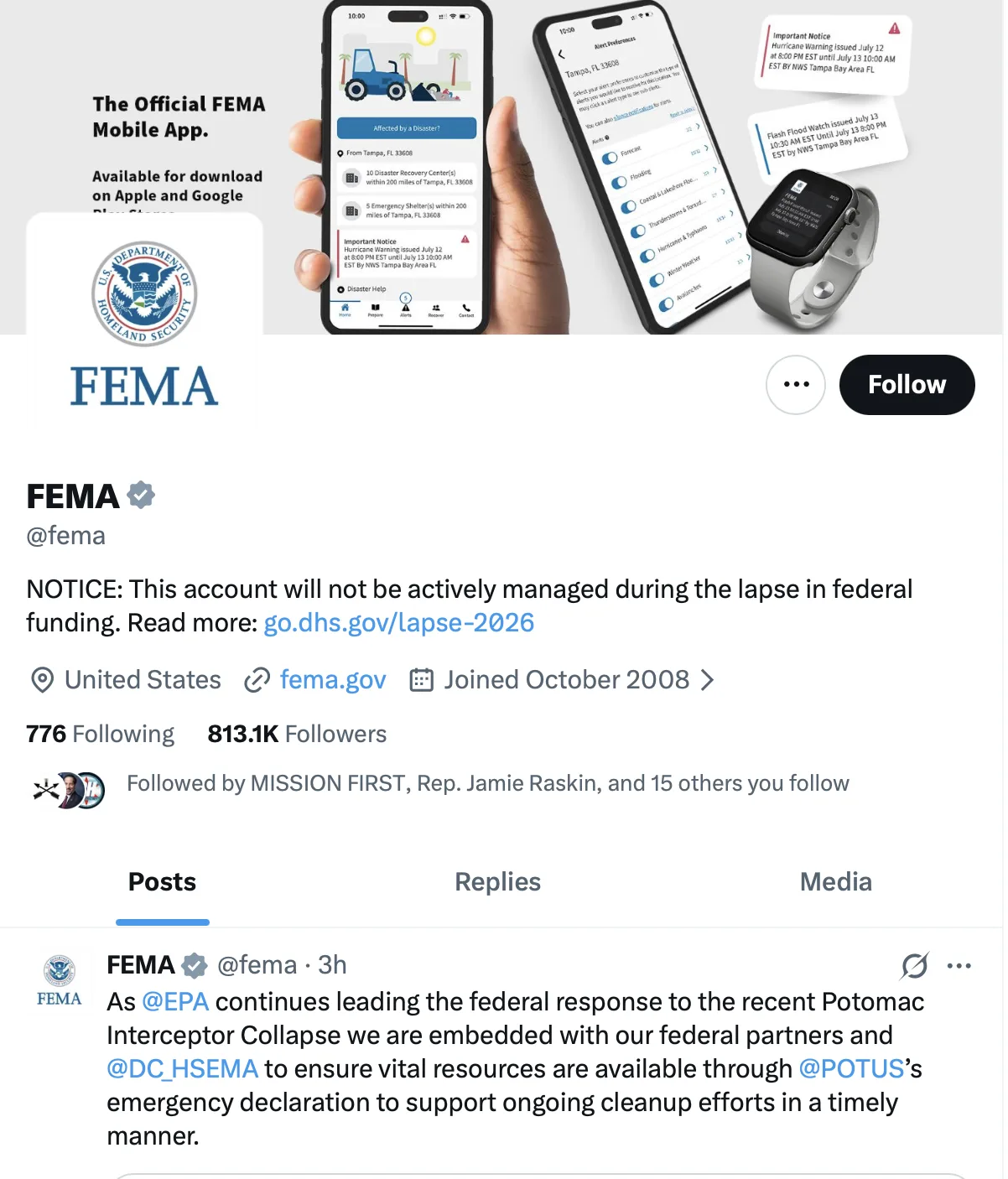
The shutdown’s impact on major event security also continued to generate debate this week. DHS Secretary Kristi Noem posted on X Wednesday afternoon that “FEMA was in the final stages of reviewing applications to ensure proper oversight when Democrats shut down the government putting significant portions of the FEMA staff on administrative leave. No funds have been awarded yet under the FIFA World Cup Grant Program.”
Noem warned that “the longer DHS goes without funding, the less prepared our nation will be for threats at the FIFA World Cup and America250.” The 2026 FIFA tournament will feature 78 matches across 11 host cities in addition to numerous events celebrating the nation’s 250th anniversary of independence on July 4, 2026.
Rep. Nellie Pou (D-NJ) pushed back on Noem’s characterization. “This is simply not true,” Pou wrote on X. “World Cup security funding was enacted into law last summer and these matches have been scheduled for years. DHS’ own notice of funding opportunity of this grant program listed the anticipated award date as ‘no later than January 30, 2026.’ Well before the funding impasse. It’s time for DHS to do its job.”
President Trump referenced the shutdown during his State of the Union address Tuesday, February 24, pointing to a recent snowstorm that affected parts of the Northeast in urging Democrats to end the partial shutdown.
Secretary Noem is scheduled to testify before the Senate Judiciary Committee on Tuesday, March 3 at 9 a.m., and the House Judiciary Committee on Wednesday, March 4 at 10 a.m., appearances that could provide new insights into the administration’s negotiating position and the shutdown’s operational impacts.
DHS Partial Shutdown Continues After Funding Bill Fails in Senate Vote
February 24, 2026, 10:00 AM
Funding for Department of Homeland Security (DHS) failed to make progress during a second procedural vote on Tuesday, February 24. In the first legislative action since Congress returned from recess, the shutdown stalemate continued and will be entering its 12th day on February 25.
The 50-45 vote fell short of the 60 needed to advance the House-passed DHS appropriations bill, H.R. 7147. Forty-seven Republicans and one Democrat (Senator (Sen.) John Fetterman of Pennsylvania) voted to advance the measure, while 43 Democrats and two independents opposed it. Notably, Senate Majority Leader John Thune (R-SD) voted against his own procedural motion, which is a parliamentary maneuver that allows him to bring the measure back for reconsideration. Five did not vote: Sens. Deb Fischer (R-NE), Maggie Hassan (D-NH), Rand Paul (R-KY), Thom Tillis (R-NC), and Sheldon Whitehouse (D-RI).
The first attempt on February 12 failed on a 52-47 vote before Congress entered its weeklong recess with the shutdown beginning February 14. As the impasse continues, new concerns have emerged about the shutdown’s impact beyond immediate operations. Funding has lapsed for Federal Emergency Management Agency (FEMA), the agency administering $625 million in federal security grants for the 2026 FIFA World Cup, which will be co-hosted by the United States, Mexico, and Canada. The tournament is expected to draw some five million fans to the U.S. alone. Miami applied for $70 million in World Cup security assistance; funds that are now uncertain as the shutdown drags on. The security funding was authorized last July through the administration’s comprehensive policy legislation.
DHS Partial Shutdown Enters Second Week Amid Growing Operational Strain
February 22, 2026, 1:00 PM
The Department of Homeland Security (DHS) shutdown entered its second week amid operational disruptions and a security incident at Mar-a-Lago that amplified scrutiny of the funding impasse.
DHS reversed course Sunday morning, February 22, after announcing it would suspend TSA PreCheck due to the shutdown. “TSA PreCheck remains operational with no change for the traveling public,” the Transportation Security Administration (TSA) said in a statement, walking back a Saturday, February 21, announcement that the suspension would take effect at 6 a.m. Sunday.
Despite the reversal, TSA confirmed it has suspended courtesy escorts for members of Congress “to allow officers to focus on the mission of securing America’s skies.” The Global Entry program also remains paused – as originally announced by DHS Secretary Kristi Noem – as the department continues to manage staffing constraints.
The initial suspension announcement drew swift industry criticism. Airlines for America CEO Chris Sununu said air travelers had become a “political football,” while U.S. Travel Association put out the following statement on X: “Democrats and Republicans have used air traffic controllers, TSA, [Customs and Border Protection] CBP and the entire travel experience as a means to achieve political ends.”

As the shutdown continues, DHS announced emergency measures that took effect Sunday, February 22 at 6 a.m. These cost-saving steps include halting all non-disaster-related Federal Emergency Management Agency (FEMA) response efforts to prioritize disaster response in addition to the suspension of the CBP Global Entry service and congressional courtesy escorts at airports.
The operational constraints extend beyond public-facing services. The DHS Office of Inspector General (OIG) confirmed that most audits and inspections, including at least seven probes into ICE conduct, have been paused during the shutdown. “Most of OIG’s audits, inspections, and similar reviews are paused during the lapse in appropriations,” a spokesperson said. Only disaster relief audits supported by separate appropriations continue.
The critical focus on the funding battle intensified Sunday following a security incident at President Trump’s Mar-a-Lago residence. An armed man, now identified as 21-year-old Austin Tucker Martin, was shot and killed after unlawfully entering a secured area of the property around 1:30 a.m. The individual was allegedly carrying what appeared to be a shotgun and a gas canister when confronted by two Secret Service agents and a Palm Beach County sheriff’s deputy. The incident underscored that Secret Service are one of several law enforcement agencies within DHS continuing their important work without pay during the shutdown.
The political rhetoric escalated over the weekend as both parties hardened their positions. Vice President JD Vance accused Democrats Saturday of “throwing a temper tantrum” in hopes Trump would “give up entirely on the idea of border enforcement.” Speaking on “My View with Lara Trump,” Vance said, “We’re willing to talk to anybody about how we can make the enforcement of our immigration laws easier and smoother… but we’re not going to give up on the American border.”
DHS officials have repeatedly framed the shutdown as a Democratic choice, with Secretary Kristi Noem stating Saturday that “shutdowns have serious real world consequences” and the department being forced to make “tough but necessary workforce and resource decisions.”
The shutdown, which began Feb. 14, continues with Congress returning to session Monday and President Trump scheduled to deliver the State of the Union address Tuesday.
DHS Partial Shutdown Hits One Week on Saturday
February 20, 2026, 9:50 AM
With Congress in recess until Monday, February 23, the Department of Homeland Security (DHS) shutdown continues with no emergency session planned as the impasse deepens.
The White House rejected Democrats’ latest counter-proposal, submitted Monday, February 16. “Last night, they sent over a counter proposal that, frankly, was very unserious,” White House press secretary Karoline Leavitt said. “And we hope they get serious very soon because Americans are going to be impacted by this.”
Democrats are exploring the possibility of passing separate funding bills for agencies like the Transportation Security Administration (TSA) and Federal Emergency Management Agency (FEMA) if there are no signs of movement toward resolution. House Minority Leader Hakeem Jeffries (D-NY) stated, “In the absence of any progress over the next few days, [that’s] something that we’re going to have to take a close look at upon our return to Washington on Monday.”
Additionally, despite responding to 14 disaster declarations from last week’s winter storms, FEMA has been instructed to suspend DHS-funded travel for aid workers while DHS remains shut down. The directive, which took effect Wednesday, February 18, applies even though most deployments are funded through the Disaster Relief Fund, which is not affected by the shutdown.
Even if carve-outs are passed for TSA and FEMA, other components under DHS will remain affected if the impasse continues. As the sole military branch not under Pentagon authority, the U.S. Coast Guard faces unique challenges, operating under DHS without the funding continuity other military services maintain. All DHS employees face paycheck uncertainty the longer the shutdown remains unresolved.
President Trump also is scheduled to deliver the first State of the Union address for his second term next Tuesday, February 24, at 9 PM ET – the day after Congress returns from recess – with the shutdown potentially still in effect.
DHS Partial Shutdown Hits Day 4 And No End In Sight
February 18, 2026, 7:00 AM
The Department of Homeland Security (DHS) partial shutdown entered its fourth day Wednesday, February 18, with no clear path to resolution.
The impasse centers on a 10-point reform package originally submitted February 4 by House Democratic Leader Hakeem Jeffries (D-NY) and Senate Democratic Leader Chuck Schumer (D-NY). The demands include targeted enforcement protocols, prohibitions on masks, visible officer identification, and other operational restrictions.
Democrats reportedly submitted a counter-proposal Monday, though details have not been released publicly. Some Republicans are pushing for compromise: Rep. Don Bacon (R-Neb.) urged negotiators to “find some low-hanging fruit that both the Democrats [and] Republicans can support” during a media appearance on February 17.
The administration has made limited concessions. DHS Secretary Kristi Noem announced on X February 2 that body cameras would be deployed to every officer in Minneapolis, with nationwide expansion “as funding is available.” White House Border Czar Tom Homan announced on February 4 that the numbers of immigration agents in Minnesota would be reduced and followed that with an announcement on February 12 that Operation Metro Surge was ending.

Meanwhile, DHS issued a strongly worded statement February 17 titled “Another Democrat Government Shutdown Dramatically Hurts America’s National Security,” detailing operational impacts across the department’s 23 components.
“Shutting down the DHS means cutting off resources and funding to FEMA, TSA, the Coast Guard, and thousands of federal law enforcement officers — the men and women who stand on the front lines of protecting our homeland every single day,” said DHS Assistant Secretary for Public Affairs Tricia McLaughlin, who also confirmed the same day that she would be departing DHS next week.
DHS Shutdown Likely as Immigration Enforcement Talks Collapse
Failed Senate vote and congressional recess make partial shutdown nearly inevitable starting Saturday
February 12, 2026, 7:32 PM
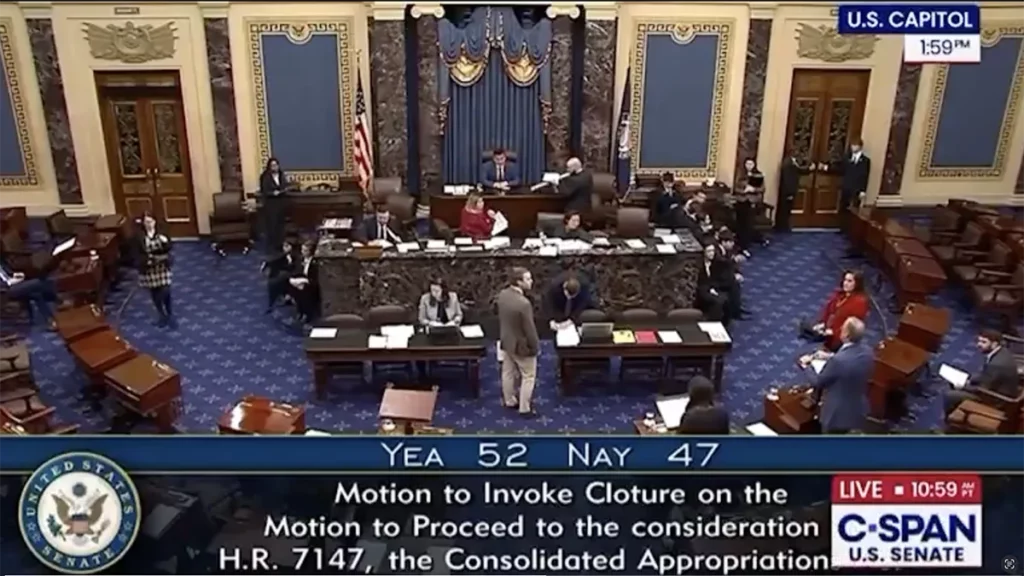
The Department of Homeland Security (DHS) appears headed for a partial shutdown beginning this weekend after Senate Democrats blocked a procedural vote Thursday, February 12, on a House-passed funding bill with a final 52-47 count, short of the necessary 60. Congress entered a week-long recess after the failed vote, making it virtually impossible to avert a lapse in appropriations when current funding expires at 12:01 a.m. Saturday, February 14. They are not scheduled to return until February 23.
The Core Dispute
The standoff centers on Democratic demands for sweeping changes to immigration enforcement operations following the January shooting deaths of two U.S. citizens in Minneapolis by federal agents conducting immigration enforcement.
Democrats have put forward requirements, including body cameras for agents, prohibitions on wearing masks, judicial warrants for arrests, and an end to what they call “roving patrols” or large-scale immigration sweeps. The White House has called the judicial warrant requirement a “particularly challenging aspect” and indicated it won’t accept changes that hamper its enforcement agenda.
Following Thursday’s vote, Senate Minority Leader Chuck Schumer dismissed the White House’s latest proposal as “not serious” while declining to specify sticking points. The administration, meanwhile, maintains Democrats’ demands would fundamentally undercut immigration operations.
Limited Overt Public Impact, Significant Workforce Strain
Unlike a full government shutdown, the public disruption may be minimal. The vast majority of DHS’s more than 260,000 employees are classified as essential personnel who will continue working. However, if the shutdown extends beyond the next pay period, that means working without paychecks.

Components facing operational pressures include the Transportation Security Administration (where unpaid agents could affect airport security screening, for example), Federal Air Marshal Service, U.S. Coast Guard, Federal Emergency Management Agency, Cybersecurity and Infrastructure Security Agency, and U.S. Secret Service.
However, Customs and Border Protection and Immigration and Customs Enforcement will experience fewer impacts due to a separate $170 billion immigration funding package passed last year. Mission support and headquarters functions across the department will bear the brunt of appropriations lapses.
Path Forward Unclear
While both chambers could theoretically return from recess if negotiators reach agreement, prospects appear dim. Many lawmakers will be attending the Munich Security Conference in Germany from February 13 to 15, further complicating logistics. Senate Majority Leader John Thune said members would return to vote “if and when there’s a breakthrough,” but neither side has signaled movement toward compromise.
This marks an unusual breakdown in the appropriations process, with DHS singled out while the rest of the federal government remains funded through the end of the fiscal year on September 30. The first single-agency agency shutdown was in 1980 when the Federal Trade Commission lapsed for one day due to expired appropriations.