One of the most important lessons in counterterrorism is that terrorist organizations reveal their intentions long before they act. They reveal them through the leaders they elevate, the institutions they rebuild, the capabilities they invest in, and the people they trust to shape the next generation. Those indicators often tell us far more about the future than any propaganda statement ever will.
That is why Osman bin Laden deserves far more attention than he has received. His significance is not simply that he is the son of Osama bin Laden. It is what al-Qaeda has entrusted him to rebuild. Understanding Osman bin Laden ultimately requires understanding the institution he was chosen to lead, because the return of Tarnak Farm says far more about al-Qaeda’s future than his family name ever could.
The Return of Tarnak Farm
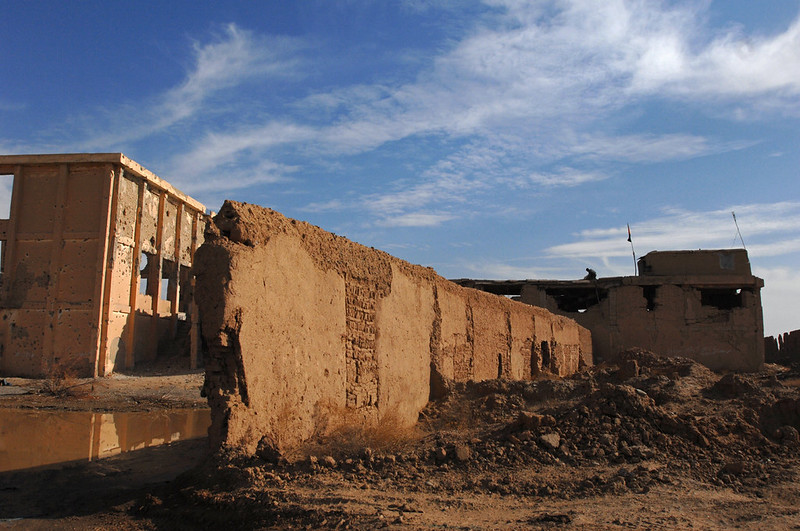
More than twenty-five years after coalition forces dismantled one of al-Qaeda’s most important training camps, Tarnak Farm has quietly returned.
Before September 11, Tarnak Farm was far more than a military training facility. Located outside Kandahar, it was one of al-Qaeda’s principal operational centers and second only to its al-Farooq camp in importance. Together, the two camps formed the institutional backbone of al-Qaeda’s training enterprise. Foreign fighters received instruction in operational tactics, explosives, tradecraft, and toxic substances as part of the organization’s broader pursuit of chemical, biological, radiological, and nuclear (CBRN) capabilities. Osama bin Laden himself resided at Tarnak Farm, and the facility became one of the most closely watched terrorist locations in Afghanistan before the attacks of September 11.
Prior to 9/11, Tarnak Farm appeared repeatedly in intelligence reporting because it was more than another training camp. It served as one of Osama bin Laden’s principal compounds and functioned as a hub where senior leaders met, foreign fighters trained, and operational knowledge was passed to the next generation of al-Qaeda operatives. As pressure mounted on al-Qaeda during the late 1990s, Tarnak became one of the facilities most closely monitored by U.S. intelligence because it reflected where the organization was investing its resources and preparing for the future.
When coalition airstrikes destroyed Tarnak Farm and al-Farooq following the U.S.-led invasion of Afghanistan in 2001, it symbolized far more than the destruction of two camps. It represented the dismantling of the institutional infrastructure that had helped transform al-Qaeda from a regional terrorist organization into a global one. One of the greatest mistakes we make in counterterrorism is assuming that because a camp has been destroyed, the institution behind it has disappeared. Buildings are relatively easy to replace. Institutional knowledge is not.
Today, both Tarnak Farm and al-Farooq have been reestablished as part of a broader network of al-Qaeda training facilities operating across Afghanistan. The rebuilding of Tarnak Farm should not be viewed in isolation. It is one indicator within a broader pattern of al-Qaeda’s reconstitution following the Taliban’s return to power in August 2021.
Rather than recreating the centralized infrastructure that existed before September 11, al-Qaeda appears to have learned from its past. Training is now dispersed across multiple facilities, making the network more resilient, more difficult to disrupt, and better suited to the permissive operating environment that now exists. Tarnak Farm remains the symbolic center of that effort, but it is no longer simply a single camp. It has become part of a distributed training architecture designed to prepare the organization’s next generation.
That raises an important question: Why revive Tarnak Farm at all? Why not simply establish a new camp under a different name?
The answer is institutional continuity. Tarnak Farm carries prestige inside al-Qaeda because it represents the organization’s rise before September 11, its history, and its identity. Rebuilding Tarnak sends a message to recruits and veteran operatives alike that the movement has survived, endured, and believes it is entering another period of expansion. This is not nostalgia. Organizations do not recreate historic institutions because they miss the past. They rebuild them because they believe they have a future.
Chosen for More Than His Name
Just as important as the return of Tarnak Farm is the individual al-Qaeda selected to oversee it.
Osman bin Laden, the fifth son of Osama bin Laden, has quietly emerged as one of the organization’s most important operational leaders. While much of the world’s attention has focused on his brothers, Osman has been entrusted with rebuilding one of the institutions responsible for training future generations of jihadists.
Terrorist organizations rarely make leadership decisions by accident. Choosing Osman bin Laden to rebuild Tarnak Farm was strategic messaging. Inside al-Qaeda, Tarnak is more than a camp; it represents the organization’s rise before September 11. Rebuilding it under a member of the bin Laden family reinforces continuity, legitimacy, and confidence that the movement believes it is entering another period of expansion.
Osman’s influence extends well beyond his surname. He reportedly serves within al-Qaeda’s senior decision-making circle and has become one of the organization’s key military trainers in Afghanistan. He is also uniquely positioned within al-Qaeda’s leadership through a network of family relationships.
He is son of the founder of al-Qaeda, Osama bin Laden. Through marriage, he is connected to Saif al-Adel, one of al-Qaeda’s most experienced military strategists, having married Saif’s daughter, Safiya. More recently, Osman further strengthened his position through a second marriage to the daughter of Hafiz Mohammad Agha Hakim, the emir of al-Qaeda’s Afghan branch, who simultaneously serves as the Taliban’s governor of Panjshir Province.
A Terrorist Dynasty
These marriages should not be viewed simply as family events. Throughout history, ruling families, organized crime syndicates, and insurgent movements have used marriage to consolidate power, reinforce loyalty, and preserve succession. Al-Qaeda increasingly appears to be following the same model.
Family relationships are becoming organizational alliances that bind together the movement’s most influential leadership circles. The bin Laden family remains at the center, while marriages increasingly connect the organization’s senior military and operational leadership into a tightly knit inner circle. Family has become governance. This emerging leadership structure is more than symbolic. It strengthens trust, reduces internal rivalries, reinforces succession planning, and creates continuity across generations. In many respects, it resembles a dynasty more than a traditional terrorist hierarchy.
Rebuilding Institutions, Not Just Camps
Counterterrorism professionals often focus on personalities. We ask who has become the next emir, who replaced a senior commander, or who now leads a regional affiliate. Those are important questions, but organizations survive because they preserve institutions. Veteran instructors train younger operatives. Experienced bombmakers mentor apprentices. Operational tradecraft is refined, preserved, and passed from one generation to the next. Camps such as Tarnak Farm exist to safeguard that institutional memory.
Al-Qaeda is rebuilding institutions. None of this would be possible without the permissive operating environment that has emerged since the Taliban returned to power in August 2021. Al-Qaeda has regained the freedom to relocate senior families, rebuild training infrastructure, and restore institutions that were largely dismantled following the U.S.-led invasion.
Beyond Tarnak
Osman’s responsibilities have already expanded beyond Kandahar. He reportedly also assumed command of the Khalid bin Walid training camp in Nangarhar Province, one of the largest multinational jihadist training facilities in eastern Afghanistan.
According to ground observations, the camp hosts fighters from al-Qaeda, Islamic State-Khorasan Province, Tehrik-e-Taliban Pakistan, and the Islamic Movement of Uzbekistan. That cooperation deserves attention. Public discussion often treats these organizations as entirely separate entities competing for influence. While they maintain distinct leadership structures and objectives, shared training infrastructure demonstrates that operational relationships remain considerably more complex than many public-facing assessments suggest.
This demonstrates that al-Qaeda is no longer rebuilding a single facility. It is rebuilding an interconnected training architecture spanning multiple locations across Afghanistan.
Taken together, these developments paint a troubling picture. Al-Qaeda is no longer focused simply on surviving. It is rebuilding institutions, cultivating the next generation of leaders, restoring training infrastructure, and reinforcing family alliances designed to preserve organizational continuity for decades to come. The reestablishment of facilities historically associated with foreign fighter training, explosives, toxic substances, and broader CBRN ambitions should receive close attention as analysts assess the organization’s long-term trajectory.
Why This Matters
Counterterrorism is often about recognizing indicators before they become headlines. The rebuilding of Tarnak Farm is one of those indicators. The return of al-Farooq is another. The elevation of Osman bin Laden, the strengthening of family alliances within al-Qaeda’s leadership, and the expansion of training infrastructure across Afghanistan all point in the same direction.
Viewed individually, each development may appear manageable. Viewed together, they reveal that al-Qaeda is rebuilding the institutions that once enabled it to project terrorism around the world. We often measure terrorist organizations by the leaders we remove or the camps we destroy. Those are important metrics, but they are incomplete. The better question is whether the organization is rebuilding the institutions that made it dangerous in the first place.
The return of Tarnak Farm suggests that al-Qaeda believes it is. That should command our attention.
Endnotes
- The National Commission on Terrorist Attacks Upon the United States. The 9/11 Commission Report. New York: W.W. Norton, 2004. Chapters 2–3.
- Coll, Steve. Ghost Wars: The Secret History of the CIA, Afghanistan, and Bin Laden. New York: Penguin Press, 2004.
- Wright, Lawrence. The Looming Tower: Al-Qaeda and the Road to 9/11. New York: Alfred A. Knopf, 2006.
- United Nations Security Council Analytical Support and Sanctions Monitoring Team. Recent reporting on Afghanistan, 2025 and 2026.
- Author’s investigation and source reporting regarding Osman bin Laden, the reestablishment of Tarnak Farm and al-Farooq, leadership succession, family alliances, and al-Qaeda’s training infrastructure in Afghanistan (2021–2026).