
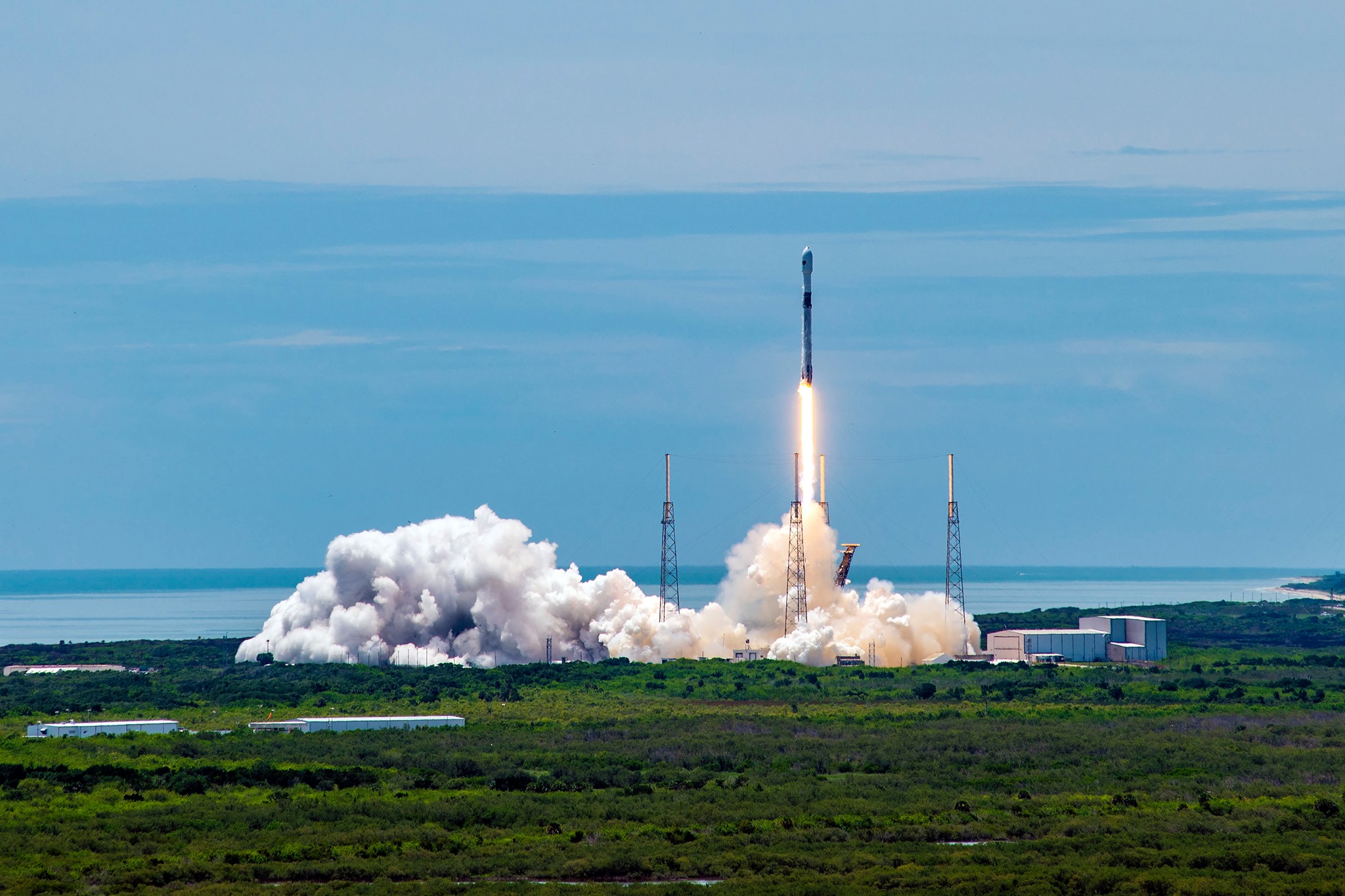
On May the 4th, a date often associated in popular culture with outer space and galaxies far far away, it is worth focusing on a more grounded reality: space is no longer a distant domain or the final frontier. It is a foundational layer of our way of life.
Space-based systems enable the operations that underpin daily life, economic prosperity, and national security. Communications networks rely on satellites for connectivity and redundancy. Energy systems depend on precise timing signals to maintain grid stability. Transportation systems require satellite navigation for routing and safety. Financial institutions use satellite-based timing to validate transactions. Even emergency services depend on space-enabled communications to respond to crises.
As Sam Visner, Chair of the Board of Directors for the Space Information Sharing and Analysis Center (ISAC) has noted, “Space ISAC members regard space systems as essential components of the critical infrastructure on which our country and its allies and partners depend”, adding that “all other critical infrastructure depends on space, whether for navigation, timing, or remote sensing.”
These are not future dependencies or capabilities happening in a far-off galaxy. They are operational realities engrained in nearly every critical infrastructure sector.
From my time working on infrastructure security, two lessons stand out: (1) risk does not stay contained within one domain; and (2) coordination is key. Infrastructure operates as a system of systems, where disruptions can quickly cascade across interconnected operations, systems, and supply chains. Space systems sit at the center of many of those connections, yet we are not prioritizing their integration into our risk management planning and coordination efforts.
Capabilities and dependencies across the critical infrastructure sectors are so deeply interconnected that risks to one sector or one capability exponentially amplifies the risk to the nation. As reliance on space-enabled capabilities grows, or on any new capability for that matter, so does the risk. Space systems are increasingly connected to global networks and depend upon complex, cross-sector supply chains–expanding the cyber-attack surface. Once again, technological innovation is outpacing security frameworks, standards, and policies.
Policymakers have begun to recognize the urgency, and legislative proposals such as the Space Infrastructure Act and recommendations from national security commissions and industry groups reflect a growing consensus that space systems—satellites, ground infrastructure, and supporting networks—are essential to national and economic security.
One solution that has been proposed is to formally designate Space as a Critical Infrastructure Sector. By treating space systems as critical infrastructure, we are signaling for the proper prioritization of their importance and that their security and resilience is a national imperative. This solution and designation, while helpful, does not fully address the challenge though.
Today, much of our security model is still organized around individual sectors. That structure has value, but it does not fully capture the dependencies between the sectors. Space is a clear example. It reaches across sectors, yet coordination around space-related risk is often fragmented and the designation as a sector alone does not fix this issue. We must work to fully integrate space systems into how we think about infrastructure as a whole and ensure space systems are a part of integrated risk management planning.
Improving resilience means strengthening how sectors communicate, share information, and plan together around these shared dependencies. It means ensuring that space systems and connections are consistently considered in risk assessments, operational planning, and resilience strategies across the infrastructure community.
That kind of connective approach is increasingly important as infrastructure systems grow more interdependent. At the Center for Cross-Sector Coordination, we are focused on strengthening those links—helping sectors better understand shared dependencies and align approaches to security and resilience. And, with this in view, we will recognize space systems as critical infrastructure—and ensure that these interdependencies are considered in all our planning, analysis, and solutions.
Space is already part of the critical infrastructure ecosystem. The focus now should be on ensuring our policies, partnerships, information flow and operational practices fully reflect that reality.
In today’s environment, resilience is not defined by how well individual systems perform in isolation. It is defined by how well they are perform collectively—and how effectively we manage the dependencies between them.