
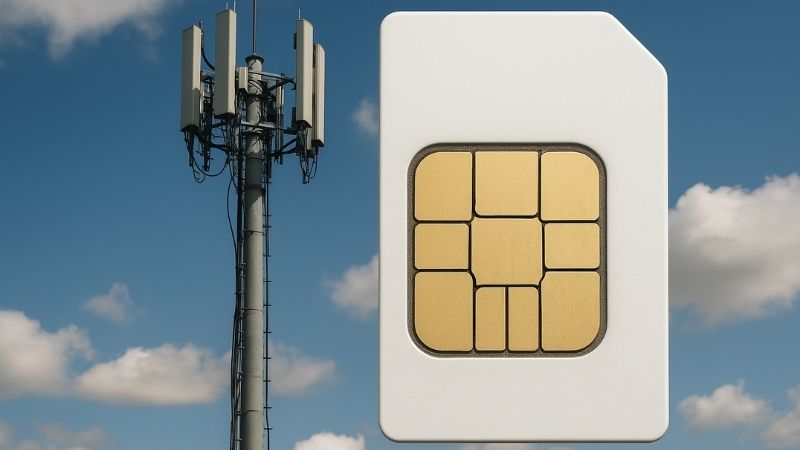
The U.S. Secret Service recently announced the takedown of a large wireless threat in the New York tri-state area, timed around the United Nations General Assembly. It is a wake-up call for anyone charged with protecting people or places during high-profile events. The alleged scheme (spread across apartments and stocked with SIM servers and at least 100,000 SIM cards) underscores how easily adversaries can weaponize the airwaves to confuse, delay, or blind protective operations.
According to public details, investigators seized more than 300 co-located SIM servers and 100,000 SIM cards across multiple sites, some reportedly close to the U.N. complex. That scale isn’t just about volume; it’s about leverage. With sufficient infrastructure, attackers can flood local towers, mask origins, and spin up opaque communication channels that complicate attribution and slow down response.
Why this matters now: Protective details, first responders, and event organizers increasingly rely on wireless communications for everything from encrypted radios and push-to-talk to secure cellular links and emergency alerts. When the wireless layer is degraded or manipulated, the impact cascades. Routes can’t be updated in real time. Dispatches stall. Situational awareness gets patchy just when leaders need clear information most.
How SIM farms change the risk picture
Officials say similar infrastructure can push on the order of 30 million text messages per minute, enough to buzz every phone in the country in minutes while jamming 911 and other emergency channels. SIM servers can rotate through SIMs quickly, placing or routing messages and calls in a way that taxes cell towers with constant session churn. At scale, that creates the potential for localized disruption even without physically touching a tower. More troubling, the same kind of setup can enable untraceable communications or pair with other tactics like downgrading connections to set the stage for interception of less secure protocols (e.g. 2G cellular). While major U.S. carriers have retired 2G, many international devices still support it, and dignitary travel brings those devices into concentrated, high-value areas.
Blended operations are the new normal
The lesson from New York isn’t just technical. It’s operational. Wireless exploitation is now part of blended campaigns that mix cyber operations, physical disruption, and information tactics. That kind of infrastructure has already been linked to swatting campaigns and threatening calls targeting senior officials, even before you layer on the possibility of jamming 911 or knocking out cell service during a physical incident. Layer a local cellular denial-of-service effort on top of a physical incident and you multiply confusion: ambulance dispatch slows, law enforcement can’t synchronize, and command posts act on stale data. In that environment, seconds become minutes, and minutes matter.
What security leaders should do next
- Treat wireless like a primary security domain: Put spectrum monitoring, rogue-device detection, and traffic-anomaly analysis on the same planning tier as access control and endpoint hardening. Make someone explicitly accountable for wireless risk during events and day-to-day operations.
- Detect faster, respond faster: Stand up playbooks for unusual RF activity, sudden paging spikes, base-station anomalies, or mass SIM rotation. Tie detection to action: who’s paged, what is isolated, and which agencies and carriers are contacted in minute one.
- Build public-private muscle memory: Carriers have visibility; government has authority. Create pre-event communication channels and run joint tabletop exercises with telecom operators, venue managers, and law enforcement so you’re not exchanging business cards at T-minus five.
- Raise the bar for venues and planners: For heads-of-state events, major conventions, and marquee sports, require a wireless threat assessment, defined RF monitoring coverage, and a documented escalation path. Include these in procurement language so expectations are clear before contracts are signed.
- Pressure-test assumptions with red teams: Have independent teams simulate SIM-farm behaviors, rogue base stations, and paging floods. Score responses on time-to-detect, time-to-contain, and cross-agency coordination. Use results to harden both technology and procedures.
- Plan for international device realities: Assume a mixed device population, some that can be coerced into insecure modes. Establish guidance for attendees and staff on device configurations, and consider supplemental, managed communications for critical roles.
The bigger picture
The growth of mobile connectivity, IoT devices, and wireless-first systems keeps expanding the attack surface. The New York operation shows that at sufficient scale, adversaries can use wireless not only to listen, but to slow, confuse, or shape real-world outcomes. The Secret Service’s new Advanced Threat Interdiction Unit, which is leading this case, has already warned it would be “unwise” to assume this was a one-off network rather than a template that could be replicated in other cities. If defenders keep treating airspace as an afterthought, attackers will keep exploiting the gap. The fix isn’t flashy. It’s disciplined planning, better visibility, and faster, practiced coordination.