Few topics generate more heat than climate change.
For some, the phrase represents settled science. For others, it signals political agendas, regulatory debates, or policy disagreements. Mention the term in the wrong setting and the conversation can quickly shift from preparedness and resilience to ideology and partisanship.
Emergency managers should resist that temptation.
Our job is not to win political debates. Our job is to prepare communities for risk.
Whether we embrace the term climate change, dislike it, or prefer not to use it at all, one reality is difficult to ignore: the conditions in which we operate are changing.
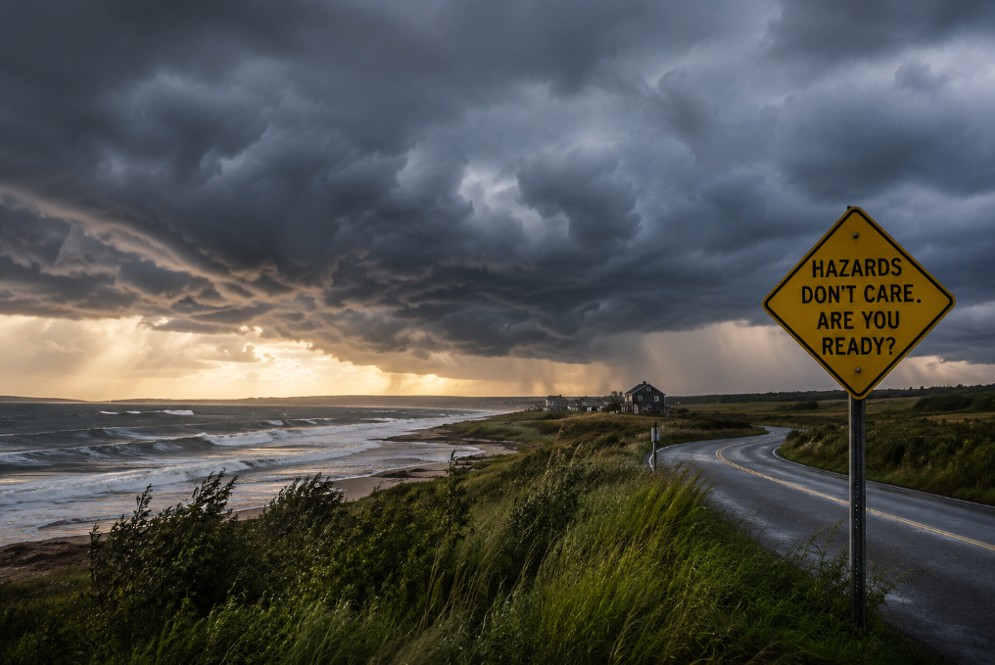
The atmosphere does not vote. Rivers do not watch cable news. Hurricanes do not register with a political party. Hazards simply arrive, and emergency managers are expected to be ready when they do.
That reality should guide our profession.
Our Job Is Observation
Emergency management has always been rooted in observation. We identify threats, assess vulnerabilities, evaluate consequences, and develop strategies to reduce risk. We do not have the luxury of ignoring trends simply because they have become politically controversial.
Across the country, communities are experiencing challenges that many emergency managers recognize immediately. Heavy rainfall events are overwhelming drainage systems. Flooding is occurring in places that have little history of it. Heat waves are lasting longer and affecting larger populations. Wildfires are burning with greater intensity and in locations where they were once considered unlikely. Coastal communities continue to face concerns about storm surge, while inland communities are grappling with severe weather patterns that seem increasingly unpredictable.
Reasonable people can disagree about the causes. We can debate the pace of change, the best policy responses, or the role of government. Those conversations are important, but they are not the primary responsibility of emergency managers.
Our responsibility is much simpler.
We prepare for what may happen next.
Emergency Management Is Forward Looking
That distinction matters.
Emergency management is one of the few professions whose success depends on anticipating the future rather than documenting the past. We study historical data, but we do not exist to preserve it. We exist to understand what those data suggest about tomorrow’s risks.
Preparedness often focuses on what happened before. Readiness asks what could happen next.
The communities we serve deserve more than plans based solely on historical experience. They deserve plans informed by science, emerging realities, and evolving risks.
Historical Data Alone May Be Insufficient
Too often, planning assumptions are based primarily on what has happened before. We talk about hundred year floods, historical averages, and previous disaster records. Those metrics remain valuable, but they should not become limitations.
Communities are changing. Infrastructure is aging. Development patterns are evolving. Populations are growing and shifting. Technology is transforming how people receive information and respond to warnings. Hazard profiles are becoming more complex.
A plan based solely on yesterday’s conditions may not adequately prepare us for tomorrow’s realities.
This is not a call for alarmism. Emergency managers should be among the calmest voices in the room. Our profession is built on evidence, not exaggeration.
Adaptation Is Not Politics
Adaptation means revisiting hazard mitigation plans. It means evaluating whether critical infrastructure can withstand future conditions. It means updating evacuation assumptions, strengthening warning systems, improving public communication strategies, and ensuring that vulnerable populations are not overlooked.
Most importantly, it means maintaining an open mind.
Emergency managers regularly ask communities to prepare for uncomfortable possibilities. We should be willing to do the same. If the risks are changing, our planning should change with them.
The public does not care whether a disaster confirms a political viewpoint. They care whether the warning arrived in time. They care whether emergency services responded effectively. They care whether roads were cleared, shelters were opened, and recovery resources were available when they were needed.
That is where our focus belongs.
Preparing for the Future
The climate change debate will likely continue for years. Political leaders, scientists, advocates, and commentators will continue to argue about causes, solutions, costs, and priorities.
Emergency managers do not need to resolve those debates.
We simply need to do what the profession has always done. Observe conditions, assess risk, and prepare for what comes next.
That is the essence of readiness in emergency management. It is not about labels or debates. It is about recognizing reality early enough to act on it.
That preparation shows up in very practical decisions about how we build capability and sustain operations.
First, mutual aid systems such as EMAC should be treated as core capacity rather than contingency planning. As hazards expand in scale and frequency, no jurisdiction should assume it will always be self-sufficient. EMAC should be embedded into routine planning, exercised regularly, and integrated into operational decision making before a crisis occurs.
Second, staffing conversations must evolve beyond historical workload. If incident frequency, complexity, and duration are changing, then staffing models built on past demand will inevitably lag behind future need. Emergency managers should be using data not only to document activity, but to make a clearer case for capacity before the next disaster exposes the gap.
Third, technology should be viewed as operational infrastructure, not optional enhancement. Decision support tools, geospatial analysis, predictive modeling, and modern communication platforms are increasingly essential to maintaining speed and clarity during events. The goal is not technology for its own sake, but faster understanding and better coordinated action when conditions change rapidly.
Fourth, risk information must be more directly tied to infrastructure and mitigation decisions. Emergency managers may not control capital budgets, but we do shape how risk is understood. If hazard patterns are shifting, then planning assumptions, mitigation priorities, and long term investments must reflect that shift rather than rely solely on historical precedent.
Finally, none of this works without people. Training, exercising, relationship building, and leadership development remain the foundation of effective emergency management. Systems matter, but trust and coordination determine how well those systems perform under stress.
None of this requires agreement on the phrase climate change. It requires agreement that conditions are changing and that emergency management must evolve from preparedness to true readiness.
We simply need to do what our profession has always done. Observe conditions, assess risk, and prepare for what comes next.
Because in the end, hazards do not care what we call them.
But we should care whether we are ready.
Dan Stoneking is the Owner and Principal of Stoneking Strategic Communications, the Author of Crisis Communications and Emergency Management, the Founder and Vice President of the Emergency Management External Affairs Association, the Founder of Message Prism, and an Adjunct Professor in the Communications Department at West Chester University.