Every year, many of us go in for a routine physical. Not because anything feels wrong, but because it is useful to know what is changing quietly: blood pressure edging up, cholesterol drifting, a number or two that does not mean much on its own but tells a story over time. The value is not in the diagnosis. It is in paying attention early, before small trends become harder problems.
Emergency management works much the same way. Most of what shapes the field does not arrive as a single moment or headline. It accumulates gradually through staffing patterns, public expectations, technology, climate, and stress on the people doing the work. None of this is new. But the way these forces combine and the pace at which they are becoming normal matters.
What follows is my take on several trends U.S. emergency managers might want to have their pulse on in 2026. These are not predictions or warnings, and they are not tied to specific events or dates. They are simply the background conditions that increasingly shape how emergency management is practiced, often whether we acknowledge them or not. These are also in random order as each of us may prioritize these differently. It is not about the biggest trend; it is about preparing for all of them.
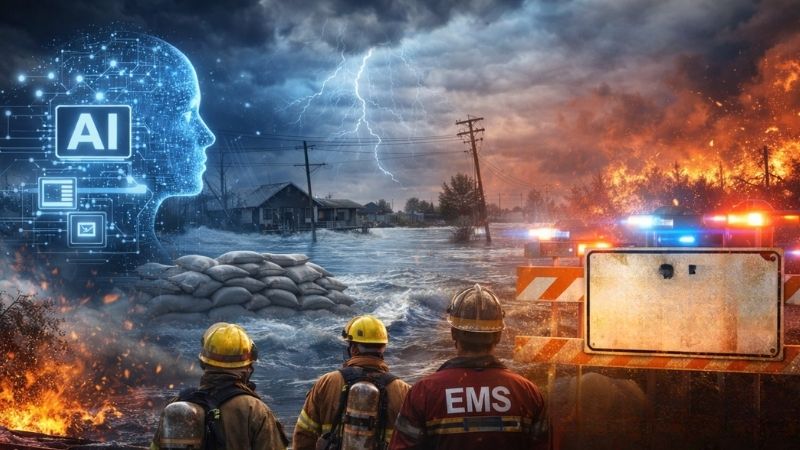
Next generation artificial intelligence is no longer novel in emergency management. By 2026, it supports damage assessments, call taking, translation, logistics forecasting, and situational awareness. In many cases, it makes work faster and more efficient.
The challenge is not the technology itself, but uneven adoption and unclear governance. Well-resourced jurisdictions gain capabilities others cannot easily replicate, and AI outputs can appear authoritative even when they are incomplete or wrong. Used thoughtfully, AI can be a force multiplier. Used uncritically, it introduces new blind spots.
Equity has moved from something discussed primarily in recovery to something evaluated during response. Whoever receives warnings, shelter access, aid, and attention is now visible and questioned almost immediately.
This shift has improved outcomes in many communities. It has also added pressure to already compressed decision timelines and reduced tolerance for imperfect tradeoffs. Equity is no longer a downstream consideration. It is part of the operational environment.
Public expectations for emergency response continue to rise. Many people now expect instant action, constant updates, and visible leadership, even during complex or rapidly evolving incidents.
Uncertainty is often interpreted as incompetence, and silence, even when operationally necessary, is viewed with suspicion. Emergency managers operate in a reputational environment where judgments are formed long before full information is available. Transparency is the antidote.
Infrastructure failures are no longer confined to the aftermath of disasters. Power, water, transportation, and communications systems increasingly fail during incidents, compounding response challenges.
Many of these systems were built for different climates, different populations, and different expectations. Emergency management is drawn into managing long duration service disruptions that blur the line between disaster response and basic governance.
Disaster governance has become more contested. States seek flexibility and speed, federal partners emphasize accountability and compliance, and local governments often carry the operational burden without matching authority or resources. The administration is changing the landscape.
As a result, emergency managers spend increasing time navigating political and administrative friction that directly affects response, recovery, and public messaging.
False or misleading information now spreads faster than official guidance during emergencies, particularly around evacuations, sheltering, and public health measures.
Misinformation shapes behavior at scale. Countering it requires time, attention, and coordination at moments when all three are scarce. Information management is no longer a support function. It is operational.
Cyber disruptions increasingly create real world emergencies: hospital diversions, water system outages, fuel disruptions, and transportation failures.
These incidents often fall between traditional planning lanes, with unclear ownership and limited situational awareness. Emergency management is pulled into complex events that begin in digital systems but end in physical consequences.
Staffing shortages persist across emergency management, EMS, fire, public health, and emergency communications. Mutual aid is less reliable because shortages are widespread rather than localized.
Plans increasingly have to address people who are difficult to recruit, retain, or sustain over long operational periods. Workforce resilience has become as critical as equipment, facilities, or funding.
Overlap: Extreme heat, flooding, wildfire smoke, and severe storms are no longer exceptional. They define the baseline conditions under which emergency management operates. Recovery overlaps with response. Mitigation competes with immediate needs.
The system rarely returns to a true steady state, eroding time for rest, learning, and adaptation. Perhaps the most consequential trend is not any single hazard, but the cumulative emotional and cognitive strain of overlapping crises.
Burnout, moral injury, and decision fatigue affect leaders and frontline staff alike. Capacity erodes quietly, long before formal failure appears. Emotional sustainability has become a limiting factor for resilience.
Conclusion
At the end of a physical, most doctors do not tell you to panic. They usually say something closer to: keep an eye on this, adjust a few habits, come back next year. The point is awareness, not alarm.
The same applies here. None of these trends, on their own, defines the future of emergency management. Taken together, they describe the environment many of us are already working in, one where the most significant challenges are cumulative, human, and slow moving rather than sudden or dramatic.
Paying attention to trends is not about predicting failure. It is about staying oriented. Just as small changes in a chart can tell a story before symptoms appear, these forces give us a chance to notice what is shifting beneath our feet and adjust while we still can.
If 2026 requires anything from emergency managers, it is not new heroics. It is the discipline to keep checking the vitals.
Dan Stoneking is the Owner and Principal of Stoneking Strategic Communications, the Author of Cultivate Your Garden: Crisis Communications from 30,000 Feet to Three Feet, the Founder and Vice President of the Emergency Management External Affairs Association, and an Adjunct Professor in the Communications Department at West Chester University