


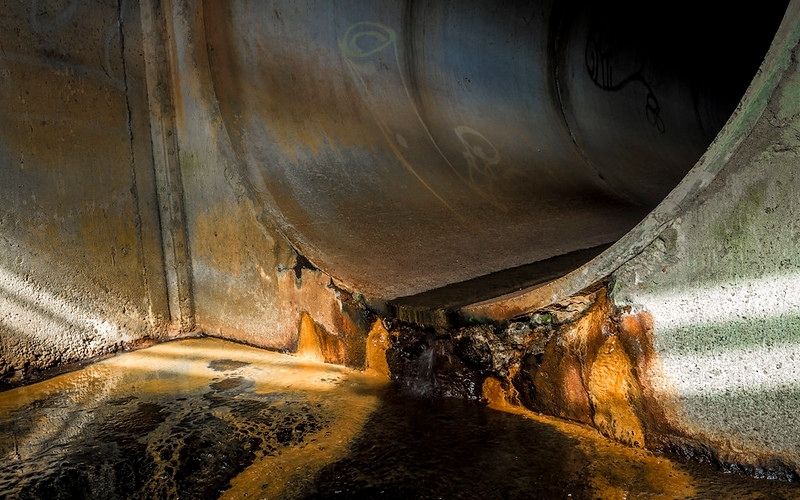
“The United States’ water infrastructure is aging, underfunded, and its failure disproportionately affects low-income and vulnerable communities, reflecting societal inequities.”
— American Society of Civil Engineers (ASCE), 2021 Report Card for America’s Infrastructure, Water Category
The contemporary strategic threat environment is no longer defined by the bipolar, nuclear-focused deterrence models of the Cold War. Instead, the U.S. faces a multipolar landscape where adversaries, led by China as the “pacing threat” and Russia as an “acute threat,” are weaponizing new domains to achieve strategic objectives.i Rather than solely focusing on military targets, they now aim to induce economic and societal disruption by exploiting national vulnerabilities.ii Adversaries are increasingly employing cyber capabilities and disinformation as non-traditional strategic weapons. These attacks challenge conventional deterrence theory, which struggles to counter gray-zone aggression that erodes public trust and destabilizes society from within. A fictionalized example comes from a training scenario where a U.S. terror group’s propaganda about water contamination is amplified by Russian hackers.iii Threat actors understand that by inflaming tensions around real, existing problems, they can create a degree of plausibility and make U.S. citizens feel physically and politically insecure, achieving strategic effects without firing a single shot. By examining the vulnerabilities in our nation’s drinking water systems, this article illustrates how a failure to address domestic infrastructure and social equity issues creates a permissive environment for adversary exploitation, thereby undermining U.S. national security.
The size and scale of the U.S. water infrastructure is vast. The drinking water infrastructure alone is estimated to consist of more than 2 million miles of underground pipes. Approximately 90% of all people in the U.S. receive water from a centralized, public water system of some kind, and there are nearly 150,000 public water systems in operation.iv Some of the oldest pipes and aqueducts in the U.S. were laid during the 1800’s, and even those that were installed after World War II were anticipated to have only a 75-to-100 year lifespan. Not all the materials used are equal and some are contributing directly to pollution and health issues, such as those made of lead. As one might expect, some portions of this voluminous, widespread, and aging system seem to be a ticking time bomb.
The Environmental Protection Agency (EPA) estimated that more than 9 million lead service lines are currently providing drinking water to the population across all 50 states and U.S. territories.v The Natural Resources Defense Council (NRDC) published estimates for lead service lines closer to 12.8 million and have also estimated that roughly 186 million people drank from U.S. water systems that exceeded the 1-part-per-billion lead levels recommended by the American Academy of Pediatrics between 2018 and 2020.vi Lead is classified as a neurotoxin that can cause serious damage to the brain and nervous system. Children are particularly vulnerable to its effects which include delayed growth, cognitive development, learning disabilities, and behavioral issues, while adults exposed to lead consumption can also suffer from increased cardiovascular diseases, elevated blood pressure, and kidney and reproductive problems.vii
Besides lead from many of the pipes themselves, other contaminants water suppliers battle includes industrial pollution, agricultural runoff, and “forever chemicals” that are formally referred to as per- and polyfluoroalkyl substances (PFAS). PFAS are described by the EPA as a group of synthetic chemicals that have been in use since the 1940s and are found in a wide array of consumer and industrial products.viii Chemical manufacturing and processing facilities, as well as airport and military facilities, are some of the largest contributors to PFAS pollution. The U.S. Centers for Disease Control and Prevention (CDC) have comprehensive data linking these contaminants to everything from diarrhea to terminal cancers.ix Under its Clean Water Act authorities, the EPA has developed extensive tables of criteria for healthy water quality for both humans and aquatic life, but sadly these criteria are not regulatory or legally binding.x Even though failure to meet these criteria could result in loss of federal funding to update infrastructure, this would ultimately hurt the segments of the population most in need of infrastructure updates.
One example of a community adversely impacted by many risks that came to fruition is highlighted with the repeating crises in Jackson, Mississippi. In 2010, a major storm caused hundreds of water mains to break, leaving residents without water for several weeks. In 2012, the City of Jackson issued a federal consent decree for violating the Clean Water Act. In 2019, over 3 billion gallons of sewage was released into the Pearl River and formal guidance was issued for Jackson residents to avoid water contact activities. In 2020, another 6.3 billion gallons of raw or minimally treated sewage was released into the Pearl River due to the city’s sewage system being overwhelmed by record rainfall. In 2021, a major winter storm, the same storm that famously knocked out the Texas power grid, wreaked havoc on the entire Jackson water system, leaving its residents without drinking water for an entire month. Then, just a year and a half later, floodwater from another major storm caused a complete plant failure at Jackson’s primary water treatment plant, leaving more than 150,000 residents with no water pressure for a month, meaning no ability to fill and flush toilets or to bathe, much less drink water. More than 750 official boil water notices were issued in Jackson, Mississippi between 2016 and 2023.xi How did so many major failures start to happen at such increasingly high rates? Unfortunately, Jackson suffers from some of the same causes of deterioration that many other parts of the nation do, with a few additional considerations related to the concept of environmental justice.
In general, the major causes of deterioration for just about any infrastructure category consist of the underfunding of infrastructure maintenance and upgrades, deferred maintenance due to budget constraints or misdirected political priorities, climate change impacts, and changes to population. For many areas, the latter consideration is usually due to population growth and strain on existing systems, but in the case of Jackson, negative consequences have been attributed to population decline of wealthier residents, with a major portion of the poorer population staying put but not being able to cover the increased costs. Information from the U.S. Census Bureau showed a 12% population decline in Jackson from 2010 to 2020, with an additional 5% decline projected between 2020 and 2023 alone.xii It is highly likely that a cyclical contributing issue is at play, where wealthier residents and business owners continue to leave the city in part due to the constant negative impacts these water infrastructure issues cause to businesses and quality of life.
In the last 5 years, Jackson, Mississippi has had a steady influx of support (people and hardware) from the EPA, the Federal Emergency Management Agency (FEMA), the U.S. Army Corps of Engineers, the Mississippi Emergency Management Agency, the Mississippi State Department of Health, and support from various other states. The federal agencies seem to constantly cite failures to meet recommended criteria, and the state agencies constantly cite lack of funding. Multiple class-action lawsuits have been filed, and a lawsuit was even filed by the U.S. Department of Justice in the U.S. District Court for the Southern District against the city stating that Jackson has “violated various specific requirements of the SDWA [Safe Drinking Water Act] and administrative orders issued by EPA concerning the City’s public water system.”xiii Much of the prosecutorial language cites failures to meet standards and recommendations while much of the defense language cites a historic lack of funding and lack of political focus, with attention focused on supporting documentation from groups such as the National Association for the Advancement of Colored People (NAACP), the Southern Poverty Law Center (SPLC), and the many academic research papers that can be easily found via internet search engines and scholarly repositories using search terms such as “drinking water” AND “environmental justice”. These topics have become very divisive and politically charged for many Americans. Topics that are naturally divisive can be targets for further exploitation by U.S. adversaries.
The Environmental Justice Committee, which falls under the American Bar Association, “seeks to achieve environmental justice through advocacy, education, networking, and the provision of resources to the environmental justice communities and practitioners.”xiv This committee firmly believes that water related challenges, including aging infrastructure and pollution, “disproportionately affect low-income and marginalized communities, where race and location are strong predictors of water stress” while also reporting that 88% of U.S. voters consider the availability of clear water to be a top priority, with 65% supporting more funding, and 61% willing to pay more themselves even if the money supports clean water for people other than themselves.xv A large contributing factor to the funding is the fact that 93% of the systems providing drinking water serve communities of less than 10,000 people, and approximately half of these systems serve communities under 500 people.xvi As such, it proves difficult for these systems to pay for their operating costs while also updating infrastructure to meet the standards set by the EPA. The NAACP feels that environment injustice is a civil rights issue methodically geared to impact communities of color and low-income communities disproportionately, and that, “black communities continue to bear the brunt of environmental injustices and safe drinking water violations.”xvii They use real world stories such as those coming from Jackson, Mississippi as vignettes. Some of the empirical data for this city and its eight peripheral cities (suburbs) reveal that the two cities with the most water system failures, physical health impacts, and mental health impacts, are also the only two cities with a black population exceeding 66%.xviii Only one other suburb has a black population exceeding 40%. The NAACP submitted an official letter of complaint to the EPA stating, “This discrimination is evident in the State’s repeatedly having deprived Jackson of federal funds to maintain its public drinking water system in favor of funding smaller, majority-white communities with less acute needs – despite the fact that Jackson is Mississippi’s most populous city, with a demonstrated need for improvements to water infrastructure.”xix Even when statements such as this are true and backed with sufficient data, they can still be divisive for many.
There are more examples of environmental justice challenges to be found in the U.S., and the empirical evidence is tremendous. So much so that the EPA formally established the National Environmental Justice Advisory Council (NEJAC) in 1993 to provide independent advice and recommendations to the EPA Administrator across “a broad range of strategic, scientific, technological, community engagement, and economic issues related to environmental justice.”xx The consequences of not addressing the social and political ramifications are complex, and U.S. adversaries are more than willing to exploit these areas. As it applies to water security, consistent failures in what many perceive to be the most basic of services can erode trust in government institutions and leaders at multiple echelons including local, state, and federal levels. It can also lead to the distrust of scientific expertise, such as the distrust many developed with Dr. Anthony Fauci during the 2019 COVID pandemic, warranted or not. This loss of trust can potentially manifest through a mix of increased or decreased community action (protests, social media posts), the formation of civic groups (some based on racial or socioeconomic tensions), lawsuits, resistance to policies (even those not directly related), and a real-world reduction in property values in impacted areas. These types of consequences line up nicely with adversary objectives which usually include social and political instability, undermining public trust in the government, diverting resources from other national security priorities, and generally causing economic disruption to name a few.xxi
According to the EPA, cyberattacks against drinking water systems have increased in frequency and severity across the country with the potential for significant adverse consequences. They listed some of the malicious cyber actors that have acted against water systems including the Iranian Government Islamic Revolutionary Guard Corps (IRGC)-affiliated cyber actors, Pro-Russia Hacktivists, and the People’s Republic of China (PRC) state-sponsored cyber actors such as Volt Typhoon, Vanguard Panda, and others.xxii They have teamed with the Cybersecurity and Infrastructure Security Agency (CISA), the Federal Bureau of Investigation (FBI), the National Security Agency (NSA) and other federal groups to develop basic cyber hygiene recommendations for water systems operators and their connected partners. Even so, over 70% of the systems inspected by the EPA between September 2023 and May 2024 have been in violation of the basic recommendations they have issued.xxiii This is a scary finding considering the willingness and widely varying motivations for adversaries to exploit water systems. In 2024, some attacks included data breaches and espionage (Southern Water Data Breach, City of Flint Water System Breach), operational disruptions (Muscatine Power and Water Attack, Arkansas City Water Treatment Facility Incident), and more advanced threats, highlighted by CISA, warning of Chinese state-sponsored actors exploiting default credentials in water related Industrial Control Systems (ICS) across the nation.xxiv Some of the most notable techniques used have included: carefully crafted phishing emails to trick employees into providing credentials; ransomware attacks on operational technology (OT) systems; using unchanged default credentials and remote protocols on outdated software used in ICS environments; and the use of more complex “living off the land”, or often known as its acronym LOTL, techniques that allow attackers to use legitimate administrative tools within existing systems to move laterally around the system to evade security and ultimately upgrade access privileges.xxv
Even without sophisticated cyberattack abilities or authorities, there is still an unfortunate amount of pre-existing water system breakdowns that can be leveraged for chaos using disinformation or misinformation campaigns. These are usually used by adversaries to amplify existing narratives and sow discord. They can pile-on to existing narratives or add completely fabricated ones highlighting government negligence or outright discrimination or corruption. The modern-day ease of access to artificial intelligence (AI) tools gives adversaries many more options and channels to spread “deep fakes” and generally create havoc. In January of 2024, a post on social media falsely claimed that the primary water treatment facility in Jackson, Mississippi had shut down and urged people to fill their bathtubs and stock up on water. This caused a real-world surge that overwhelmed the water treatment facility, leading to a loss of pressure in the system and the need for a boil water notice for more than 12,000 residents due to the system quality disruptions that resulted.xxvi This was a simple social media post that caused real-world strain to the physical infrastructure without the need for in-person sabotage. Direct physical sabotage is also very much on the table for adversaries, but less common in the U.S. outside of insider threats such as disgruntled employees. Even so, the threat is real, and preparation is paramount for providers. The investment for physical protections comes at a substantial cost which can vary widely depending on the provider and water source(s).
What can be done to update the U.S. water infrastructure and mitigate adversary exploitation opportunities? First, funding estimates are helpful but true commitments must be made to budget allocations at all government levels. The funding levels allocated should closely match recommendations from experts in the field. The American Society of Civil Engineers (ASCE) produces a phenomenal product each year known as the Report Card for America’s Infrastructure, where various portions of the U.S. infrastructure are given grades with great amounts of insight and important data points. Perhaps most useful, each sector is given a specific list of recommendations that, if implemented, can raise the overall grade / score for that sector. Drinking water was given a grade of “C-“ for 2025 and some of the recommendations include: direct $3.4 billion to the Drinking Water State Revolving Fund (DWSRF) without reducing congressionally directed spending for community projects; increase federal and local support to recruit, train, and retain the next generation of sector workers; develop and fund programs to ensure low-income and vulnerable communities do not bear disproportionate burden of rate increases; and many other great recommendations.xxvii In 2023 the EPA estimated that it will require over $625 billion to remediate and update existing drinking water systems over the next 20 years.xxviii That figure also does not encompass funding needed for wastewater and non-potable water systems. If new tools are needed for support, they should certainly be created, but existing tools should be emphasized first such as the EPA’s very helpful Funding Integration Tool for Source Water (FITS). FITS is, “a one-stop-shop tool that explains how users can integrate various federal funding sources to support activities that protect sources of drinking water”xxix and is full of information on everything from basic knowledge to funding, partnership, and direct support options.
The EPA was originally designated as the lead federal agency for environmental justice issues, including being designated the lead for coordinating and convening the Federal Interagency Working Group on Environmental Justice under Executive Order (E.O.) 12898, but this was later restructured under E.O. 14008 to become the White House Environmental Justice Advisory Council (WHEJAC) with the EPA designated as an administrator for the working group and the Office of Management and Budget (OMB) directed to publish annual Environmental Justice Scorecards for agency performance measures.xxx This illustrates the political weight placed on this issue and the involvement of a broad number of stakeholders that can impact actual execution. This type of setup can easily create risk where well laid plans are “robbed” for other urgent political needs as they occur, which will not be helpful for resolving critical infrastructure needs on schedule.
Cybersecurity enhancements are certainly needed, but there is not a current shortage of expert recommendations being provided by the EPA, CISA, FBI, NSA, and others. Implementation by providers seems to be largely recommended vice being mandated, and those with shortcomings are often hit with lawsuits or other detrimental actions. Perhaps more could be done to incentivize the community of providers by offering financial bonuses and other incentives to those that show the most efficient and effective usage of current investments. These same federal agencies could also dedicate teams and resources to work more closely with state and local government, along with water providers, to create counter disinformation strategies to build trust with government and infrastructure operators and hopefully counter malicious propaganda efforts. Even with such investments, not all crises can be avoided so perhaps more could be done to partner with and empower local volunteer groups to prepare for and respond to water crises, illustrating more unity with the community to get through hardships.
Addressing the crisis in America’s water infrastructure is not merely a matter of public works or environmental justice; it is a foundational component of 21st-century national security strategy. The vulnerabilities in this system, from decaying pipes to the digital controls that manage them, have become a key battleground in the multi-domain, multipolar strategic competition outlined in the National Defense Strategy. U.S. adversaries have demonstrated their willingness to use non-traditional weapons, including cyberattacks and weaponized information, to exploit these seams and erode societal cohesion in ways that traditional deterrence models are ill-equipped to prevent. Investing in resilient infrastructure, ensuring equitable resource distribution, and developing robust counter-disinformation capabilities are not just domestic policies; they are critical acts of strategic defense that harden the homeland against the types of aggression that will define the evolving threat landscape for decades to come.
The author is responsible for the content of this article. The views expressed do not reflect the official policy or position of the Defense Threat Reduction Agency, National Intelligence University, the Office of the Director of National Intelligence, the U.S. Intelligence Community, the Department of War, or the U.S. Government.
References
i U.S. Department of Defense, 2022 National Defense Strategy (Washington, DC: U.S. Department of Defense, 2022), 4-6, https://media.defense.gov/2022/Oct/27/2003103845/-1/-1/1/2022-NATIONAL-DEFENSE-STRATEGY-NPR-MDR.pdf.
ii U.S. Department of Defense, 2022 National Defense Strategy, 8.
iii “Scenario Narrative 3: Deep Disinformation,” Secure Tomorrow Series, November 13, 2023, 4-5, https://www.cisa.gov/sites/default/files/publications/STS_Scenarios-Workshop_Scenario-3_Deep-Disinformation_508.pdf.
iv American Society of Civil Engineers, 2025 Report Card for America’s Infrastructure, (Reston, VA: American Society of Civil Engineers, 2025), 59, https://infrastructurereportcard.org/cat-item/drinking-water-infrastructure/.
v “Lead Service Lines,” United States Environmental Protection Agency, last modified January 17, 2025, https://www.epa.gov/ground-water-and-drinking-water/lead-service-lines.
vi Nicole Greenfield, “America’s Failing Drinking Water System,” Natural Resources Defense Council, last modified October 5, 2023, https://www.nrdc.org/stories/americas-failing-drinking-water-system.
vii Jeff Turrentine, “How Exactly Does Lead Exposure Harm the Brain,” Natural Resources Defense Council, last modified September 28, 2023, https://www.nrdc.org/stories/how-exactly-does-lead-exposure-harm-brain.
viii “How’s My Waterway Glossary,” Office of Water, United States Environmental Protection Agency, last modified June 2024, https://sor.epa.gov/sor_internet/registry/termreg/searchandretrieve/glossariesandkeywordlists/search.do?details=&vocabName=HMW%20Glossary.
ix “About Drinking Water,” United States Centers for Disease Control and Prevention, last modified January 30, 2025, https://www.cdc.gov/drinking-water/about/.
x “Human Health Water Quality Criteria for PFAS,” United States Environmental Protection Agency, last modified May 7, 2025, https://www.epa.gov/wqc/human-health-water-quality-criteria-pfas.
xi “Mississippi city’s water problems stem from generations of neglect,” Southern Poverty Law Center, last modified June 28, 2023, https://www.splcenter.org/resources/stories/timeline-jackson-mississippi-water-problems/
xii Norman Dupont, John Milner, L.K. Williams, “Water in Jackson, Mississippi,” Natural Resources & Environment 38, no.3 (Winter, 2024): 14, 1, ProQuest Scholarly Journals.
xiii Dupont, “Water in Jackson, Mississippi”, 3.
xiv “Environmental Justice Committee,” American Bar Association, accessed December 2, 2025, https://www.americanbar.org/groups/crsj/about/committees/environmental-justice/.
xv Christy Harowski and Mami Hara, “Water Equity, Infrastructure, and Policy,” Human Rights Magazine, October 30, 2024, https://www.americanbar.org/groups/crsj/resources/human-rights/2024-october/water-equity-infrastructure-policy/.
xvi ASCE, 2025 Report Card, 59.
xvii “Environmental & Climate Justice,” National Association for the Advancement of Colored People, accessed December 2, 2025, https://naacp.org/know-issues/environmental-climate-justice.
xviii Qingmin Meng, “Urban Water Crisis Causes Significant Public Health Diseases in Jackson, Mississippi U.S.A: An Initial Study of Geographic and Racial Health Inequities,” Sustainability 14, no. 24 (2022): 16325, 4-8, ProQuest Scholarly Journals.
xix Meng, “Urban Water Crisis”, 2.
xx “About the National Environmental Justice Advisory Council,” United States Environmental Protection Agency, last modified March 7, 2025, https://www.epa.gov/faca/about-national-environmental-justice-advisory-council.
xxi Jonathan Gordon, “Targeting Critical Infrastructure: Recent Incidents Analyzed,” Industrial Cyber, last modified June 30, 2024, https://industrialcyber.co/analysis/targeting-critical-infrastructure-recent-incidents-analyzed/.
xxii “Enforcement Alert: Drinking Water Systems to Address Cybersecurity Vulnerabilities,” United States Environmental Protection Agency, last modified July 24, 2025, https://www.epa.gov/enforcement/enforcement-alert-drinking-water-systems-address-cybersecurity-vulnerabilities.
xxiii U.S. EPA, “Enforcement Alert”.
xxiv Ymir Vigfusson, “How APT Groups are Targeting Water Infrastructure in 2024/2025: Top Techniques Exploited by State-Sponsored Attackers,” Keystrike, last modified April 22, 2025, https://www.keystrike.com/blog/how-apt-groups-are-targeting-water-infrastructure-in-2024-2025-top-techniques-exploited-by-state-sponsored-attackers.
xxv Vigfusson, “How APT Groups are Targeting Water Infrastructure”.
xxvi Richard Bourne, “JSN Water calling for law enforcement to investigate misinformation,” Jackson Hearst Television Inc., last modified January 19, 2024, https://www.wapt.com/article/jxn-water-calling-for-law-enforcement-to-investigate-misinformation/46458779.
xxvii ASCE, 2025 Report Card, 67.
xxviii ASCE, 2025 Report Card, 63.
xxix “Source Water Protection,” United States Environmental Protection Agency, last modified November 21, 2025, https://www.epa.gov/sourcewaterprotection
xxx Angela Jones, “U.S. Environmental Protection Agency (EPA) Environmental Justice Activities and Programs,” Library of Congress, February 13, 2024, https://www.congress.gov/crs-product/R47920
BIBLIOGRAPHY
American Bar Association. “Environmental Justice Committee.” Accessed December 2, 2025. https://www.americanbar.org/groups/crsj/about/committees/environmental-justice/.
American Society of Civil Engineers. 2025 Report Card for America’s Infrastructure. Reston, VA: American Society of Civil Engineers, 2025. https://infrastructurereportcard.org/cat-item/drinking-water-infrastructure/.
Bourne, Richard. “JSN Water calling for law enforcement to investigate misinformation.” Jackson Hearst Television Inc., January 19, 2024. https://www.wapt.com/article/jxn-water-calling-for-law-enforcement-to-investigate-misinformation/46458779.
Dupont, Norman, John Milner, and L.K. Williams. “Water in Jackson, Mississippi.” Natural Resources & Environment 38, no. 3 (Winter 2024): 1–14. ProQuest Scholarly Journals.
Gordon, Jonathan. “Targeting Critical Infrastructure: Recent Incidents Analyzed.” Industrial Cyber, June 30, 2024. https://industrialcyber.co/analysis/targeting-critical-infrastructure-recent-incidents-analyzed/.
Greenfield, Nicole. “America’s Failing Drinking Water System.” Natural Resources Defense Council. Last modified October 5, 2023. https://www.nrdc.org/stories/americas-failing-drinking-water-system.
Harowski, Christy, and Mami Hara. “Water Equity, Infrastructure, and Policy.” Human Rights Magazine, October 30, 2024. https://www.americanbar.org/groups/crsj/resources/human-rights/2024-october/water-equity-infrastructure-policy/.
Jones, Angela. “U.S. Environmental Protection Agency (EPA) Environmental Justice Activities and Programs.” Library of Congress, February 13, 2024. https://www.congress.gov/crs-product/R47920.
Meng, Qingmin. “Urban Water Crisis Causes Significant Public Health Diseases in Jackson, Mississippi U.S.A: An Initial Study of Geographic and Racial Health Inequities.” Sustainability 14, no. 24 (2022). ProQuest Scholarly Journals.
National Association for the Advancement of Colored People. “Environmental & Climate Justice.” Accessed December 2, 2025. https://naacp.org/know-issues/environmental-climate-justice.
“Scenario Narrative 3: Deep Disinformation.” Secure Tomorrow Series. November 13, 2023. https://www.cisa.gov/sites/default/files/publications/STS_Scenarios-Workshop_Scenario-3_Deep-Disinformation_508.pdf.
Southern Poverty Law Center. “Mississippi city’s water problems stem from generations of neglect.” Last modified June 28, 2023. https://www.splcenter.org/resources/stories/timeline-jackson-mississippi-water-problems/.
Turrentine, Jeff. “How Exactly Does Lead Exposure Harm the Brain.” Natural Resources Defense Council. Last modified September 28, 2023. https://www.nrdc.org/stories/how-exactly-does-lead-exposure-harm-brain.
United States Centers for Disease Control and Prevention. “About Drinking Water.” Last modified January 30, 2025. https://www.cdc.gov/drinking-water/about/.
United States Department of Defense. 2022 National Defense Strategy. Washinton, DC: U.S. Department of Defense 2022. https://media.defense.gov/2022/Oct/27/2003103845/-1/-1/1/2022-NATIONAL-DEFENSE-STRATEGY-NPR-MDR.pdf.
United States Environmental Protection Agency. “About the National Environmental Justice Advisory Council.” Last modified March 7, 2025. https://www.epa.gov/faca/about-national-environmental-justice-advisory-council.
—. “Enforcement Alert: Drinking Water Systems to Address Cybersecurity Vulnerabilities.” Last modified July 24, 2025. https://www.epa.gov/enforcement/enforcement-alert-drinking-water-systems-address-cybersecurity-vulnerabilities.
—. “Guide to Environmental Issues: Glossary of Terms & Acronyms.” Office of Enforcement and Compliance Issues. Accessed December 2, 2025. https://sor.epa.gov/sor_internet/registry/termreg/searchandretrieve/glossariesandkeywordlists/search.do?details=&vocabName=Environmental%20Issues%20Glossary.
—. “How’s My Waterway Glossary.” Office of Water. Last modified June 2024. https://sor.epa.gov/sor_internet/registry/termreg/searchandretrieve/glossariesandkeywordlists/search.do?details=&vocabName=HMW%20Glossary.
—. “Human Health Water Quality Criteria for PFAS.” Last modified May 7, 2025. https://www.epa.gov/wqc/human-health-water-quality-criteria-pfas.
—. “Lead Service Lines.” Last modified January 17, 2025. https://www.epa.gov/ground-water-and-drinking-water/lead-service-lines.
—. “Source Water Protection.” Last modified November 21, 2025. https://www.epa.gov/sourcewaterprotection.
Vigfusson, Ymir. “How APT Groups are Targeting Water Infrastructure in 2024/2025: Top Techniques Exploited by State-Sponsored Attackers.” Keystrike, April 22, 2025. https://www.keystrike.com/blog/how-apt-groups-are-targeting-water-infrastructure-in-2024-2025-top-techniques-exploited-by-state-sponsored-attackers.

