
The Coast Guard does not have a problem with people. It has a utilization problem.
Across the service, operational demands continue to expand—ports and waterways security, migrant interdiction, disaster response, and emerging cyber requirements—while recruiting and retention struggle to keep pace. This gap is not new. What is new is the assumption that solving it requires entirely new structures, new authorities, or more time.
It does not.
The Coast Guard already has access to a capable, trained, and mission-aligned workforce. It simply is not employing it to its full potential.
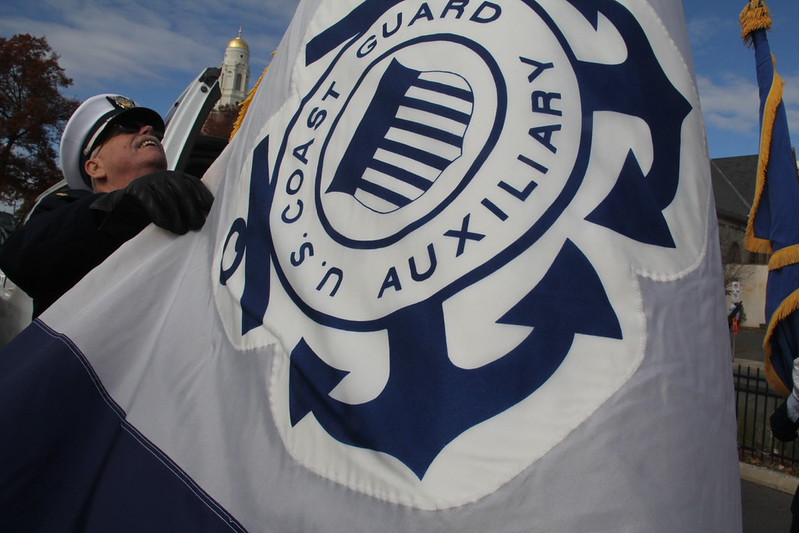
That workforce is the Coast Guard Auxiliary.
A Capability We Chose to Set Aside
The current separation between the Auxiliary and operational forces is often treated as fixed. It is not. It is the result of a historical decision—not a permanent limitation.
During World War II, the Coast Guard faced a similar challenge: too many missions, not enough uniformed personnel. The solution was not theoretical. It was practical. Civilians, including Auxiliarists, were enrolled in the Temporary Reserve and assigned to operational roles. They crewed vessels, conducted patrols, and augmented port security. ²
This was not an experiment. It was a deliberate use of available talent to meet operational demand.
After the war, the service reverted to a more structured force model. The Reserve became a formal military component. The Auxiliary remained a civilian organization. Over time, that distinction hardened—not because it had to, but because it was administratively convenient.
Today, that convenience comes at a cost.
A Workforce in Waiting
The Auxiliary is often described in terms of what it cannot do. It is more useful to consider what it already does.
Auxiliarists train alongside Coast Guard units. They conduct vessel examinations, support marine safety missions, augment public affairs, and contribute to aviation and operational support activities. Many bring civilian expertise in fields the Coast Guard actively needs—cybersecurity, engineering, medicine, and maritime operations.
Yet their employment remains constrained by design.
As argued in “A New (Old) Call to Service,” the United States does not lack citizens willing to serve; it lacks flexible mechanisms to employ them. ¹ The Coast Guard is no exception. The service has people. What it lacks is a scalable way to use them when and where they are needed most.
The Temporary Reserve provides that mechanism.
A Practical Solution, not a New Idea
Reviving the Temporary Reserve is not a call for sweeping reform. It is a call to use existing authority more deliberately.
Under a modernized approach, qualified Auxiliarists could opt into Temporary Reserve status for defined periods—three to six months—focused on specific mission requirements. This would not replace the Auxiliary’s volunteer model. It would complement it.
The benefits are immediate and measurable.
First, it restores surge capacity.
The Coast Guard cannot afford to wait months or years to generate manpower during crises. A Temporary Reserve model allows the service to draw from a trained pool and respond in weeks. 3
Second, it aligns capability with authority.
Auxiliarists already possess relevant skills. Temporary Reserve status would allow those skills to be applied where they are currently restricted, particularly in specialized mission areas.
Third, it expands the service pathway.
Not every capable American can commit to full-time military service. A temporary, mission-focused option creates a middle ground—one that reflects how people serve today.
This is not a departure from tradition. It is consistent with it.
Managing the Risks
The primary concern with reviving the Temporary Reserve is cultural. The Auxiliary’s identity as a volunteer organization must be preserved. That concern is valid—and manageable.
Participation should remain strictly voluntary. The Auxiliary’s core mission should remain intact. The Temporary Reserve should be used only where it provides clear operational value.
Administrative challenges—screening, training alignment, and command integration—are real but not unique. The Coast Guard already manages a blended workforce of active-duty members, reservists, civilians, and Auxiliarists. Adding a targeted Temporary Reserve pathway does not fundamentally change that structure.
The greater risk is not in trying this model. It is in continuing to ignore it.
Start Small, Then Decide
The appropriate next step is not debate. It is execution.
A limited pilot program, 100 to 200 Auxiliarists, activated under Temporary Reserve authority for short-duration assignments, would provide the data needed to evaluate the model. Focus areas should include marine safety, cyber operations, aviation support, and small-boat stations where the gap between demand and capacity is most evident.
Success should be measured in operational terms:
- Are mission gaps reduced?
- Are units better supported?
- Is the cost justified?
If the answer is yes, expansion follows naturally. If not, the service will have tested the concept at minimal risk.
Use What We Already Have
The Coast Guard has always been a service that adapts. It has done more with less, operated across missions, and integrated diverse capabilities long before “joint” and “total force” became common terms.
Reviving the Temporary Reserve is not innovation for its own sake. It is a recognition that the service already possesses the tools it needs—it simply has not used them.
“We need more ways for people to serve—and we’ve done it before.” ¹
The Temporary Reserve is one such way.
The question is not whether the Coast Guard can afford to revive it. It is whether it can afford not to.
Footnotes
- “A New (Old) Call to Service,” U.S. Naval Institute Proceedings, March 2026.
- U.S. Coast Guard Auxiliary, “History of the Auxiliary,” official Coast Guard Auxiliary resources.
- “No Time Like the Present to Revive the Coast Guard Temporary Reserve,” Homeland Security Today, accessed 2026.