
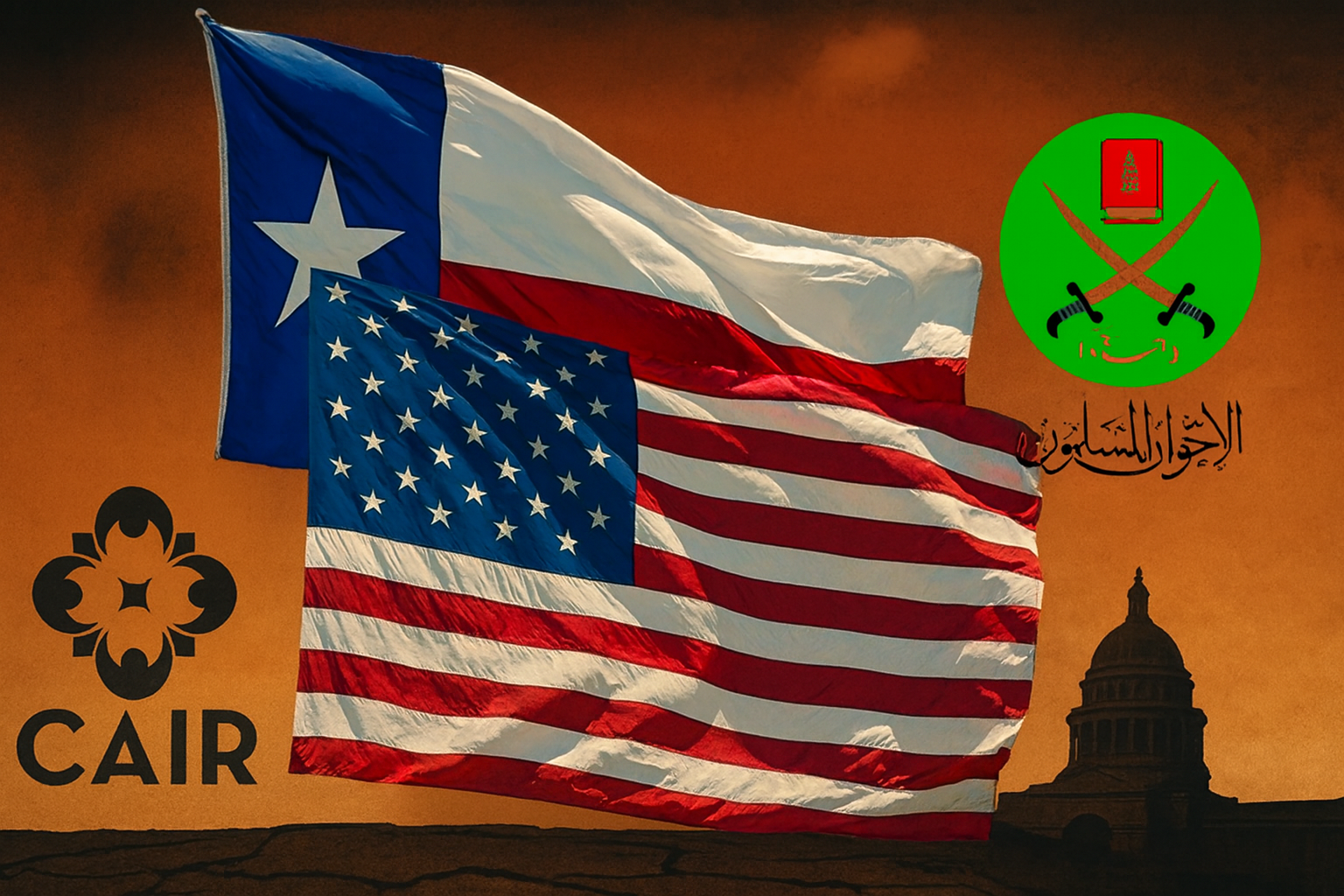
Texas Governor Greg Abbott’s recent designation of the Council on American-Islamic Relations (CAIR) and the Muslim Brotherhood as terrorist organizations on November 18, 2025, ignited debate within the national security community. The unprecedented state-level action – which occurred prior to the federal framework that typically governs such designations – raised fundamental questions about the boundaries of counterterrorism policy, the effectiveness of broad ideological labels, and the potential consequences for community relations, constitutional protections, and international cooperation.
On November 24, President Trump followed up his initial statement of intent to pursue a federal designation of the Muslim Brotherhood (MB) as a Foreign Terrorist Organization (FTO), by issuing an Executive Order doing just that for select MB chapters. Leading experts in counterterrorism, national security, and extremism weigh in for Homeland Security Today on what these developments mean for homeland security strategy, legal precedent, and America’s relationship with its Muslim communities. Their assessments reveal divisions over whether these designations represent necessary security measures or counterproductive overreach that could undermine the very community partnerships essential to preventing radicalization. (For background on Gov. Abbott’s announcement and the specific state-level actions taken, see our earlier coverage: Texas Governor Designates CAIR and Muslim Brotherhood as Terrorist Organizations in Unprecedented State Action.)
Disagree, CAIR and the Muslim Brotherhood Should Not Be Designated as FTOs
Dr. Mahmut Cengiz
Associate Professor and Research Faculty with Terrorism, Transnational Crime and Corruption Center (TraCCC) and the Schar School of Policy and Government at George Mason University (GMU), and Homeland Security Today Editorial Board Member
From a counterterrorism perspective, the main issue is whether the named entities truly meet the State Department’s legal criteria for designating a Foreign Terrorist Organization (FTO). The Muslim Brotherhood is a highly decentralized ideological movement with officially independent national branches operating in more than 90 countries. Available data on terrorism incidents indicate that the broader organization has not been directly linked to recent attacks, and the U.S. already designates Hamas, its most violent branch, as an FTO. Including the entire global Muslim Brotherhood network would be a policy decision with much broader political implications than security benefits. It also risks expanding the definition of terrorism beyond the evidentiary standard the State Department has traditionally upheld.
In practical terms, such a designation could cause several unintended effects. One concern is that it might inadvertently reinforce existing misperceptions, especially in the heightened atmosphere following the October 7 terror attacks, that counterterrorism policies target a religion rather than specific violent individuals. These narratives have been circulating in various regions for some time and are often amplified by extremist platforms for their own purposes. A broad designation could give those actors extra material to exploit, potentially strengthening their recruitment messages and increasing the risk of radicalization among individuals who already feel socially or politically marginalized.
Second, this move could unintentionally sideline moderate or politically engaged members within the Brotherhood’s various national branches, individuals who may act as buffers against more extreme networks. History shows that when such political avenues are cut off, violent organizations like ISIS and Al-Qaeda tend to fill the void. Broad designations can therefore weaken long-term counterterrorism goals by removing opportunities for nonviolent political engagement.
“History shows that when such political avenues are cut off,
violent organizations like ISIS and Al-Qaeda tend to fill the void.“
Third, there is a real risk that authoritarian governments in the region will interpret a U.S. designation as validation of their own expansive counterterrorism practices. We have already seen how counterterrorism labels can be used domestically to suppress political opposition in the Middle East. A U.S. action could further legitimize such crackdowns, narrowing civic space and reinforcing exactly the types of conditions that contribute to extremism.
Regarding CAIR, a state-level designation does not have federal authority and is unlikely to cause major changes in counterterrorism activities. However, it may symbolically add to concerns that religious identity, community advocacy, and violent extremism are all being viewed equally. This perception can make it harder to build and keep trust with American Muslim communities, which are still key partners in preventing radicalization and ensuring public safety.
In my opinion, a constructive way forward is to keep prioritizing individuals, networks, and specific groups that meet clear and evidence-based criteria for terrorist activity, rather than depending on broad ideological labels. Staying this precise not only supports legal clarity but also helps ensure that counterterrorism efforts stay focused, effective, and aligned with long-term security goals.
For more insight, read Dr. Cengiz’s July column, “Between Security and Strategy: Considerations for the Terrorist Designation of the Muslim Brotherhood.”
Dr. Suha Hassen
Minerva Peace and Security Scholar and Research Analyst, United States Institute of Peace; PhD in Conflict Analysis and Resolution from George Mason University; regular contributor to Homeland Security Today and 2025 Trailblazer.
In my opinion, the governor’s designation reflects a limited understanding of how the Muslim Brotherhood actually operates. The Brotherhood is not a conventional organization that can be dismantled through legal measures; it functions through networks of personal ties – a “brother-to-brother” connection – as well as a broad ideological and behavioral framework that extends far beyond formal structures.
Since October 7, the Muslim Brotherhood has actively leveraged manipulated narratives, significantly influencing public perception in Egypt and Jordan. Among these narratives, a common expression circulating – especially among ordinary people – is “our brother in Gaza,” reflecting the Brotherhood’s extensive network and its capacity to shape popular sentiment and penetrate society.
Because of this, such a designation is unlikely to eliminate or weaken their influence. On the contrary, moves like this often increase internal cohesion, deepen solidarity, and push actors to reorganize informally rather than disappear. Moreover, their narrative of victimhood and targeting based on religion can further strengthen radicalization and recruitment.
For additional insight into Dr. Hassen’s work, read “Manipulating the Narrative: How Hamas is Retelling Historic Islamic Battles to Influence the Muslim Community and Reshape Jihadist Ideology.”
Dexter Ingram
Founder and President of IN Network: The National Security Academy. Former Director of the State Department’s Office of Countering Violent Extremism; Acting Director of the Defeat ISIS Coalition; Senior Counter Terrorism Coordinator, Executive Director Police Services for INTERPOL; Liaison Officer for WMD Directorate of FBI; Homeland Security Today Editorial Board Member; 2024 Trailblazer
(Submitted prior to November 24 Executive Order.) This isn’t effective counterterrorism—it’s jurisdictional overreach that creates more problems than it solves.
Terrorist designations are federal for a reason: They require classified intelligence, interagency vetting, and uniform enforcement. A state governor can’t just declare domestic organizations terrorists because he disagrees with them, especially when they’re not on any federal terror list.
CAIR being named an unindicted co-conspirator 18 years ago means prosecutors didn’t have enough to charge them. Real counterterrorism (CT) work requires precision, not broad-brush accusations that lump advocacy groups with actual terrorist networks.
Effective counterterrorism depends on community partnerships—people who can spot radicalization early and trust law enforcement enough to report it. Labeling mainstream Muslim organizations as terrorists destroys that trust. It’s exactly the kind of alienation that extremist recruiters exploit.
Land restrictions without federal backing are easy to work around. Strategically, it’s a disaster. When CT tools become campaign props, they lose credibility with the agencies, allies, and communities that actually matter for security.
I expect this to face constitutional challenges. But the real cost is burning the community relationships that have been essential to disrupting plots for two decades.
Dr. Ahmet S. Yayla
Director of the Center for Homeland Security and the Master of Arts in Homeland Security program (MAHS) at DeSales University as well as an Associate Professor of Criminal Justice. Also a faculty member at Georgetown University’s School of Continuing Studies in Master’s in Applied Intelligence and an Instructor at Penn State’s Justice and Safety Institute (JASI) Counterterrorism & Intelligence program for criminal justice and homeland security professionals.
From a federal homeland security and counterterrorism standpoint, it is crucial to update the context in light of President Trump’s November 24, 2025, directive to begin the process of designating specific Muslim Brotherhood chapters, mainly in Egypt, Jordan, and Lebanon, as Foreign Terrorist Organizations (FTOs) or Specially Designated Global Terrorists (SDGTs). This action is branch-specific and does not classify the Muslim Brotherhood as a global movement, nor does it impact Muslim organizations operating within the United States. Additionally, the Council on American-Islamic Relations (CAIR) remains unfounded as a designated terrorist organization at the federal level, continues to function as a civil society and advocacy group, and has never been linked to acts of violence in the United States.
“It is also important to note that the U.S. government
has never identified any MB-affiliated individual
or CAIR affiliate as engaging in violent activity on U.S. soil,
nor have these groups been subjected to federal terrorism charges.“
It is also important to note that the U.S. government has never identified any MB-affiliated individual or CAIR affiliate as engaging in violent activity on U.S. soil, nor have these groups been subjected to federal terrorism charges. For decades, both federal law enforcement and intelligence agencies have approached domestic security threats with an evidence-based, behavior-focused perspective rather than through broad ideological labels.
Given this longstanding federal stance, the recent Texas designations primarily serve symbolic purposes. They are likely to encounter substantial constitutional and civil-liberties legal challenges, especially now that federal policy differentiates foreign MB chapters from domestic civic groups that remain lawful. Unless states meet federal evidentiary standards, such designations generally do not withstand judicial review and rarely lead to meaningful operational counterterrorism benefits.
Another concern is how this affects community involvement. Labeling domestic advocacy groups as terrorist organizations without clear evidence of violence risks alienating law-abiding communities and damaging long-standing partnerships that are crucial for effective homeland security, early warning, and community-based prevention efforts.
Meanwhile, there are well-documented cases of armed extremist groups from various ideological backgrounds who have carried out or planned acts of violence within the United States. Evidence-based threat assessment is generally the most effective and credible way to improve safety.
Overall, while the Texas action is unprecedented, its practical counterterrorism impact remains limited, and the legal, operational, and community-relations implications may outweigh any symbolic value, even in the context of the Administration’s newly announced foreign-branch-specific designations.
For Dr. Yayla’s insights into the organizational structure and operational mechanisms of terrorist cells, click here.
Agree, CAIR and the Muslim Brotherhood Should Be Designated as FTOs
Ambassador Alberto Fernandez
Vice President, Middle East Media Research Institute (MEMRI). Previously served as U.S. Ambassador to Equatorial Guinea and U.S. Charge d’Affaires to Sudan. Also held senior public diplomacy positions at the U.S. Embassies in Afghanistan, Jordan, Syria, Guatemala, Kuwait, and in the Department’s Near East Affairs (NEA) Bureau.
The Texas designation of the Muslim Brotherhood (MB) and Council on American-Islamic Relations (CAIR) is significant. We see now that the Trump Administration has announced that it intends to designate the Muslim Brotherhood as a Foreign Terrorist Organization (FTO). But while both steps, in Texas and in DC, are to be welcomed, they are merely first steps in what will be a long and complex battle. I am sure that some of this will be fought in the courts and government is going to have to be persistent and aggressive in this regard.
The MB is a diffuse organization. There is not one but many “Muslim Brotherhoods” under different names. While some obvious branches are well-known and have been declared illegal terrorist groups by friendly governments like Egypt, Jordan and the UAE, there is no one single leadership. This isn’t like ISIS or Al-Qaeda. The decentralized nature of the MB makes it harder to target. And they have a lot of experience in knowing how to cheat and skirt along the edges of the law in different jurisdictions.
There are also, including in the West, the massive presence of pro-MB front organizations, or aligned or allied groups, which will be hard to target. Some are clearly linked but with others the connection is looser, less easily defined. One of the challenges government will face is using existing laws – not just anti-terror laws – to root out these indirect allies or fellow travelers. There is a lot that law enforcement can and should do using existing criminal and administrative statutes. I think this is key in turning the powerful symbolism of these first steps into effective concrete actions. It is a long war but at least we are pointing in the right direction.
“It is a long war but at least we are pointing in the right direction.“
To explore MEMRI’s earlier insight into the Muslim Brotherhood, read “From Student Visas to Terror Networks: Why America Needs a Muslim Brotherhood Investigation.”
Dr. Hans-Jakob Schindler
Senior Director, Counter Extremism Project; member of Germany’s Task Force for the Prevention and Combat of Islamist Extremism; former Coordinator of the U.N. Security Council’s ISIL/Al-Qaeda/Taliban Sanctions Monitoring Team; and specialist in counterterrorism financing, sanctions international counter-extremism efforts.
The Muslim Brotherhood has always been exceptionally difficult to counter in the West. While there’s a clear track record of individuals connected to the Brotherhood’s network who later appeared in Al-Qaeda and other terrorist organizations, the group has been strategically careful never to explicitly promote or call for violence in Western countries. This created a significant challenge: the relationship between the Muslim Brotherhood and direct violence has always been tactical and geographically limited. The organization has used violence in Türkiye, Syria, and Egypt, but deliberately avoided it in Europe and North America, allowing it to claim protection under freedom of religion and speech.
In Europe, the Brotherhood takes this strategy even further by outright denying its existence. You won’t find anyone openly identifying as Muslim Brotherhood across the continent—they operate under different names and typically sue (though usually unsuccessfully) when government reports identify their connections. Yet the structure has been clear since the 1950s, when the Egyptian government’s crackdown prompted the Brotherhood to relocate people and money to Europe, with Geneva remaining one of their major financial hubs.
Austria’s Operation Luxor in 2020 illustrates the difficulty of this challenge. Police raided Muslim Brotherhood-connected offices and seized substantial material, but attempts to bring terrorism charges ultimately backfired because criminal prosecution requires concrete evidence of planned violence or attacks. This failure scared many European governments away from similar approaches.
Now that the federal Foreign Terrorist Organization (FTO) designation process has begun, it will very likely significantly complicate Muslim Brotherhood operations worldwide, particularly through financial channels. Even if European governments cannot or will not designate the Brotherhood, European banks will be extremely reluctant to handle accounts of a U.S.-designated terrorist organization due to dollar-based transactions. However, since the Brotherhood denies its own existence, many bank accounts are Brotherhood-connected but not Brotherhood-labeled, potentially allowing some to escape scrutiny.
Canada has taken a particularly effective approach through tax investigations rather than terrorism charges. What began as a single tax audit of a small charity – examining whether it was operating within its licensed mandate – expanded into a comprehensive mapping of Canada’s Muslim Brotherhood network. Tax investigations are difficult to evade; financial transactions between organizations provide conclusive proof of connections that can’t be dismissed as merely “similar ideas.” This approach gave Canadian authorities a more complete understanding of Muslim Brotherhood structures in their country.
The Texas designation itself has limited operational impact beyond preventing state contracts within Texas, but it serves as crucial proof of concept that under American legal conditions, designating the Muslim Brotherhood as a terrorist organization is viable. The federal government is now replicating this at the national level. For the FTO designation, they seemed to have focused on violent incidents where the Brotherhood was clearly involved outside the U.S., for example, in the Middle East.
There will inevitably be pushback claiming this “tarnishes all Muslims with terrorism” or represents Islamophobia. This argument is ludicrous—the Muslim Brotherhood represents only a small subset of Muslims in Europe and North America, not the broader Muslim population. It’s no different from designating Al-Qaeda as terrorist; that doesn’t implicate all Muslims. The Brotherhood has been strategic in building networks through educational institutions and media contacts, silencing critics by framing opposition as racism or unjustifiable connections.
“It’s significant that Middle Eastern governments
– by no means uniformly pro-Israel or pro-West –
have designated the Muslim Brotherhood as terrorists.“
It’s significant that Middle Eastern governments – by no means uniformly pro-Israel or pro-West – have designated the Muslim Brotherhood as terrorists. Saudi Arabia, the UAE, Bahrain, Egypt, and Jordan all reached this conclusion. None of these legally classify Hamas as a terror group. When regional governments view the Brotherhood as a greater danger than Hamas itself, perhaps it’s not simply about Islamophobia.
Going harder after these networks in this particular situation is not just strategically sound—it’s operationally necessary.
Mubin Shaikh
Editor-at-Large for the Intervention vertical at Homeland Security Today; former undercover operative for the Canadian Security Intelligence Service (CSIS) and the Royal Canadian Mounted Police (RCMP) Integrated National Security Enforcement Team. Over 20 years and counting working as a subject-matter expert in national security and counterterrorism, and works as an Interventionist for Parents for Peace.
(Submitted prior to November 24 Executive Order.) It is a good move, finally taking the threat of the Muslim Brotherhood (MB) seriously. If anything, it’s sad that it took so long, because now these organizations are entrenched, with millions of dollars at their disposal and have control over the largest Mosques in the country. Their hijacking of Islam into a political ideology is largely why we see so much extremism and terrorism around the world as manifested in violent groups like AQ and ISIS, all of whom draw from the same wellspring of an aggressive form of Islam that they believe must be wielded as a weapon, not practiced as a faith.
There is a lot that can be done by this legislation, and will be even worse for the MB if this is taken up at the federal level. This will prevent their ideologues from being able to scheme against society, and will stop them in their tracks when it comes to acquiring more influence among the Muslim population in America. Some sympathetic Muslims have tried to suggest that this is just an excuse to go after Muslims at large but no other organization has been shown to be as active as a foreign infiltration organization like CAIR.
No doubt there will be many liberal types who will come to their defense, as they have been strategic in making allies especially among progressive circles, all of whom are woefully ignorant of what the MB is. The late Sufi Master, Hisham Kabbani said in 1999 how 80% of Muslim organizations in America were under the influence of extremists. Fast forward to today and his comments are more true than ever, with the vast majority of Muslim organizations firmly in the orbit of groups like CAIR, which itself has positioned itself as the de facto gatekeeper of all things Islam and Muslims.
For more insight, read Mubin Shaikh’s “PERSPECTIVE: Weaponizing Islam: How Both Sides Get It Wrong.”

Editor-in-Chief at The Jerusalem Strategic Tribune; Lecturer at the University of Haifa; Senior Fellow Jerusalem Institute for Strategy and Security; and President of Inter Jewish Muslim Alliance
President Trump’s Executive Order designating three chapters of the Muslim Brotherhood as Foreign Terrorist Organizations and Specially Designated Global Terrorists is a major step forward for counterterrorism efforts. It will enable the intelligence community and the Departments of State, Treasury and Homeland Security to take legal actions against lslamist violence that targets Americans and American interests. It’s long overdue, and it is just a start.
In the late 1990s, I served as a political officer in the U.S. Embassy in Cairo and was authorized to hold meetings with leaders of the Egyptian Muslim Brotherhood, who had been elected to the boards of Egyptian labor unions and professional associations. So, I got to know the Egyptian Muslim Brotherhood and their leaders in intimate detail, which strengthens my sense that this measure is long overdue.
Next steps must include rigorous enforcement of this EO. Presumably, the intelligence community has been conducting investigations in anticipation of this move so that, for example, U.S. Treasury can shortly begin the process of freezing bank accounts and seizing assets.
Homeland Security will have a very important role in enforcing this EO. Let me give one potential implementation step. There is a special expedited immigrant visa category for religious workers, and American Muslim communities may use it to bring foreign-trained imams to serve in their mosques. This is perfectly legal, but following this EO, imams trained in institutions controlled by the Muslim Brotherhood should be excluded from entering from the United States.

Retired from the Federal Bureau of Investigation (FBI) with over 24 years of experience, including having served as a Certified FBI Behavioral Analysis Unit (BAU) “Profiler.” Former Military Intelligence officer in the Indiana Army National Guard, achieving the rank of Captain (O-3). Homeland Security Today Editorial Board Member.
The designation of the Muslim Brotherhood as a foreign terrorist organization (FTO) is long overdue. As the backbone of modern day terrorism, their ideological impact has reverberated through the jihadi-driven community, even as the backbone for and provided a roadmap for those who intend to cause harm. Now, intelligence and law enforcement will have additional authorities at their disposal to tackle this nefarious and ideologically motivated groups and more swiftly disrupt their cells.
Balancing Security and Strategy on the Path Forward
The expert perspectives presented here reveal a fundamental tension at the heart of today’s counterterrorism policy: the balance between decisive action against potential threats and the precision required for effective, legally sound security measures. There’s also the potential international ramifications of FTO designations: disrupting global terror financial networks and signaling to European allies that coordinated action is viable. While some analysts view the Texas designation and now President Trump’s Executive Order as long-overdue acknowledgment of ideological networks that fuel extremism, others warn that broad-brush approaches risk alienating the community partners who remain essential to identifying and disrupting actual threats.
CAIR’s legal arm and the Muslim Legal Fund of America, a legal advocacy group for Muslims, sued both Abbott and Texas Attorney General Ken Paxton on Thursday, November 20, to prevent the enforcement of Abbott’s designation. On social media, the governor noted that it was “great” that CAIR was threatening to sue the state for being designated a terror organization. “The lawsuits will open the doors to all of their financial transactions and funding. To all of their dealings and misdeeds,” he wrote. “The Attorney General will have a heyday.”
This pending lawsuit and anticipated legal challenges, in combination with the Trump Administration’s 75-day timeline for federal FTO and Specially Designated Global Terrorist (SDGT) designations of specific Muslim Brotherhood chapters, ensures this debate will continue to evolve as it moves from theoretical to operational. The coming weeks also will test whether chapter-specific designations based on documented violent activities can meet the legal foundations and evidentiary standards that have traditionally governed U.S. counterterrorism policy, and whether this approach proves more effective than the broad organizational labels some had anticipated.
What remains clear is that the effectiveness of any counterterrorism measure will ultimately be judged not by its symbolic impact, but by whether it enhances or undermines America’s ability to prevent violence while preserving the constitutional principles and community trust that underpin long-term security.