
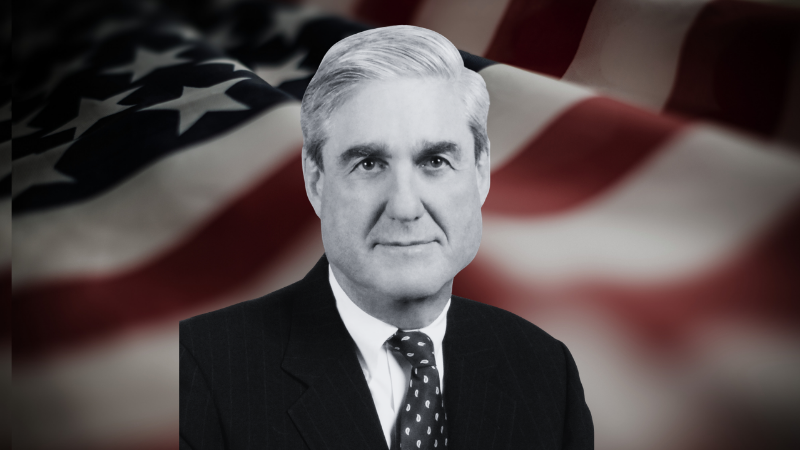
Robert S. Mueller III, the former FBI director who led the bureau through the aftermath of the September 11 attacks and later oversaw the high-profile investigation into Russian interference in the 2016 U.S. election, died March 20, 2026, at age 81.
His family confirmed his death in a statement, requesting privacy. A specific cause was not immediately disclosed, though Mueller had been living with Parkinson’s disease in recent years.
Mueller’s career spanned decades of public service, national security transformation, and politically sensitive investigations, cementing his legacy as one of the most consequential law enforcement leaders of the post-9/11 era.
Transforming the FBI After 9/11
Mueller was sworn in as the sixth Director of the Federal Bureau of Investigation on September 4, 2001—just one week before the terrorist attacks that would define his tenure.
Over the next 12 years, he led a sweeping transformation of the FBI from a primarily criminal investigative agency into an intelligence-driven organization focused on preventing terrorism.
Serving under both Republican and Democratic administrations, Mueller became one of the longest-serving FBI directors since J. Edgar Hoover, guiding the bureau through major structural, technological, and cultural changes aimed at counterterrorism and national security.
Special Counsel and the Russia Investigation
Mueller returned to public service in 2017 when he was appointed special counsel to oversee the Justice Department’s investigation into Russian interference in the 2016 presidential election and possible ties to the Trump campaign.
The nearly two-year investigation resulted in multiple indictments and convictions of Trump associates but did not establish a criminal conspiracy between the campaign and Russia.
Mueller’s report also documented evidence related to potential obstruction of justice but did not reach a prosecutorial conclusion on the matter, citing longstanding Department of Justice policy.
The probe placed Mueller at the center of intense political debate, drawing both praise for his independence and criticism from across the political spectrum.
A Career Defined by Public Service
Born August 7, 1944, in New York City, Mueller was educated at Princeton University, New York University, and the University of Virginia School of Law.
Before entering government service, he served as a Marine Corps officer in Vietnam, where he was awarded the Bronze Star, Purple Heart, and other commendations for combat service.
Mueller went on to hold a series of senior Justice Department roles, including:
- U.S. Attorney for the Northern District of California
- Assistant Attorney General for the Criminal Division
- Acting Deputy Attorney General
Throughout his career, he built a reputation as a disciplined, apolitical prosecutor who handled major cases ranging from terrorism to organized crime and international narcotics networks.
Leadership Style and Legacy
Known for his reserved demeanor and strict adherence to institutional integrity, Mueller emphasized mission over personal recognition. Colleagues often described him as methodical, nonpartisan, and deeply committed to the rule of law.
His leadership helped reshape U.S. federal law enforcement for the 21st century, particularly in integrating intelligence and law enforcement functions after 9/11—changes that continue to influence homeland security operations today.
At the same time, his role as special counsel ensured his legacy would remain intertwined with one of the most politically charged investigations in modern American history.
Personal Life
Mueller is survived by his wife, Ann Cabell Standish, two daughters, and grandchildren.
Enduring Impact
From the battlefields of Vietnam to the highest ranks of federal law enforcement, Robert Mueller’s career reflected a lifetime of service at the intersection of justice, intelligence, and national security.
For the homeland security community, his tenure marked a turning point—one that redefined the FBI’s mission and reshaped how the United States confronts evolving threats in an increasingly complex global landscape.