
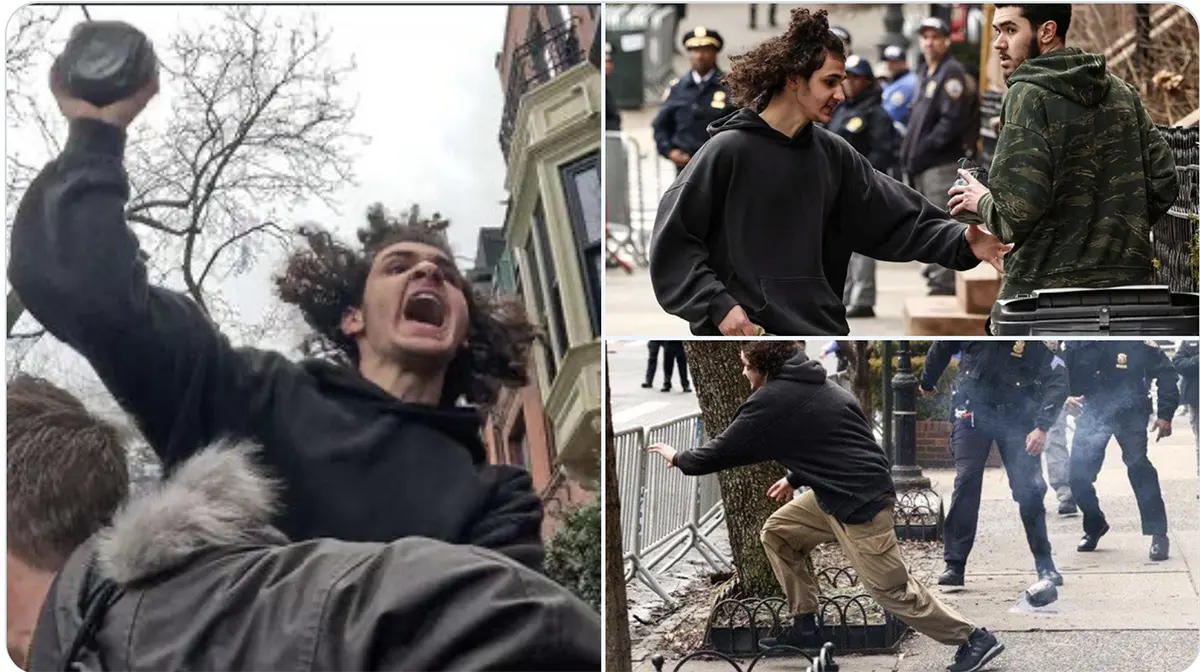
The ISIS-inspired attack outside Gracie Mansion on March 7, 2026, represents one of the most operationally significant terrorism incidents in New York City since the December 2017 Port Authority attack. Unlike lone-actor incidents that are often impulsive and poorly planned, the Gracie Mansion case involved prior material preparation, acquisition of precursor chemicals, construction of multiple improvised explosive devices (IEDs), and interstate travel to a pre-selected target. That both suspects were teenagers with no prior criminal records underscores the evolving nature of radicalization in the ISIS ecosystem and the challenge it poses to preventive intelligence and counterterrorism.
No injuries were reported because the devices failed to detonate, and officers, to their credit, quickly subdued both suspects. The failure of the devices appears to have been due primarily to technical malfunction rather than proactive disruption by law enforcement. Nevertheless, the operational preparation, the lethality potential of the devices, and the stated intent to exceed the casualty count of the 2013 Boston Marathon bombing make this a case of higher analytical and policy significance.
This analysis draws on the federal criminal complaint filed in the Southern District of New York, statements by law enforcement officials, open-source intelligence, and the author’s more than 20 years of experience as a counterterrorism police chief to reconstruct the timeline of events, assess the ideological motivations behind the attack, and derive operational lessons for homeland security practitioners.
Incident Overview
Timeline and Sequence of Events
Emir Balat, 18, and Ibrahim Kayumi, 19, traveled from Bucks County, Pennsylvania, in the greater Philadelphia region into New York City on the morning of March 7, 2026, arriving near Gracie Mansion on the Upper East Side at approximately 12:05 p.m.[i] Two simultaneous demonstrations were underway: an anti-Muslim protest organized under the banner “Stop the Islamic Takeover of New York City,” associated with far-right influencer Jake Lang and drawing dozens of participants, and a counter-protest titled “Run Nazis Out of New York City,” which attracted over a hundred participants.[ii]
Mayor Mamdani was not present at Gracie Mansion during the incident, as he and his wife were at the New York Sign Museum in Brooklyn at the time.[iii]
Shortly after noon, Balat threw the first IED toward the anti-Muslim protesters along East End Avenue near East 87th Street. The device struck a barrier and extinguished itself. Witnesses reported visible flames and smoke. Balat then retrieved a second device from Kayumi, ignited it, and dropped it near a group of NYPD officers before attempting to flee. He was tackled and arrested by officers. Kayumi was also apprehended at the scene.[iv]
Law enforcement subsequently located a third device or components recovered from a nearby vehicle registered to a family member of Balat, parked a few blocks from Gracie Mansion. The vehicle also contained components for and notes about manufacturing IEDs.[v] Authorities conducted an FBI-authorized search of a storage unit in Pennsylvania in connection with the investigation.
Device Construction and Explosive Materials
Preliminary forensic testing confirmed that at least one device contained TATP (triacetone triperoxide), a primary explosive colloquially known as the “Mother of Satan”[vi]. TATP has been a hallmark material in ISIS and AQ-affiliated attacks globally, including the 2017 Barcelona cell, which lost two operatives during improper synthesis. Its continued use in this case, despite the availability of alternative materials, is consistent with ISIS-aligned tradecraft circulating in online propaganda ecosystems, including improvised explosive device manuals distributed through jihadist channels, such as the AQAP Inspire one titled “Make a Bomb in the Kitchen of Your Mom.”
The devices were constructed in jar-like improvised containers fitted with fuses and reinforced with nuts, bolts, and duct tape to enhance fragmentation upon detonation, characteristics typical of anti-personnel IED design intended to maximize fragmentation casualties[vii]. FBI Special Agent Bomb Technicians assessed the devices as capable of causing serious injury or death. The use of improvised jar containers as housing is consistent with limited rather than sophisticated formal training. One law enforcement official briefed on the case noted that this construction method pointed away from advanced technical instruction[viii], as expected and in line with self-radicalized lone actor attacks.
Ideological Motivation and ISIS Affiliation
Declarations of Allegiance
Both suspects made unambiguous declarations of ISIS affiliation during and following their arrest. According to the criminal complaint, Balat waived his Miranda rights and authored a written statement pledging allegiance to the Islamic State, concluding with the phrase “Die in your rage, you kuffar,” recognizable ISIS rhetoric[ix]. Immediately following his arrest, Kayumi stated to bystanders that his motivation was ISIS. Kayumi subsequently told investigators he had consumed ISIS propaganda on his phone and considered himself affiliated with the organization.
Balat also reportedly stated to police his aspiration to exceed the 2013 Boston Marathon bombing in lethality, which he characterized as having resulted in only three deaths[x]. This stated ambition for mass-casualty impact, combined with the fragmentation design of the IEDs, reflects a tactical intent consistent with ISIS’s longstanding guidance to its global supporters.
The style of the attack from this perspective aligns with previous calls from ISIS central, urging their supporters to carry out random attacks as shown in their videos and manuals published online without their supervision or involvement.
Target Selection and Strategic Context
The targeting of an anti-Muslim protest is analytically significant. Open-source monitoring of ISIS’s media ecosystem has documented the group’s calls for supporters to target right-wing and anti-Muslim actors in the West. The Gracie Mansion ISIS-inspired attack appears to reflect this operational guidance: the primary IED was directed at demonstrators associated with Islamophobic activism, while the secondary device was thrown toward NYPD officers after Balat was identified and pursued[xi].
Regarding the broader geopolitical context, authorities stated there is currently no evidence linking the attack to broader geopolitical tensions. NYPD Commissioner Tisch explicitly noted there was no confirmed evidentiary link between the attack and any ongoing international conflicts[xii].
Radicalization Pathways and the Online Ecosystem
Neither suspect had prior criminal history, and neither had been previously identified by federal law enforcement as a person of concern. Balat, however, reportedly traveled to Istanbul between May 6 and August 26, 2025, a trip now under investigation by federal authorities. Investigators were examining this overseas travel as part of the ongoing probe to determine whether direct contact with ISIS-affiliated networks occurred during this time[xiii].
Kayumi’s radicalization pathway appears primarily digital. His admission that he consumed ISIS propaganda on his phone reflects the group’s well-documented strategy of leveraging encrypted social media platforms and messaging applications such as Telegram[xiv] to reach sympathizers in Western countries. Accordingly, the NYPD’s head of counterterrorism, Rebecca Weiner, noted that the case fits a disturbing pattern: younger and younger individuals are radicalizing and mobilizing to violence, a dynamic occurring against the backdrop of social media and online culture[xv].
ISIS has explicitly promoted this decentralized mobilization model since the collapse of its territorial caliphate in 2019, encouraging supporters to carry out attacks independently using readily available materials and simple tactics.
Of particular analytical interest is the question of whether the attack was merely inspired by ISIS or actively facilitated by the organization’s networks. The precursor chemical notes recovered from the suspects’ vehicle suggest familiarity with TATP recipes consistent with those circulating in ISIS-aligned online propaganda. Investigators have not yet publicly confirmed whether the pair received direct coaching from ISIS-affiliated individuals at the time of writing, and this question remains central to the ongoing investigation, although the attack structure suggests a self-directed micro-cell rather than centrally directed terrorism[xvi].
Homeland Security Implications
Threat Detection Gaps
The Gracie Mansion case exposes persistent gaps in the detection of radicalized individuals who present no prior law enforcement footprint. Balat and Kayumi were unknown to federal authorities prior to the attack. Their preparation, which included sourcing fuse materials from a fireworks retailer in Penndel, Pennsylvania, five days before the incident, did not trigger any investigative alert, despite the potentially identifiable nature of TATP precursor chemical acquisition[xvii].
This case reflects the well-documented “lone-actor detection paradox,” in which the absence of communications that enable operational secrecy simultaneously deprives intelligence agencies of interceptable signals.
This points to the need for enhanced information-sharing frameworks between federal, state, and local law enforcement regarding the monitoring of precursor chemical purchases and suspicious IED component acquisitions, particularly in communities that may not have robust Joint Terrorism Task Force (JTTF) coverage. The FBI’s rapid mobilization of the JTTF following the incident demonstrates the value of that architecture, but the case underscores that the primary failure occurred in the pre-attack prevention phase.
Soft Target and Protest Environment Security
The choice of a public protest as the attack venue reflects a broader ISIS strategic preference for soft targets with high visibility and symbolic value. Protest environments present a particularly challenging security posture: large, dynamic crowds; competing political interests that may resist law enforcement over-presence; and the constitutional protections of assembly that constrain proactive intervention.
The rapid response by NYPD officers, specifically Chief Aaron Edwards and Sergeant Luis Navarro, who were praised by Mayor Mamdani for running toward the threat, was decisive in preventing the detonation of the second device and neutralizing both suspects. Following the incident, authorities increased security presence around sensitive sites across New York City. Mayor Mamdani stated that anyone who comes to New York City to commit violence would be held accountable under the law[xviii].
Countering Violent Extremism (CVE) and Youth Radicalization
The youth of both suspects, 18 and 19 years old, and the apparent primacy of online radicalization in at least one case demands renewed investment in Countering Violent Extremism (CVE) programs targeting adolescents and young adults. Community-based intervention programs, school-based threat assessment protocols, and digital literacy initiatives that inoculate at-risk youth against extremist messaging are all evidence-based preventive tools with demonstrated efficacy. The Council Rock School District’s prompt communication to parents and encouragement to report concerns exemplifies best-practice community response[xix]. However, these efforts must be systematized and adequately resourced at both the federal and local levels to have meaningful impact at scale.
Legal Framework and Prosecutorial Strategy
Balat and Kayumi face five federal counts, including providing material support to a designated foreign terrorist organization, use of a weapon of mass destruction, transportation of explosive materials, unlawful possession of destructive devices, and interstate transportation and receipt of explosives[xx]. Both were ordered held without bail following their initial appearance in Manhattan federal court. The prosecution by the Southern District of New York, historically the nation’s leading venue for federal terrorism cases, signals the government’s intent to pursue the maximum available penalties.
Conclusion
The attempted ISIS-inspired attack outside Gracie Mansion represents an important indicator of the evolving terrorism landscape in the United States. The case demonstrates that ISIS continues to retain the ideological capacity to inspire violent action on U.S. soil, even when direct organizational command or facilitation is unclear. Two young individuals with no prior criminal record were able to progress from ideological radicalization to operational mobilization, highlighting the persistent threat posed by decentralized extremist ecosystems.
One of the most significant lessons from this incident is the continuing difficulty intelligence and law enforcement agencies face in detecting and preventing lone-actor or small-cell plots. When individuals radicalize largely online, maintain minimal communication with external networks, and avoid direct contact with known terrorist organizations, traditional intelligence collection methods become far less effective. The absence of operational communication with established terrorist structures severely limits the indicators that intelligence services typically rely on for early detection. In such cases, investigative visibility may only emerge once the perpetrators begin acquiring materials or physically mobilizing toward an attack.
This challenge underscores a structural limitation in counterterrorism prevention. Intelligence systems are designed primarily to detect networks, communications, and patterns of coordination. Lone actors or micro-cells operating independently leave far fewer detectable signals. As demonstrated in this case, the perpetrators were able to acquire materials, construct devices, and travel across state lines without triggering an investigative response prior to the attack attempt. The fact that the plot failed largely due to device malfunction rather than successful interdiction should serve as a sobering reminder for counterterrorism professionals.
A broader social dimension must also be acknowledged. The increasingly polarized and divisive political environment in the United States risks creating fertile ground for radicalization across multiple ideological spectrums. Escalating rhetoric, dehumanizing narratives, and identity-based political mobilization can contribute to an atmosphere in which vulnerable individuals, particularly younger audiences, are pushed toward the margins. Extremist organizations and propaganda networks exploit these grievances, presenting violence as a perceived form of justice, revenge, or defense of identity. When such narratives intersect with youth identity crises, online echo chambers, and algorithmic amplification of extremist content, the pathway to radicalization can accelerate rapidly.
Another important factor in this case appears to be peer reinforcement. While much of the discussion surrounding terrorism prevention focuses on lone actors, many attacks actually involve very small clusters of individuals who reinforce each other’s beliefs and intentions. The presence of a peer can normalize extremist ideas, strengthen commitment to violent action, and reduce psychological barriers to carrying out an attack. In this case, the two perpetrators likely reinforced and encouraged one another throughout the radicalization and preparation process, increasing their resolve and lowering the threshold for operational mobilization.
Research on small-group radicalization consistently shows that peer reinforcement accelerates commitment to violent action by normalizing extremist beliefs and lowering psychological barriers to violence.[xxi]
Taken together, the Gracie Mansion case highlights several key policy implications. First, the online radicalization ecosystem connected to ISIS and similar extremist movements remains active and continues to reach younger audiences. Second, precursor chemical acquisition and improvised explosive device preparation remain among the most important actionable indicators available to law enforcement during the pre-attack phase. Third, the security of public assembly spaces, including protests and demonstrations, requires coordinated planning between law enforcement, municipal authorities, and event organizers due to their attractiveness as symbolic soft targets.
As the investigation continues, authorities are examining Balat’s overseas travel history and potential contacts with ISIS-affiliated networks. Whether the plot ultimately proves to be purely ISIS-inspired or demonstrates elements of organizational facilitation will shape the analytical interpretation of the incident. Regardless of that determination, the attempted attack reinforces an enduring reality: decentralized extremist movements retain the ability to mobilize young individuals toward violence with little warning. Addressing this challenge will require not only improved detection mechanisms but also sustained efforts to counter online radicalization, reduce societal polarization, and strengthen community-based prevention frameworks.
REFERENCES
[i] U.S. Department of Justice. (2026, March 10). Two ISIS supporters charged with attempting to detonate explosive devices during protests outside Gracie Mansion. https://www.justice.gov/opa/pr/two-isis-supporters-charged-attempting-detonate-explosive-devices-during-protests-outside
[ii] City & State New York. (2026, March 9). Attempted bombing at Gracie Mansion investigated as act of ISIS-inspired terrorism. https://www.cityandstateny.com/politics/2026/03/islamophobic-demonstration-outside-gracie-mansion-leads-6-arrests/411968/
[iii] NPR. (2026, March 9). Attempted attack with explosives in NYC investigated as ISIS-inspired terrorism. https://www.npr.org/2026/03/09/nx-s1-5742434/explosives-new-york-zohran-mamdani-isis
[iv] U.S. Department of Justice. (2026, March 10). Two ISIS supporters charged with attempting to detonate explosive devices during protests outside Gracie Mansion. https://www.justice.gov/opa/pr/two-isis-supporters-charged-attempting-detonate-explosive-devices-during-protests-outside
[v] CBS New York. (2026, March 10). Suspects charged in alleged ISIS-inspired attack near NYC’s Gracie Mansion. https://www.cbsnews.com/newyork/news/zohran-mamdani-gracie-mansion-ied-nypd-explosive-jessica-tisch/
[vi] CBS News. (2026, March 10). FBI launches terrorism investigation as authorities say ISIS-inspired attack targeted NYC mayor’s residence.https://www.cbsnews.com/news/fbi-investigation-terrorism-explosive-device-new-york-city-mayor-mamdani-gracie-mansion/
[vii] U.S. Department of Justice. (2026, March 10). Two ISIS supporters charged with attempting to detonate explosive devices during protests outside Gracie Mansion. https://www.justice.gov/opa/pr/two-isis-supporters-charged-attempting-detonate-explosive-devices-during-protests-outside
[viii] CNN. (2026, March 10). What we know about 2 terror suspects accused of tossing makeshift bombs near NYC Mayor Mamdani’s home. https://www.cnn.com/2026/03/10/us/mamdani-gracie-mansion-protest-what-we-know
[ix] U.S. Department of Justice. (2026, March 10). Two ISIS supporters charged with attempting to detonate explosive devices during protests outside Gracie Mansion. https://www.justice.gov/opa/pr/two-isis-supporters-charged-attempting-detonate-explosive-devices-during-protests-outside
[x] ABC News. (2026, March 9). Suspects in NYC mayor’s home IED attack wanted it ‘even bigger’ than Boston Marathon bombing, officials say. https://abcnews.go.com/US/explosive-thrown-nyc-mayors-residents-probed-act-isis/story?id=130897179
[xi] Chambers, H. (2026, March 11). Islamic State-linked NYC explosives attack fails. Militant Wire. https://www.militantwire.com/p/analysis-islamic-state-linked-nyc
[xii] City & State New York. (2026, March 9). Attempted bombing at Gracie Mansion investigated as act of ISIS-inspired terrorism. https://www.cityandstateny.com/politics/2026/03/islamophobic-demonstration-outside-gracie-mansion-leads-6-arrests/411968/
[xiii] CBS News. (2026, March 10). FBI launches terrorism investigation as authorities say ISIS-inspired attack targeted NYC mayor’s residence.https://www.cbsnews.com/news/fbi-investigation-terrorism-explosive-device-new-york-city-mayor-mamdani-gracie-mansion/
[xiv] Yayla, A. S., & Speckhard, A. (2017, May 10). Telegram: The mighty application that ISIS loves. Modern Diplomacy.https://moderndiplomacy.eu/2017/05/10/telegram-the-mighty-application-that-isis-loves/
[xv] NPR. (2026, March 9). Attempted attack with explosives in NYC investigated as ISIS-inspired terrorism. https://www.npr.org/2026/03/09/nx-s1-5742434/explosives-new-york-zohran-mamdani-isis
[xvi] Yayla, A. S. (2025). Anatomy of terrorist cells: A critical examination and identified gaps in current research. Studies in Conflict & Terrorism, 1–28. https://doi.org/10.1080/1057610X.2025.2471294
[xvii] CBS Philadelphia. (2026, March 10). Two Bucks County, Pennsylvania men charged in ISIS-inspired attack outside NYC Mayor Mamdani’s residence. https://www.cbsnews.com/philadelphia/news/zohran-mamdani-gracie-mansion-philadelphia/
[xviii] ABC News. (2026, March 9). Suspects in NYC mayor’s home IED attack wanted it “even bigger” than Boston Marathon bombing.https://abcnews.go.com/US/explosive-thrown-nyc-mayors-residents-probed-act-isis/story?id=130897179
[xix] Gothamist. (2026, March 10). Investigators probing Gracie Mansion IED incident as act of ISIS-inspired terrorism. https://gothamist.com/news/gracie-mansion-ied-incident-probed-as-act-of-isis-inspired-terrorism-nyc-officials
[xx] U.S. Department of Justice. (2026, March 10). Two ISIS supporters charged with attempting to detonate explosive devices during protests outside Gracie Mansion. https://www.justice.gov/opa/pr/two-isis-supporters-charged-attempting-detonate-explosive-devices-during-protests-outside
[xxi] Yayla, A. S. (2021). Prevention of recruitment to terrorism. In A. P. Schmid (Ed.), Handbook of terrorism prevention and preparedness (Chapter 13). International Centre for Counter-Terrorism (ICCT). https://icct.nl/sites/default/files/2023-01/Chapter-13-Handbook.pdf