

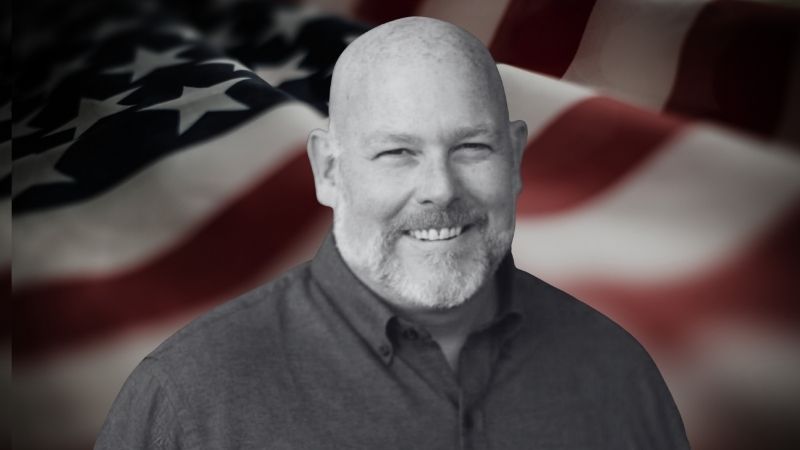
Erik Modisett, a U.S. Navy veteran, longtime federal law enforcement professional, and a key figure in the development of the nation’s counter-unmanned aircraft systems (C-UAS) enterprise, passed away unexpectedly on June 3, 2026, at the age of 50.
Born on July 15, 1975, in Kokomo, Indiana, and raised in Windfall, Modisett graduated from Tri-Central High School in 1993 before earning a Bachelor of Science in Aviation Management from Purdue University and a master’s degree in International Relations from The Fletcher School of Law and Diplomacy at Tufts University.
His career in public service spanned nearly three decades. After serving in the U.S. Navy during Operation Desert Storm, Modisett joined the Federal Air Marshal Service before becoming a pilot with U.S. Customs and Border Protection’s Air and Marine Operations. Throughout his career, he earned a reputation for professionalism, integrity, and dedication to protecting the nation.
Within the homeland security community, Modisett played a significant role in helping establish the federal government’s counter-drone capabilities. He was among the small group of professionals responsible for developing and implementing many of the policies, operational authorities, and capabilities that underpin the United States’ modern C-UAS framework.
His work contributed to counter-drone authority implementation across the Department of Homeland Security and Department of Justice, informed the President’s National Counter-UAS Action Plan, supported the development of the SAFER SKIES Act, and helped advance efforts to strengthen counter-drone capabilities for state, local, tribal, and territorial partners.
Modisett also founded and led the Center for Air and Marine Drone Exploitation (CAMDEx), DHS’s dedicated drone forensics laboratory, creating a capability designed to support investigations involving unmanned aircraft systems and strengthen the department’s technical expertise in drone exploitation.
Following his retirement from federal service, Modisett had recently accepted a position as Assistant Professor in Purdue University’s School of Applied and Creative Computing, where he was preparing to begin teaching his first students later this year.
Friends and colleagues also remembered his lifelong passion for aviation and travel. A licensed pilot, he visited six of the world’s seven continents while combining his love of flying with a career dedicated to national security.
His legacy spans military service, federal law enforcement, aviation, and the evolution of America’s counter-drone mission, while the capabilities he helped establish continue to support homeland security efforts across the country.