
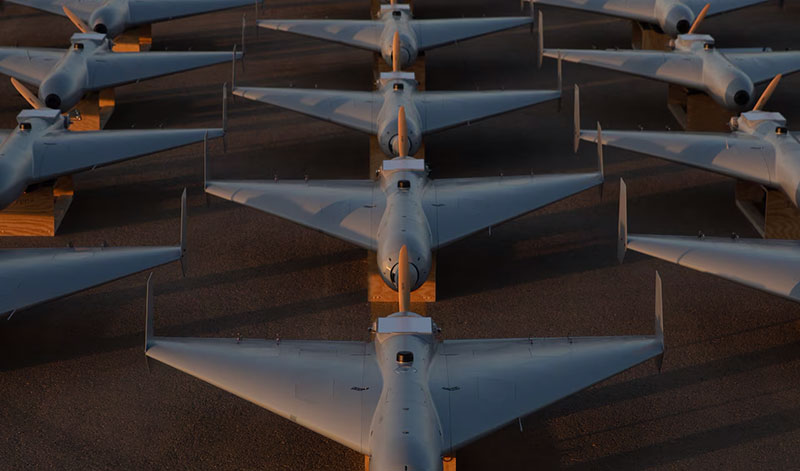
The current US campaign against Iran is best understood not as an isolated military battle, but as the open phase of a protracted conflict that has been building for decades through nuclear aspirations, proxy warfare, regional bullying, drone and missile threats.
President Trump’s March 2 remarks made that point by grounding the discussion in institutional memory rather than abstraction. “Every time you see someone with missing arms and legs or a face that’s been absolutely shattered violently, it was almost certainly caused by an Iran roadside bomb,” he said. That line was meant to recall what much of the U.S. military and national security establishment has not forgotten since Iraq. For many American officials, Iran’s role in backing armed networks that targeted US forces is not a distant historical issue. It remains part of how the threat is understood today.
That memory also helps explain why the administration is presenting the current operation as a continuation of a long war rather than the start of a new one. President Trump said, “for almost 47 years, this regime has been attacking the United States and killing Americans.”
Secretary of State Marco Rubio then translated that broader argument into present operational logic, saying the United States acted “preemptively” because it expected Israeli action to trigger attacks on American forces and believed that without US action, “we would suffer higher casualties.” At the Pentagon, Defense Secretary Pete Hegseth described a “decisive mission” focused on degrading Iran’s missile threat, weakening its naval capacity, and ensuring it can “never have nuclear weapons.” Trump’s administration remarks form a clear policy case that Washington sees the present campaign as a necessary response to a long-maturing threat.
Yet the central issue is not only Iran’s direct capabilities. It is the regional architecture Tehran built over years through partners, proxies, and aligned armed movements. Hezbollah in Lebanon, the Houthis in Yemen, and Iran-backed militias in Iraq are not side actors in this story. They are central to it. They give Tehran strategic depth, plausible deniability, and the ability to impose pressure across several fronts at once.
Lebanon now illustrates that problem sharply. After rockets were launched from Hezbollah-controlled territory south of the Litani River, the Lebanese government responded with one of its strongest statements in years, declaring that all military and security activity outside state institutions is unacceptable and that the decision of war and peace belongs only to the Lebanese state. It also called for the immediate prohibition of Hezbollah’s military and security activity and demanded that weapons be confined to the state. Whatever the practical limits of enforcement, the political message was significant. Beirut is signaling that it understands the danger of being drawn into a wider war by a non-state actor operating beyond full national control.
Iraq presents the same challenge in another form. Pro-Iranian militia networks there have circulated claims and footage suggesting drone and missile launches against US positions in the region. This matters because it shows how quickly the battlefield can widen without formal state declarations. The more these groups operate across borders, the more difficult deterrence becomes. A conflict between states can turn into a distributed regional struggle, shaped by armed factions that can impose real military and political costs while preserving ambiguity.
The Houthis add another layer. Their recent messaging has aligned clearly with Tehran, framing solidarity with Iran as a political and moral duty. At the same time, they have not yet formally announced a full return to sustained maritime attacks or a broad new military front. That restraint may prove temporary, but it remains significant. The Houthis have already shown they can threaten shipping routes, raise insurance, and transport costs, and inject uncertainty into global maritime trade. Their posture will remain one of the key indicators of whether this war broadens further.
The sheer scale of the recent Iranian missile and drone attacks has also shocked observers across the region. Based on officially announced figures, a total of 298 ballistic missiles, 826 drones, and four cruise missiles were detected and dealt with by the UAE, Qatar, and Kuwait, as of 02 March 2026. Bahrain and Saudi Arabia also reported interceptions of ballistic missiles and drones, though they did not release precise numbers. Even by regional standards, that volume is striking.
These numbers matter because they show that the present conflict is not defined only by headline strikes inside Iran, or by statements from Washington and Tehran. It is already a regional military event, testing air defenses, disrupting civilian confidence, and raising questions about escalation control. Even where interception rates are high, the psychological, economic, reputational, and political effect of saturation attacks is real.
At the same time, Iran itself is now entering a period of internal transition after the documented US-Israeli strike that killed Supreme Leader Ali Khamenei. That transition introduces a second layer of uncertainty beyond the fighting itself. In public, Iranian officials are insisting that state procedures are intact and that succession mechanisms are functioning. But the transition comes at a moment of war, sanctions pressure, and social strain, which raises concern about cohesion and command discipline inside the system.
That concern was reinforced by Foreign Minister Abbas Araghchi’s own remarks. “Our military units are now, in fact, independent and somewhat isolated, and they are acting based on general instructions given to them in advance,” he said. That is a remarkable statement in wartime. Even if intended to explain battlefield conditions, it suggests that Iran may be operating with a more fragmented command environment than usual. That would increase the risk of miscalculation, mutiny, or uneven compliance across different units and aligned forces.
Iranian media have also sought to distance Tehran from some attacks, including reports concerning Saudi Arabia. Whether that reflects message discipline, real limits on command and control, or both, it adds to a broader fear now taking shape across the region. Iran is not only under military pressure from outside. It may also be entering a period in which the central leadership transition coincides with looser operational control over parts of its military and proxy network.
That is why the proxy issue and the succession issue now intersect. Hezbollah, Iraqi militias, and the Houthis have long provided Tehran with reach. But in a moment of leadership transition, those same networks can become harder to manage. If units are acting on broad prior instructions while political authority is being reorganized in Tehran, the danger is not only escalation. It is escalation driven by partial control.
The result is a more serious and unstable regional picture. The United States and its partners are confronting not just a hostile state, but a system built on dispersed force, proxy leverage, and strategic depth. At the same time, Iran is facing a transition that may leave it vulnerable to the very problem strong centralized systems most fear during war, the weakening of command and control now it matters most.