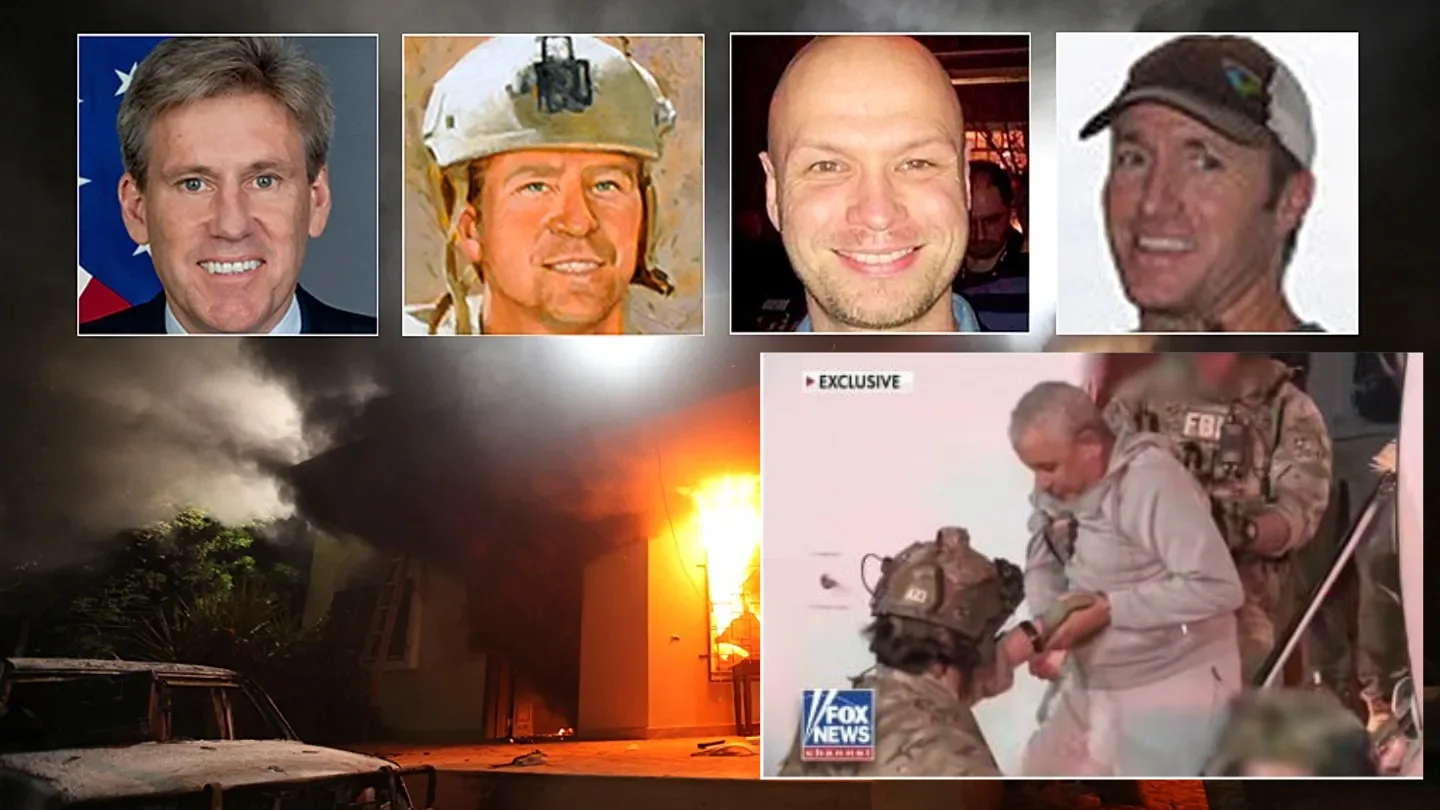
More than 13 years after the deadly assault on U.S. facilities in Benghazi, Libya, the Department of Justice announced Friday, February 6, 2026, that it had in custody a suspect described as a key participant in the attack that killed four Americans.
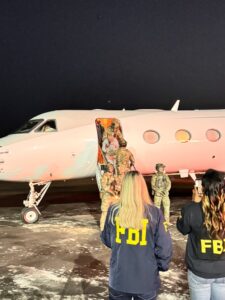
Attorney General Pam Bondi revealed that Zubayr Al-Bakoush – identified as a member of an extremist militia group in Libya, Ansar al-Sharia – was apprehended and arrived at an airfield in Virginia early Friday morning, approximately 3 a.m., to face federal charges in Washington. An eight-count indictment was unsealed Friday in U.S. District Court.
“We lost four American lives that day: Ambassador J. Christopher Stevens, Sean Smith with the State Department, and two Central Intelligence Agency (CIA) contractors, Glen Doherty and Tyrone Woods,” Bondi said during a press conference. “We have never forgotten those heroes and we have never stopped seeking justice for that crime against our nation.”
Details of the Benghazi Attack
The assault occurred on September 11, 2012, the 11th anniversary of the terrorist attacks on the World Trade Center, Pentagon, and the crash of United Flight 93 into Shanksville, Pa. According to the indictment, at least 20 militants armed with AK-47s and grenade launchers assembled outside the U.S. Special Mission in Benghazi around 9:45 p.m.
The group breached the main gate and spread out across the compound, setting fires to multiple buildings. When attackers couldn’t gain entry to Villa C, Ambassador Stevens’ residence, they set it ablaze. Ambassador Stevens and Sean Smith suffocated from the smoke. Diplomatic Security Services Special Agent Scott Wickland, who tried to guide the two men to safety, was injured and took repeated small arms fire while attempting the rescue.
According to the indictment, Al-Bakoush entered the Mission compound around 10 p.m. with other conspirators, conducting surveillance of the Tactical Operation Center and buildings. He attempted to gain entry to vehicles belonging to Mission staff before temporarily retreating.
Around 11:15 p.m., conspirators launched a second violent attack using AK-type assault rifles, grenades, and rocket-propelled grenades. After 30 minutes, they ransacked the Mission’s office, stealing documents, maps, and computers containing sensitive information about the location of the nearby CIA Annex.
The violence continued in the early hours of September 12 at the CIA Annex, first with gunfire and then with a precision mortar attack. CIA contractors Tyrone Woods and Glen Doherty were killed while defending the Annex. Diplomatic Security Special Agent David Ubben and CIA Security Specialist Mark Tiegen were seriously wounded but survived.
The attack was carried out by the militant group Ansar al-Sharia and immediately became a flashpoint in American politics, with Republicans challenging the Obama administration’s security preparations and response.
The Charges
The unsealed indictment accuses Al-Bakoush of joining the armed mob that stormed the compound with assault rifles and explosives. He faces multiple charges including: conspiracy to provide material support and resources to terrorists resulting in death; providing material support and resources to terrorists resulting in death; murder of an internationally protected person; murder of a United States national outside of the United States (two counts); attempted murder of a United States national outside of the United States; arson and placing lives in jeopardy within special maritime and territorial jurisdiction; and maliciously destroying and injuring property and placing lives in jeopardy.
Al-Bakoush appeared in federal court Friday afternoon before U.S. Magistrate Judge Moxila A. Upadhyaya for the District of Columbia, and the judge set a Feb. 11 detention hearing. U.S. Attorney Jeanine Pirro, whose office will prosecute the case, emphasized the administration’s commitment to pursuing accountability.
The Process of Justice
This arrest marks the latest in a series of prosecutions stemming from the Benghazi attacks. Ahmed Abu Khattala, captured in Libya in 2014, was convicted and sentenced to 28 years in prison after a seven-week trial. Mustafa al-Imam was captured in 2017 and convicted two years later for his role in the assault, sentenced to almost 20 years after a four-week trial.
Federal Bureau of Investigation (FBI) Director Kash Patel described the arrest as Foreign Transfer of Custody (FTOC) after years of investigation.
While officials celebrated the arrest, some Benghazi experts suggested the suspect represents a lower-tier figure. Sarah Adams, author of “Benghazi: Know Thy Enemy” and former CIA targeter, noted that Al-Bakoush had suffered a stroke years ago and “hasn’t been a player for some time.” She called for authorities to pursue higher-level planners still at large.
“This is a win, but we need to go much higher,” Adams wrote, advocating for senior attack plotters to be added to the FBI’s Most Wanted list.
A Lasting Wound
The Benghazi attack left deep scars on American politics and foreign policy. A Republican-led congressional investigation faulted the Obama administration for security deficiencies and a slow response, though it found no wrongdoing by then-Secretary of State Hillary Clinton.
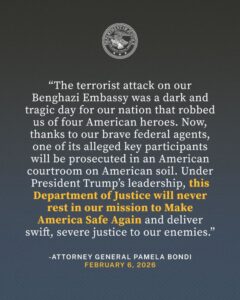
“Let this case serve as a reminder: if you commit a crime against the American people anywhere in this world, President Trump’s Justice Department will find you,” Bondi declared. “It might not happen overnight, but it will happen. You can run, but you cannot hide.”
Pirro echoed that determination: “The Benghazi saga was a painful one for Americans. Let me be very clear: There are more of them out there. Time will not stop us from going after these predators,” and acknowledged the complaint that led to Al-Bakoush’s FTOC was first filed in 2015 during the last year of the Obama administration.
As Al-Bakoush prepares to face American justice, Sarah Adams shared the following on X: “Let’s keep up the fight and go after every last one of the Benghazi attackers and the leaders behind the plot.”