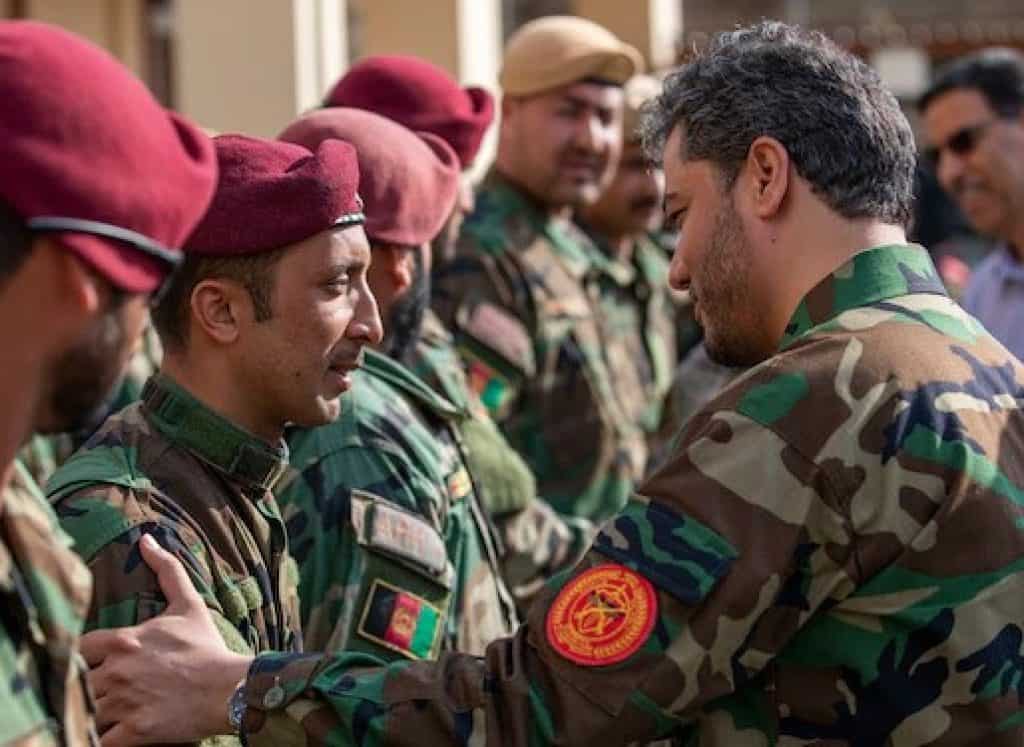
New reporting indicates the movement is increasingly drawing on allied jihadist organizations to reinforce its battlefield operations, revealing how long-standing relationships with internationally recognized terrorist groups are being employed under pressure.
The Battlefield Is Changing
Every terrorist organization wants you to believe it is winning. It projects strength, claims momentum, and insists it remains in control. That message is intended to shape perceptions, reassure supporters, and influence decision-makers. It deserves attention, but it rarely provides the clearest picture of where a conflict is headed.
When assessing terrorist organizations, the most reliable indicators are often found in what they do, not what they say. Operational behavior almost always tells you more than public messaging. Where an organization commits its forces, how it responds to battlefield pressure, whether it changes its recruiting practices, and who it chooses to fight alongside often reveal strategic shifts long before leaders acknowledge them publicly. Those decisions frequently provide a clearer picture of an organization’s priorities than its public statements ever will.
Viewed through that lens, the recent fighting in northeastern Afghanistan deserves far more attention than it has received. Since the Taliban returned to power in August 2021, much of the international community has treated Afghanistan as a settled conflict. The prevailing assumption has been that the Taliban consolidated power while the armed resistance survived only in isolated pockets, posing little strategic challenge to the Islamic Emirate. Recent developments suggest that assumption deserves another look.
The story emerging from Badakhshan Province is not simply about another battle in Afghanistan. Districts have changed hands throughout the country’s modern history, and tactical victories rarely determine the course of a war. The more revealing question is how the Taliban have responded. Over the past several weeks, the movement has redirected experienced formations to the north, renewed recruitment efforts in its traditional southern strongholds, and taken additional steps that suggest the battlefield has become more contested than many outside observers appreciate.
Those developments help explain a recent statement by General Mohammad Yasin Zia, leader of the Afghanistan Freedom Front. In describing his organization’s mission, Zia remarked, “The Freedom Front is not only an anti-Taliban movement; it is a popular movement to confront all terrorist groups. Our goal is to eradicate terrorism in every form and under every banner.” At first glance, Zia’s statement may seem broader than the events unfolding in Badakhshan. Recent developments suggest otherwise. They indicate the conflict is increasingly being defined not simply by the Taliban, but by the network of allied terrorist organizations fighting alongside it.
Badakhshan Changed the Initiative
The significance of Badakhshan lies less in the territory that changed hands than in the Taliban’s response. Afghanistan’s battle lines have shifted repeatedly over the past four decades, and tactical victories rarely determine the course of a war on their own. Organizations that hold the initiative dictate the tempo of operations. Organizations under pressure begin reallocating forces, adjusting priorities, and searching for additional resources. The Taliban’s recent actions suggest it increasingly finds itself in the latter position.
The current phase of the campaign began on July 17 when the anti-Taliban resistance group Sepahian-e Mihan, composed largely of former Afghan National Army soldiers and Special Forces personnel, temporarily seized Yaftal Payan District. Although the district did not remain under resistance control, the operation demonstrated that organized resistance forces retained the ability to challenge Taliban positions and compel a military response.
Less than a week later, on July 23, the Afghanistan Freedom Front launched a coordinated offensive against Taliban positions in Zebak District. Four days of sustained fighting enabled resistance forces to capture multiple checkpoints, military positions, and strategically important terrain surrounding the district, forcing Taliban units to abandon several positions as the resistance expanded its control.
The fighting also exposed growing strains within the Taliban. Multiple sources indicate morale among Taliban units operating in northern Afghanistan has deteriorated as resistance operations intensified. Internal divisions between Pashtun and non-Pashtun Taliban factions have likewise become more visible, extending beyond battlefield command into competition over influence, narcotics revenue, and control of lucrative gold mining operations. Internal disagreements are not unusual within insurgent movements. They become far more consequential when they emerge alongside sustained military pressure.
The Taliban’s response indicates its leadership quickly recognized the significance of that pressure. Rather than treating the fighting as an isolated security incident, the movement redeployed some of its most capable and trusted formations from southern Afghanistan to reinforce the north, including forces commanded by Mullah Abdul Qayyum Zakir and elements of Mawlawi Hamidullah Musafir’s Hebati unit. Reinforcing a threatened front is not unusual in itself. More revealing was that those deployments were accompanied by renewed recruitment efforts across the Taliban’s traditional southern strongholds, the same regions that had supplied generations of fighters during the insurgency.
Reporting indicates those efforts failed to generate the number of young recruits Taliban leadership had expected, reflecting growing reluctance among many young Afghans in the movement’s historic heartland to join its ranks. Faced with an emerging manpower shortfall, the Taliban turned instead to long-standing allied jihadist organizations operating inside Afghanistan. That decision may prove to be the most consequential development of the campaign.
From Sanctuary to the Front Line
For years, much of the international debate surrounding Afghanistan has centered on whether the Taliban would once again allow terrorist organizations to operate from Afghan soil. By now, their continued presence should no longer be in doubt. They remain embedded across Afghanistan and show no indication of leaving. The more consequential question is no longer whether these organizations are present, but the role they are beginning to play.
For much of its insurgency, the Taliban could rely on a steady flow of young recruits from its traditional southern strongholds. The recent campaign in Badakhshan suggests that pipeline may no longer be producing the manpower. After renewed recruitment efforts failed to generate the number of young fighters leadership anticipated, the movement looked beyond its own ranks to generate additional combat power. That shift helps explain what happened next.
Following the recent resistance offensives in Badakhshan Province, senior Taliban and Haqqani Network leaders, including Abdul Aziz Haqqani, met in Nuristan Province with representatives from Al-Qaeda, the Islamic Movement of Uzbekistan (IMU), and Jamaat Ansarullah. Reporting indicates the meetings focused on mobilizing additional fighters to support military operations against the Afghan resistance in northeastern Afghanistan.
Those meetings reveal less about new relationships than about how long-standing relationships are being employed. The Taliban’s ties to Al-Qaeda and other foreign terrorist organizations are well established. What appears to be changing is the extent to which those networks are being leveraged to reinforce Taliban military operations under battlefield pressure. Rather than simply benefiting from Taliban sanctuary, these organizations are increasingly contributing fighters and capabilities to the same campaign.
Viewed in the context of the broader campaign, the Nuristan meetings become part of a larger operational sequence rather than an isolated event. As resistance pressure mounted in Badakhshan, the Taliban redeployed elite formations from southern Afghanistan, expanded recruitment across its traditional strongholds, and, when those efforts failed to generate sufficient manpower, turned to long-standing allied jihadist organizations. Each decision addressed the same operational problem: generating enough combat power to stabilize a deteriorating battlefield.
General Zia’s observation that the Afghanistan Freedom Front is confronting “all terrorist groups” should be understood in that context. His statement is more than political rhetoric. It reflects a battlefield where the distinction between the Taliban and several internationally recognized terrorist organizations is becoming increasingly blurred as they work toward the same immediate military objective: preserving Taliban control in northeastern Afghanistan.
Beyond Badakhshan
For much of the past four years, the international conversation surrounding Afghanistan has centered on governance, humanitarian conditions, and whether the Taliban would prevent terrorist organizations from once again using Afghanistan as a sanctuary. Those remain important questions, but the events unfolding in Badakhshan suggest the conversation may need to evolve. The reporting presented here indicates that, in parts of Afghanistan, terrorist organizations are no longer merely finding sanctuary. They are increasingly planning, coordinating, and fighting together in support of a shared military objective.
The developments emerging from Badakhshan suggest the Taliban is responding to sustained resistance pressure by expanding the network of organizations supporting its military campaign. If that pattern continues, Afghanistan will no longer be defined simply as a permissive environment where terrorist organizations coexist under Taliban protection. It will increasingly become a battlefield where multiple jihadist organizations coordinate toward a shared objective: preserving the Islamic Emirate.
That distinction matters because terrorist threats rarely evolve through organizations operating alone. They become more capable through networks that share personnel, training, logistics, operational experience, and access to safe haven. Those relationships strengthen resilience, accelerate adaptation, and allow individual organizations to leverage capabilities they could not generate on their own.
Badakhshan may ultimately be remembered not because it represented the largest battle since the Taliban’s return to power, but because it exposed how the movement responds when sustained battlefield pressure strains its own manpower. Rather than relying exclusively on Taliban formations, the movement appears increasingly willing to draw upon a broader coalition of allied jihadist organizations to reinforce its campaign. That is more than a battlefield adjustment. It demonstrates the operational depth of relationships that have existed for years but are now being employed more directly in support of Taliban military operations.
The Taliban has spent years insisting it would not allow Afghanistan to become a platform for international terrorism. Its recent actions tell a different story. They suggest the movement has no intention of abandoning its role as a state sponsor of terrorism.
In the end, the most revealing indicators are rarely found in official statements. They are found in the decisions organizations make when they come under pressure: where they commit their forces, how they solve operational problems, and who they choose to fight beside. The events unfolding in Badakhshan offer a rare glimpse into those decisions. More importantly, they demonstrate why operational behavior remains a more reliable guide than public messaging. Those developments deserve far more attention than the Taliban’s public statements ever will.