

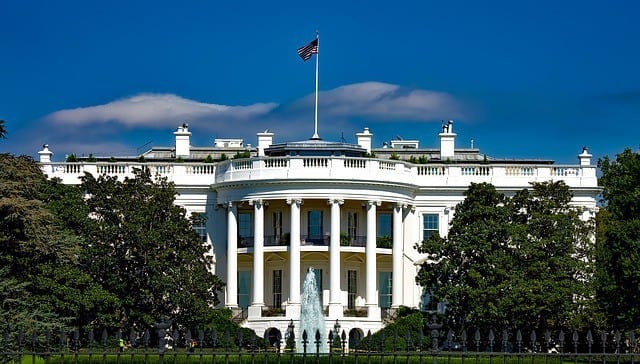
The White House has released its 2026 United States Counterterrorism Strategy, outlining a broad “America First” approach that expands the federal government’s counterterrorism priorities beyond traditional foreign terrorist organizations to include cartels, transnational gangs, and what the administration describes as “violent left-wing extremists.”
The 16-page strategy, released on Wednesday, frames counterterrorism as a core national security mission centered on protecting Americans from both foreign and domestic threats. The document emphasizes “Peace through Strength” and describes the administration’s approach as a departure from previous counterterrorism policies.
A major theme throughout the strategy is the administration’s focus on narcotrafficking organizations operating in the Western Hemisphere. The document identifies “narcoterrorists and transnational gangs” as one of the nation’s three primary terrorism threats, alongside “legacy Islamist terrorists” and “violent left-wing extremists, including anarchists and anti-fascists.”
The strategy highlights the designation of cartels and gangs as Foreign Terrorist Organizations (FTOs) and states that the administration intends to continue military, intelligence, financial, cyber, and law enforcement operations targeting those groups. The document claims that Department of War strikes against cartel-linked maritime drug trafficking operations contributed to a sharp decline in maritime smuggling activity into the United States.
Iran is identified as the administration’s top state-sponsored terrorism concern. The strategy points to operations targeting Iranian nuclear and military capabilities, including “Operation Midnight Hammer” and “Operation Epic Fury,” and states the U.S. will continue actions aimed at limiting Iran’s support for proxy organizations such as Hezbollah.
The document also places renewed emphasis on Islamist extremist groups capable of conducting external operations against the United States, specifically naming al Qaeda, al Qaeda in the Arabian Peninsula (AQAP), ISIS, and ISIS-Khorasan (ISIS-K). It states the administration intends to maintain pressure on those organizations through military, cyber, intelligence, and diplomatic efforts.
One of the strategy’s most notable additions is its focus on domestic extremist threats. The document says the administration will prioritize identifying and disrupting “violent secular political groups” described as “anti-American,” “radically pro-transgender,” and anarchist. It also references Antifa and states the government plans to use “all the tools constitutionally available” to map networks and identify members linked to violent activity.
At the same time, the strategy argues federal counterterrorism authorities should not be used politically against Americans exercising constitutionally protected rights. The document criticizes prior administrations for what it describes as politicized use of national security tools and calls for “reality-based threat assessments.”
Regionally, the strategy outlines separate approaches for the Western Hemisphere, Middle East, Europe, Africa, and Asia. In Africa, the administration says it intends to maintain a lighter military footprint while continuing counterterrorism cooperation with partner nations against ISIS, al Qaeda affiliates, and al-Shabaab. The strategy also highlights concern over attacks targeting Christian communities in parts of Africa.
In the Middle East, the document states the United States will continue targeting Iranian-backed proxy groups and protecting maritime routes such as the Strait of Hormuz and the Red Sea. It also signals continued pressure on Muslim Brotherhood branches designated as terrorist organizations.
The strategy additionally addresses weapons of mass destruction, calling prevention of terrorist acquisition of nuclear, biological, radiological, or chemical weapons a “no-fail mission.” The document also describes fentanyl and precursor chemicals as a WMD-level threat because of overdose deaths in the United States.
The White House says the strategy is intended to reshape U.S. counterterrorism policy heading into the 25th anniversary of the Sept. 11 attacks, emphasizing national sovereignty, border security, and targeted operations against groups viewed as threats to Americans at home and abroad.