
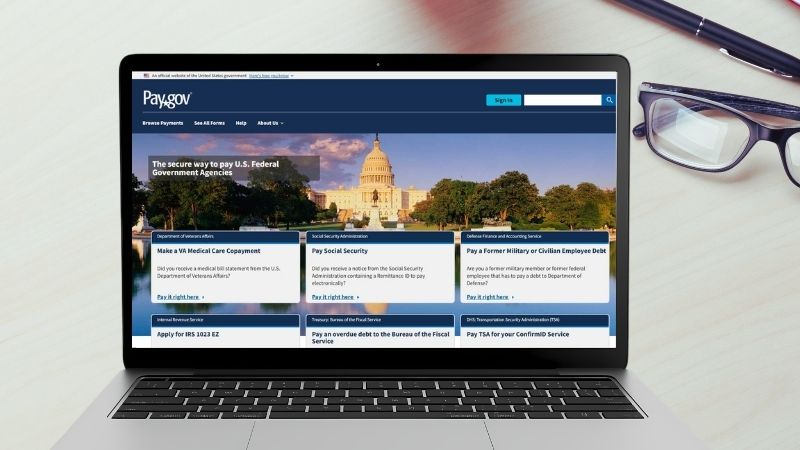
U.S. Customs and Border Protection has announced a major advancement in trade modernization for the U.S. Virgin Islands: the use of Pay.gov for all payments of duties, taxes, and fees on imported merchandise.
In upcoming months, importers will be able to submit payments electronically via Pay.gov, marking a significant step toward fully automating the USVI commercial process.
This new capability applies to all cargo arriving from the continental United States, Puerto Rico, and foreign locations. The acceptance of paper-based payments at the U.S. Virgin Islands ports of entry will drastically be reduced while CBP prioritizes cargo/importations transactions completed through electronic payment systems.
The adoption of Pay.gov offers importers, residents, and travelers a faster, secure, and user-friendly platform to manage payments. By creating a Pay.gov account, users can save payment information, track transactions, and manage recurring payments. Importer, broker, and service provider payments for formal entries can be made by ACH debit from a U.S. bank account, and payment data will be synchronized with the Automated Commercial Environment entry records in real time, reducing errors and expediting cargo release. For informal entries, residents and travelers may pay their duty amounts with a credit or debit card.
“Pay.gov is a game changer for the U.S. Virgin Islands,” said Area Port Director for the US Virgin Islands Todd Bellew. “This new platform will make it faster and easier for importers to meet their obligations, while giving CBP the tools to process cargo more efficiently and securely. It’s a win for trade and for the territory.”
The move to Pay.gov is a key component of CBP’s broader strategy to fully automate the USVI commercial process. In the near future, CBP expects to introduce additional digital solutions that will further streamline cargo processing, enhance compliance, and improve the overall experience for the trade community, like Electronic Manifest.
In addition to Pay.gov, CBP will mandate the electronic submission of cargo manifests via the ACE and Electronic Data Interchange systems. The electronic manifest transmission provides CBP with critical advance cargo notice, essential for effectively securing America’s Caribbean Border.
Carriers must use the following port codes to transmit electronic manifest information to the USVI:
- For shipments originating from the Continental US and Puerto Rico to the USVI, the carrier needs to add USVI designated foreign port codes (91155 – STT, 91195 – STJ, and 91149 – STX) to their internal proprietary systems to enable cargo manifest transmission to the USVI.
- For foreign shipments to the USVI, use domestic port codes 5101 – STT, 5102 – STJ, and 5104 – STX .
Carriers are required to test their systems with CBP to ensure proper data transmission. Importers and filers must continue to request cargo release via the USVICEI mailbox to obtain CBP authorization for delivery.
CBP will provide a grace period for carriers and importers to adapt to the new requirements. After the grace period, penalties for non-compliance may be assessed, and cargo release may be delayed.
These changes are authorized by the Trade Act of 2002, and federal regulations governing customs operations in the U.S. Virgin Islands, which mandates the advance electronic submission of cargo information.
The original announcement can be found here.