

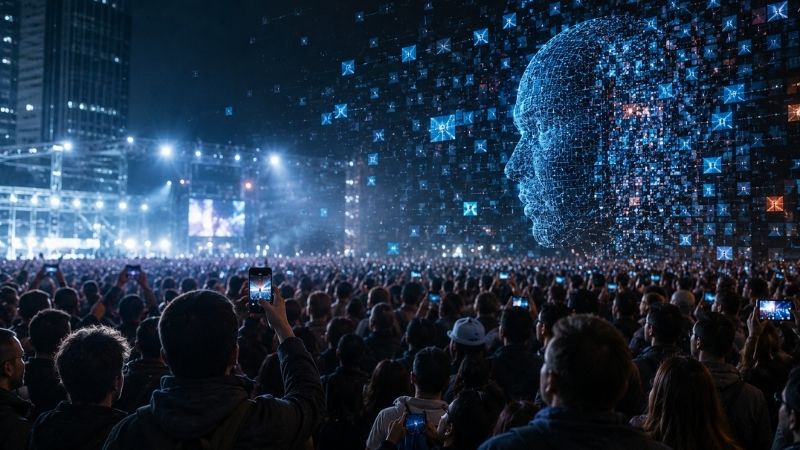
A new report from the Center for Internet Security warns that deepfakes and other forms of AI-generated synthetic media are becoming a growing security concern for large-scale public gatherings, including concerts, festivals, political conventions, major sporting events, and the FIFA World Cup 2026.
The report says generative artificial intelligence tools have made it easier for malicious actors to create realistic but false audio, video, images, and text. That content can be used to spread confusion, impersonate officials, damage reputations, or interfere with public communications during high-attention events.
According to the report, large gatherings are especially vulnerable because they bring together large crowds in fast-moving information environments. A false emergency message, fabricated video, or manipulated audio clip could spread quickly online and affect how attendees, security teams, media outlets, and the public understand what is happening.
They say that the threat is not limited to fully fabricated deepfakes. Hybrid manipulation, where real content is altered or taken out of context, may be harder to detect and easier to use during rapidly developing incidents.
The risk is heightened by the growing use of connected event infrastructure, including mobile ticketing, high-speed venue networks, broadcast systems, and Internet of Things-enabled services. These systems can expand the ways synthetic or misleading information may influence operations, public messaging, and real-time decision-making.
The report also points to previous FBI assessments that malicious actors are likely to use synthetic content in cyber and foreign influence operations. For event organizers, law enforcement, and security professionals, it recommends planning for synthetic media threats before, during, and after major events.
The report frames deepfakes as an operational risk, not just a communications problem. As synthetic media becomes easier to produce and distribute, public safety officials may need faster verification processes, trusted communication channels, and coordinated response plans to counter false information before it affects crowd behavior or event security.