


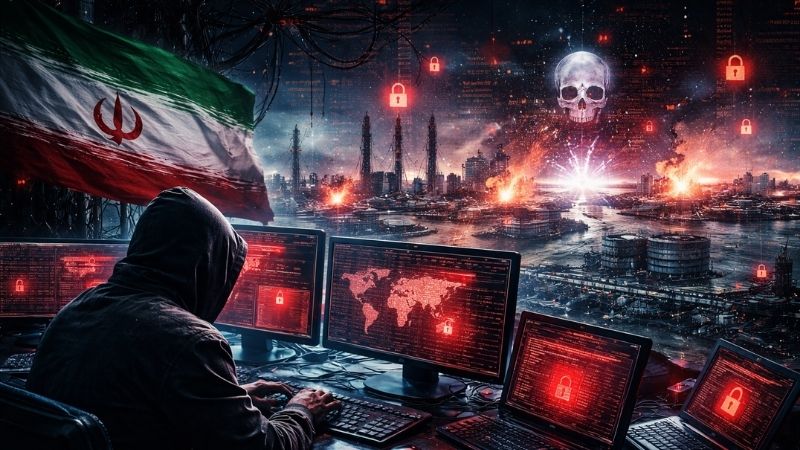
Heightened geopolitical tension—particularly following a leadership decapitation event or direct military exchange—significantly raises the probability of Iranian-linked cyber activity targeting U.S. interests. Historically, Iran blends state-directed operations with aligned “hacktivist” fronts and criminal intermediaries to create disruption, psychological impact, and political signaling.
The next 0–30 days represent a heightened risk window.
Below is what leaders should expect, where risk is most concentrated, and what actions should be taken immediately.
1) What to Expect in the Next 0–30 Days
A Surge in Retaliatory Cyber Activity
Expect an uptick in disruptive and symbolic cyber operations tied to Iranian state actors and aligned fronts. Likely activity includes:
-
Website defacements
-
Distributed denial-of-service (DDoS) attacks
-
Doxxing or data leaks
-
Disruptive intrusions aimed at public visibility
These operations are often designed less for technical sophistication and more for psychological effect—creating public fear, signaling retaliation, and demonstrating capability.
Opportunistic Exploitation of U.S.-Facing Weaknesses
Iranian actors frequently target exposed, poorly secured systems rather than exclusively pursuing complex zero-days. U.S. government warnings over the years consistently document exploitation of:
-
Unpatched internet-facing systems
-
Exposed VPN appliances
-
Default or reused credentials
-
Weakly secured OT/ICS edge devices
-
Remote management tools with known vulnerabilities
In periods of escalation, these “targets of opportunity” become priority entry points.
Critical Infrastructure Pressure Campaigns
Rather than pure espionage, expect pressure campaigns intended to create localized disruption, safety concerns, or economic friction. Particularly vulnerable are environments with:
-
Internet-facing industrial control components
-
Weak segmentation between IT and OT networks
-
Limited monitoring of edge devices
The objective is not necessarily nationwide blackout—it is symbolic disruption that creates headlines and erodes public confidence.
Increased Influence Operations
Cyber activity will likely be paired with influence operations. Historically, Iran couples technical disruption with narrative manipulation.
Expect:
-
Synthetic personas amplifying divisive narratives
-
Manipulated media or misleading incident claims
-
Coordinated messaging about shortages, energy instability, or domestic insecurity
The goal is to widen political polarization, undermine trust in institutions, and amplify fear. In escalatory environments, the cyber component rarely stands alone—it supports information warfare objectives.
2) U.S. Systems Most Likely to Be Targeted (And Why)
Risk concentration can be understood through three lenses: impact, visibility, and accessibility.
A. High-Impact Critical Infrastructure (OT/ICS)
Energy (electric distribution, oil & gas midstream, LNG, ports)
High leverage targets with cascading downstream effects. Even minor disruption can trigger economic ripple effects and public anxiety.
Water and Wastewater
Often heterogeneous environments with varying cyber maturity. Disruption generates immediate public concern—even localized incidents receive national attention.
Transportation & Logistics (ports, rail signaling-adjacent systems, aviation support systems)
Disruption produces immediate economic and operational consequences.
Telecommunications
Secondary effects amplify quickly—911 services, dispatch, banking systems, and remote operations all depend on telecom stability.
B. High-Visibility / High-Symbolism Targets
Government-Facing Services
State and local portals, emergency management websites, public safety communications support platforms—these offer easy wins for defacement or DDoS and provide a visible propaganda platform.
Media and Trusted Information Outlets
Disruption or compromise of trusted outlets can accelerate rumor cascades and undermine confidence in verified reporting.
C. High-Accessibility Enterprise Targets
Iran’s historical playbook frequently focuses on sectors where downtime tolerance is low.
Healthcare
Especially revenue cycle, claims processing, payment rails, and third-party service providers. Even short disruptions cause immediate operational strain.
Financial Services & Payment Processors
DDoS and credential-based intrusions can trigger consumer anxiety and market volatility.
Defense Industrial Base & Logistics Suppliers
Targets may be selected for theft, signaling, or secondary disruption effects.
3) Likely Techniques: A Practical Watch List for SOC & IR Teams
Defenders should actively hunt for the following patterns:
Exploitation of Known Vulnerabilities
-
KEV-listed vulnerabilities on perimeter systems
-
VPN appliances
-
Web applications
-
Identity infrastructure
-
Remote management tools
These campaigns often prioritize scale over stealth.
Credential Theft and MFA Gaps
-
Password spraying
-
Stolen session cookies or authentication tokens
-
Abuse of weak help-desk reset workflows
-
MFA fatigue attacks
Ransomware Enablement and Disruptive Extortion
U.S. agencies have documented Iran-linked actors enabling ransomware-style outcomes—even when disruption, not profit, is the primary objective.
Destructive Actions
-
Wipers
-
Configuration sabotage
-
Targeted deletion of virtual machines or backups
These techniques are particularly likely if Iran seeks visible “message effects.”
OT/ICS Edge Exploitation
-
Attacks against internet-facing PLC-related components
-
Attempts to pivot into weakly segmented OT environments
-
Manipulation of configuration parameters
DDoS + Breach Combination
DDoS activity may serve as distraction while intrusion or destructive action occurs elsewhere in the environment.
4) Could Iran Receive Assistance from China, Russia, or Others?
Leadership should approach this carefully. Assistance is more likely to be enabling than direct, jointly operated intrusion campaigns.
Russia–Iran Cooperation
Cyber cooperation agreements and intelligence sharing between Russia and Iran exist. However, credible assessments suggest limits—particularly around sharing top-tier offensive capabilities that could later be used reciprocally.
Broader CRINK Alignment (China–Russia–Iran–North Korea)
Security cooperation and mutual-benefit behaviors are increasing, but this does not represent a unified cyber command.
More realistic expectations include:
-
Shared tradecraft and lessons learned
-
Infrastructure overlap
-
Tooling diffusion
-
Access to gray-market capabilities
-
Coordinated narrative amplification
Iran does not require direct operational participation to benefit materially from this ecosystem.
5) Second-Order Ramifications of a Leadership Decapitation Event
If Tehran perceives an existential threat, the cyber domain could shift from calibrated pressure to punitive signaling.
Potential shifts include:
Lower Threshold for Destructive Cyber
-
Increased likelihood of wipers
-
More aggressive OT disruption attempts
-
Actions designed to demonstrate deterrence restoration
Greater Use of Deniable Proxies
-
Hacktivist brands
-
Criminal intermediaries
-
Blended state–nonstate activity to complicate attribution
Broader Target Set
Beyond federal agencies, expect targeting of:
-
State and local governments
-
Private sector enterprises
-
“Soft targets” capable of generating public fear
Faster Escalation Loops
Cyber incidents may be timed to coincide with military actions or diplomatic events for maximum psychological effect.
6) Proactive Measures Leaders Can Demand Within 72 Hours
If escalation risk rises, organizations should prioritize rapid, high-impact controls.
1. Lock Down Internet-Facing Exposure
-
Validate patching against KEV
-
Remove unnecessary remote admin services
-
Rotate exposed credentials
-
Confirm MFA on all remote access paths
2. DDoS Readiness
-
Validate CDN, WAF, and scrubbing services
-
Confirm rate limiting and failover
-
Stress-test public web, customer portals, and APIs
3. Identity Hardening
-
Enforce phishing-resistant MFA where possible
-
Tighten help-desk identity verification
-
Monitor for impossible travel and token theft indicators
4. OT/ICS Segmentation and Monitoring
-
Confirm jump-host controls
-
Validate logging from OT access points
-
Test isolation procedures
5. Resilience and Recovery
-
Ensure immutable or offline backups
-
Conduct restore tests
-
Pre-stage rebuild playbooks for core identity and ERP systems
-
Maintain golden images for rapid reconstitution
Bottom Line
In the next 30 days, organizations should expect disruptive, visible, and psychologically oriented cyber activity tied to Iranian actors and aligned fronts. The objective is less about silent espionage and more about signaling, pressure, and public impact.
Preparation in this window is not about predicting the exact vector—it is about reducing exposed attack surface, hardening identity, ensuring resilience, and preventing symbolic wins.
Escalation risk favors the prepared.
