


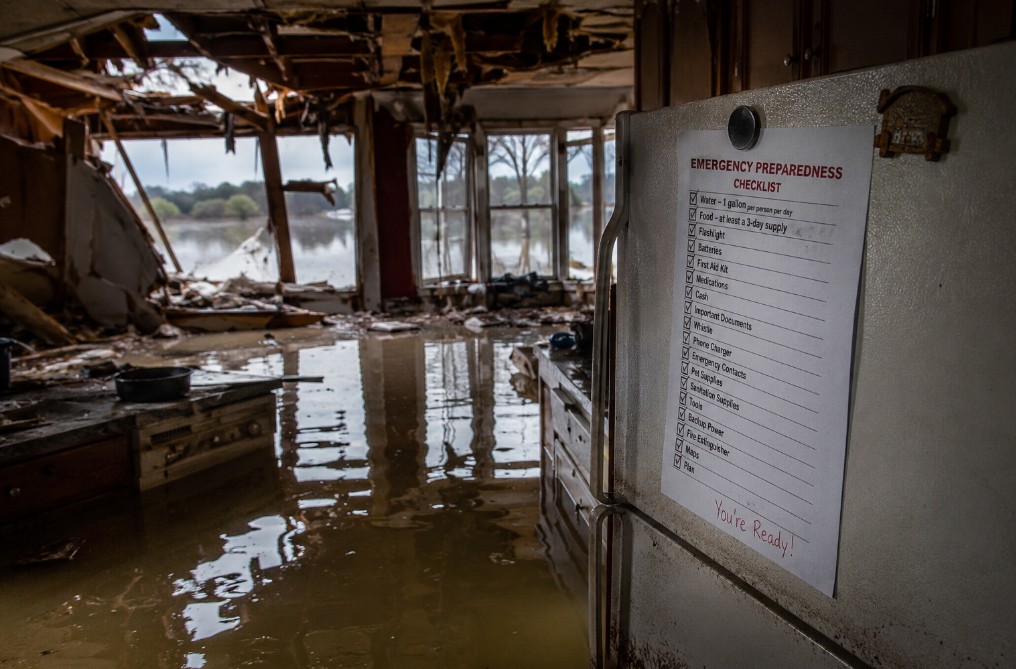
We have spent decades telling people to be prepared.
We have trained it, funded it, branded it, measured it, and repeated it in every disaster cycle. And yet, when disaster strikes, we still see the same outcome. Too many households are not ready to act. That should force a harder question than we usually ask in emergency management.
What if the problem is not awareness?
What if the problem is the word itself?
Preparedness is not the right goal.
Readiness is.
A family does not care whether they were “prepared” when the lights go out, the heat rises, and the phones stop working. They care whether they can function in that moment, whether they can make decisions, move safely, and keep their family intact when everything familiar suddenly is not. And honestly, emergency managers do not care either. They just want more families ready to respond without draining limited resources further.
Preparedness describes activity. Readiness describes outcome. And in a crisis, only one of those survives contact with reality.
Preparedness is what we ask people to do. Readiness is what we actually need them to be. Preparedness is building a kit, writing a plan, attending a training, or downloading an app. Readiness is whether any of those things translate into effective action when stress, time pressure, and uncertainty take over.
This distinction matters because we have largely been measuring the wrong thing. We have been counting actions instead of testing capability. And the results should concern us.
According to FEMA’s National Household Survey on Disaster Preparedness, preparedness behaviors among Americans have remained largely stagnant over time, with incremental changes in specific actions but no significant sustained growth in overall household readiness. Awareness has increased. Concern has increased. Actual functional readiness has not kept pace.
In other words, people are not ignoring the message. They are just not converting it into durable capability.
We do not have a preparedness awareness problem. We have a readiness conversion problem.
We already know this is a readiness system
The federal government already signals the answer in its own language.
It is not called Prepare.gov. It is called Ready.gov.
That distinction matters more than the credit it receives. Because it reflects an implicit recognition that preparedness alone is incomplete. The goal is not preparation as activity. The goal is readiness as condition.
We have, in effect, already chosen the word.
We have simply not fully aligned our public strategy with it.
Preparedness is activity. Readiness is outcome.
Preparedness often sounds like something you schedule for later. Something you will get to when life slows down. It becomes another item on a long list of competing priorities.
Readiness is different. It is immediate and unforgiving. You either are ready when the moment arrives, or you are not.
Most people do not talk about preparedness in daily life. It is a technical term, rooted in emergency management frameworks. But everyone understands readiness.
Athletes get ready for competition. Soldiers maintain readiness for deployment. Students study for exams so they are ready when tested. Readiness translates. Preparedness often does not.
Self-reliance is the mechanism of readiness
At its core, readiness is not institutional. It is personal.
It is the ability of individuals and households to function without immediate external support.
That is why self-reliance is not a side concept in emergency management. It is the mechanism through which readiness is achieved.
When individuals are self-reliant, they are inherently more ready. That is not a partial truth. It is the operating condition of early disaster response.
And yet, preparedness messaging often fragments this reality into disconnected tasks: buy this, store that, download this, learn this.
Self-reliance integrates them. Readiness reflects them.
Preparedness does not always scale across people in a meaningful way because it is often task-based. Readiness does, because it is function-based.
Readiness is capability, not inventory
One of the persistent challenges in preparedness messaging is the tendency to equate readiness with purchasing power: flashlights, bottled water, generators, and go-bags.
But true readiness is broader than supplies. It includes decision making under stress, communication habits, situational awareness, emotional resilience, and the ability to adapt when conditions change.
Supplies matter, but only if people can act with them when needed. Readiness is not what you own. It is what you can do.
Most crises begin with delay. And during that delay, self-reliance is not optional. It is decisive.
Preparedness is what you did. Readiness is who you are.
Preparedness is effort. Readiness is function. Preparedness is what sits in a closet or a document folder. Readiness is what shows up in behavior when systems fail and time compresses.
This is where emergency management often loses the narrative. Most people are not motivated by the idea of being prepared. They are motivated by outcomes. Keeping their family safe. Maintaining stability. Getting through disruption without losing control.
Stocking up on supplies, knowing your evacuation zone and having a plan are key, but only if you are able to quickly make these actionable. That’s readiness.
Preparedness is the means. Readiness is the outcome. If we communicate only the means, we should not be surprised when adoption remains inconsistent.
Ask someone if they are prepared for a hurricane and you will often get a theoretical answer. Ask instead whether their household would function for seven days without power starting tonight, and you get something much closer to truth. Readiness forces honesty. Preparedness allows abstraction.
The moment it became real
In June 2012, my home joined nearly a million others in Virginia when we lost power during the North American derecho. It was a fast moving storm that caused fatalities, widespread damage, and prolonged outages across multiple states.
I did not have an organized emergency kit. I did not have a written plan.
But I did have a wife, two daughters under the age of two, and a puppy, and we were in the middle of a dangerous heat wave.
When the power went out, I did not think in terms of preparedness. I thought in terms of movement. We needed to get somewhere safer, somewhere with electricity.
I grabbed a few flashlights because they had working batteries. My wife and I quickly packed what we needed and left.
We drove to a nearby hotel with a full tank of gas and the ability to pay for a room. I texted my boss to let him know where we were and that I would be available as needed, because my phone was charged and texting was the most reliable option.
We were safe within hours.
I was not “prepared” in the traditional sense. But I was ready. And in that moment, readiness mattered far more than any checklist.
Yet, more than a dozen years later, our messaging lens in still out of focus.
Why emergency management needs to change the goal
Emergency managers often work to improve preparedness through messaging, training, and outreach. That work is essential. But we are still optimizing the wrong endpoint.
Because preparedness is not the goal. Readiness is.
And readiness is observable. It is measurable in behavior, decision making, and response under pressure. It is visible in whether people can actually function when conditions change, not whether they once attended a workshop or downloaded a checklist.
Preparedness is the input. Readiness is the output.
And communities do not survive disasters because they were prepared in theory. They survive because they were ready in practice.
A final provocation
If we are serious about closing the gap between awareness and action, we should also be willing to rethink how we frame the calendar itself. National Preparedness Month has been an important platform for awareness. But awareness is no longer the constraint.
Readiness is.
It may be time to ask a harder question.
Should National Preparedness Month become National Readiness Month?
Because preparedness asks people to start.
Readiness asks whether they can function.
And in emergency management, function is the only outcome that ultimately matters
Dan Stoneking is the Owner and Principal of Stoneking Strategic Communications, the Author of , Crisis Communications and Emergency Management, the Founder and Vice President of the Emergency Management External Affairs Association, the Co-Founder of Message Prism, and an Adjunct Professor in the Communications Department at West Chester University.