
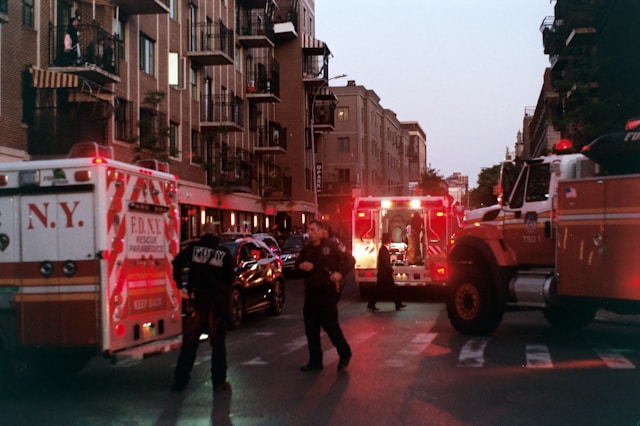
A recent George Washington University (GWU) Chemical, Biological, Radiological, Nuclear, and Explosive -Weapons of Mass Destruction (CBRNE-WMD) Capstone exercise, named Operation Red Card, examined how the United States can prepare for high-consequence, low-probability CBRNE incidents during major events such as the 2026 FIFA World Cup.
The exercise brought together emergency management, public health, law enforcement, fire service, military, intelligence, and homeland security professionals to test response capabilities against complex, multi-domain threats involving chemical releases, biological incidents, radiological attacks, cyber disruptions, and cascading infrastructure failures.
The Challenge: From Awareness to Preparedness
More than two decades after September 11, the homeland security community has developed extensive awareness of CBRNE threats. The challenge is no longer identifying potential hazards but ensuring that organizations are adequately prepared to respond.
Despite numerous plans, exercises, and assessments, significant gaps remain between strategic threat assessments and operational readiness. The exercise found that preparedness often remains fragmented across jurisdictions and disciplines, limiting the ability to respond effectively to complex incidents.
Three Scenarios, One Common Lesson
Students in the GWU CBRNE-WMD microcredential series explored three scenarios at World Cup sites in the US: a Chemical Attack and Infrastructure Failure in Los Angeles, a Biological Incident in Kansas City, and a Radiological Dispersal Device in New Jersey. Targets included infrastructure, event participants, and response capabilities. Challenges included multiple simultaneous attacks, presence of soft targets surrounding the game sites, loss of public confidence, and decontamination needs.
Key Lessons for Homeland Security
Intelligence and Fusion Must Be Operational
Fusion centres and intelligence-sharing mechanisms must be fully integrated into planning, prevention, response, and recovery activities rather than activated only during crises.
Capabilities Matter More Than Scenarios
Preparedness should focus on building flexible capabilities that can address a range of hazards rather than preparing for a single predicted event.
Cyber and Physical Security Are Inseparable
Infrastructure failures can significantly degrade emergency response capabilities. Planning must account for simultaneous attacks on both physical and digital systems.
Governance Influences Response
Legal authorities, mutual-aid agreements, and decision-making structures directly affect operational effectiveness during complex incidents.
Medical Countermeasures Remain Essential
Rapid decontamination, casualty management, prophylaxis programs, and long-term health monitoring remain critical components of any CBRNE response strategy.
Recovery Begins on Day One
Long-term recovery planning—including public information, behavioral health support, infrastructure restoration, and economic recovery—must be incorporated into preparedness efforts before an incident occurs.
Looking Ahead
The 2026 FIFA World Cup represents one of the most complex security environments ever faced by North American emergency management and homeland security agencies. The lessons identified during Operation Red Card extend well beyond sporting events and are applicable to any large-scale gathering or critical infrastructure target.
The exercise demonstrated that successful CBRNE preparedness is not simply a function of resources. It depends upon effective coordination, integrated planning, intelligence sharing, governance flexibility, and the ability to adapt to rapidly evolving threats.
Homeland Security Today Takeaway
The greatest challenge facing homeland security is not identifying potential threats—it is ensuring that communities, agencies, and governments are prepared to respond when those threats become reality.
Chuck Lineback, MS, NRP, NHDP-BC
Paul Biddle, CEM-ME
Victoria P. Simmons, MPS
Jason Kephart, MSC
Lamar González Medlock, MBA, CBRNE-WMD-C