

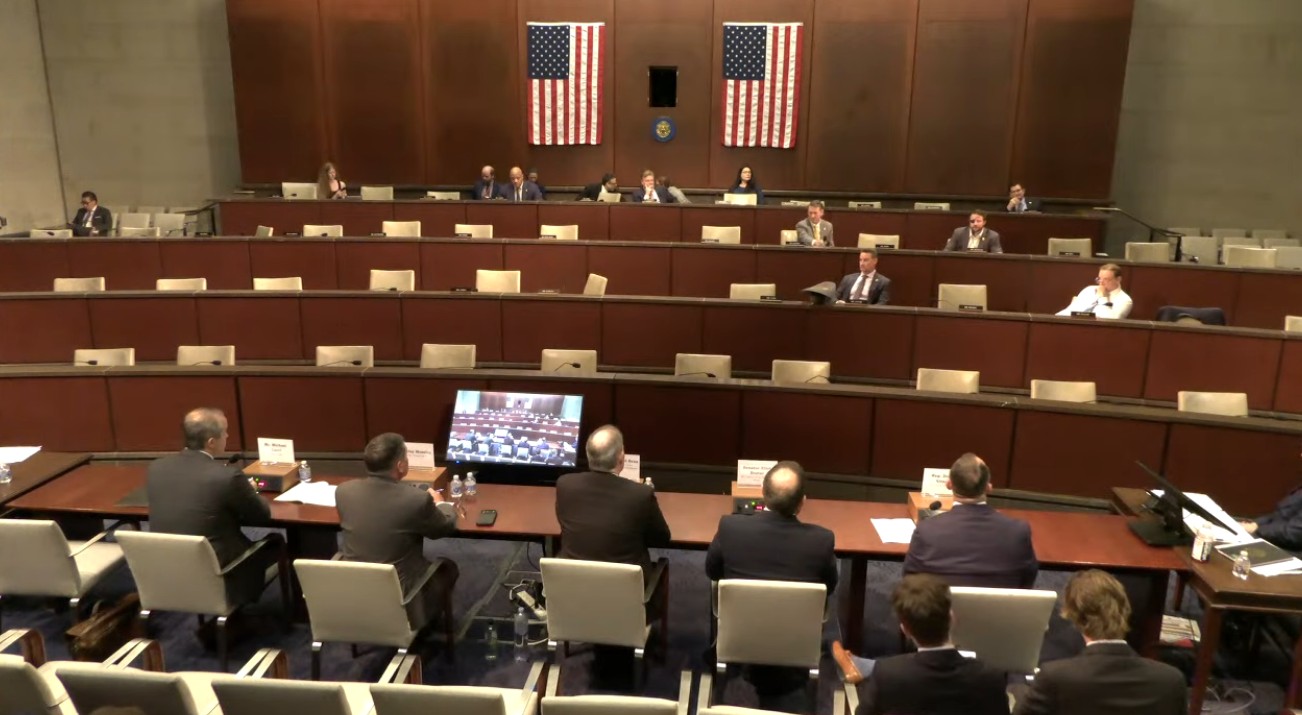
The House Permanent Select Committee on Intelligence held a hearing examining how states across the country are addressing counterintelligence (CI) threats and developing capabilities to respond to foreign influence, espionage, and other security challenges.
The hearing, led by Chairman Rick Crawford (R-AR), focused on the role of state fusion centers, local officials, and private-sector partners in supporting national counterintelligence efforts. Witnesses discussed how state-level organizations are working to identify emerging threats and share information across government networks.
The hearing included testimony from National Fusion Center Association President and Northern California Regional Intelligence Center Director Mike Sena; Alabama Fusion Center Director Jay Mosely; Nebraska State Senator Eliot Bostar; Florida State Representative Daniel Alvarez; and State Armour Founder and CEO Michael Lucci.
Crawford highlighted concerns over foreign adversaries using a range of methods to gain influence and access, including cyber operations, economic activity, supply chain relationships, research partnerships, and influence campaigns. He specifically discussed activities attributed by U.S. officials to the People’s Republic of China, as well as security concerns involving Russia and Iran.
The chairman pointed to the expanding role of state and local organizations in identifying potential threats, noting that counterintelligence concerns can emerge in areas outside traditional federal intelligence channels, including universities, infrastructure projects, ports, and local law enforcement investigations.
A major focus of the hearing was the role of fusion centers, which serve as information-sharing hubs connecting federal, state, local, tribal, and private-sector partners. Officials discussed how these organizations help identify patterns and coordinate responses to threats that may cross multiple jurisdictions.
The hearing also examined challenges associated with activity occurring below the threshold of traditional conflict, including foreign investment, cyber intrusions, and other activities that may appear routine while creating potential security concerns.
Crawford said the committee’s efforts include bringing counterintelligence discussions to state and local communities. The hearing follows previous committee roundtable discussions held in Florida, Pennsylvania, Arkansas, and Alabama focused on state-level counterintelligence challenges.
The committee emphasized that addressing counterintelligence threats requires coordination among federal agencies, state and local governments, private organizations, and the public.