The message appeared like thousands of other investigators see every year. A simple greeting sent through a gaming platform. Friendly. Casual. Unremarkable. Except the person sending it wasn’t another kid.
Behind the screen was an adult man posing as a teenager, slowly building a conversation with someone he believed was a child. Conversations like this are the starting point for many of the cases Internet Crimes Against Children investigators handle every day. Most parents never see these messages. But investigators do. And the number of them keeps growing.
Across the country, Law Enforcement personnel investigating Internet Crimes Against Children (ICAC) cases are confronting a growing reality: the sheer number of individuals attempting to exploit children online continues to rise. Many of them show up in the very places children spend their time, such as on gaming platforms, social media apps, and messaging services that often feel safe to both kids and parents.
These digital spaces were built for connection and creativity. But predators know children gather there, often unsupervised and eager to engage. For investigators working these cases, the volume of reports and digital leads are absolutely staggering.
Each report can represent dozens of potential victims. Each conversation may involve weeks or months of grooming behavior designed to gain a child’s trust. And every investigation carries the weight of knowing a real child is on the other end of that interaction.
Yet the officers tasked with protecting children from these crimes are often doing so with limited manpower and resources. The scale of the problem has grown faster than many investigative units were built to handle.
That gap between the number of predators operating online and the resources investigators have to pursue them is what led to the creation of The Invictus Project.
Born from the needs of investigators
The Invictus Project began with a simple realization: the investigators already fighting these crimes needed support.
Law enforcement officers working child exploitation cases consistently described the same challenge. They were seeing more predators, more reports, and more digital evidence than their units were equipped to manage. Cases require time, technology, and personnel – all of which are often in short supply.
The mission of The Invictus Project grew directly from that need: to partner with law enforcement to combat the trafficking and exploitation of children through educating the community, advocating for the victim, and equipping Local, State, and Federal Law Enforcement partners.
Rather than replacing the work of law enforcement, the organization exists to strengthen it; helping investigators access the resources and support needed to pursue these cases effectively.
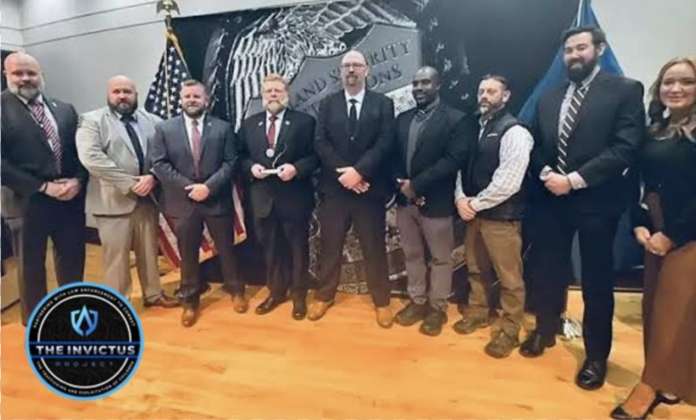
Out of this partnership grew the Invictus Task Force, a collaborative effort that brings together investigators from the Randolph, Alamance, Davidson, and Forsyth County sheriff’s offices alongside Homeland Security Investigations and the North Carolina State Bureau of Investigation.
Through this coordinated effort, investigators focus their work on identifying predators, locating victims, and building cases against those targeting children online.
From investigations to education
Investigators working these crimes see patterns long before the public hears about them. They see how predators initiate contact. They see the platforms where those conversations begin. They see the grooming tactics used to slowly gain a child’s trust. The Invictus Project helps translate those frontline observations into community education.
Instead of waiting for national reports or federal statistics to filter down years later, the organization shares what investigators are seeing now with parents, schools, and communities through presentations and events. Families learn how predators build trust with children. Teens learn how manipulation often begins with attention and conversation. Parents learn the warning signs that often appear long before exploitation escalates. Education becomes proactive rather than reactive.
Listening to teens
One of the most important tools shaping this work is something surprisingly simple: listening. Through anonymous teen surveys conducted during school presentations and community events, The Invictus Project provides students with a safe, confidential space to speak honestly. And they are doing exactly that.
Students describe the pressures they feel online. They talk about strangers initiating conversations through gaming platforms. Some share that they have encountered sexualized content far earlier than adults might expect. What teens are reporting frequently mirrors what investigators are seeing in active cases.
In many ways, their voices are confirming what law enforcement has been warning about for years: exploitation is reaching children earlier and more frequently than most adults realize. These insights help shape the conversations we have with parents and communities. Instead of speaking from assumption, we can address the digital environment teens are actually navigating.
We are encouraged by the students’ response and look forward to sharing more insights from these surveys in future articles. Their voices are helping shape a clearer understanding of the challenges young people face online. Those insights also remind us of something important: before we send our children out into the digital world on their own, we have a responsibility to prepare them for the road ahead.
Giving Our Kids the Tools Before the Keys
As a mom and someone who works closely with investigators in this field, I am often asked the same question by parents after they hear about the realities of online exploitation: Should we be afraid of the digital world our children are growing up in? The way I think about it is a little different.
When I was learning to drive, my dad insisted that before I could get behind the wheel on my own, I needed to know a few things first. Not just how to steer or stop, but how to change a tire, how to check the oil, how to handle a few basic problems that might happen on the road. At the time, it felt unnecessary. If something went wrong, I could always just call him. But that wasn’t the point.
My dad knew there might be a moment when he couldn’t get there fast enough. He wanted me to have the knowledge and confidence to handle a situation on my own if I needed to. He was preparing me for the road long before he ever handed me the keys. And in many ways, raising children in a digital world is not all that different.
There will come a time when our children are navigating online spaces without us sitting beside them. The goal isn’t to keep them from ever stepping onto that road. The goal is to make sure we have prepared them for it.
That preparation means telling them the truth about the world they are entering. It means talking through real-life scenarios. It means helping them recognize manipulation, understand boundaries, and know when something isn’t right. It also means building relationships strong enough that when something does happen, they know exactly who to call.
Because just like I did when I was learning to drive, our kids will still call home. Preparedness isn’t about assuming the worst. It’s about making sure our children are equipped before they head out on their own. When parents stay engaged, when communities stand beside investigators, and when honest conversations replace silence, the balance begins to shift.
And somewhere tonight, another simple greeting will appear on a child’s screen. The question is whether we have given our children the tools before handing them the keys to the digital road they’re about to travel.