Mahatma Gandhi advised us to “Be the change that you wish to see in the world.”
Nelson Mandela stressed that “Education is the most powerful weapon which you can use to change the world.”
Emergency management is not only changing but also shifting the balance. Is this the change we want to see? Have we applied all of our lessons learned and education to ensure success?
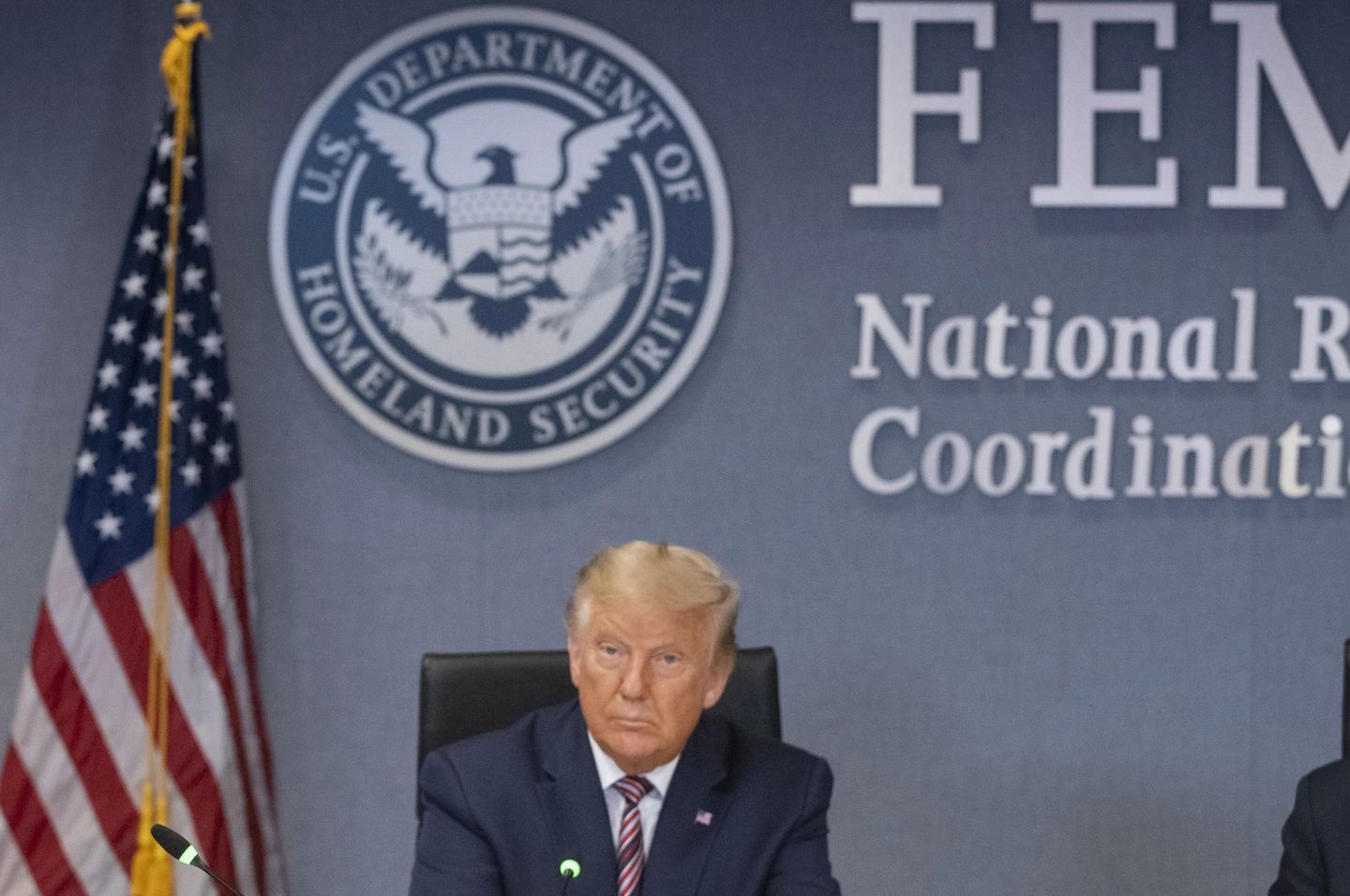
Throughout this year, the very idea of the Federal Emergency Management Agency (FEMA) as we have known it has come under debate. What was once a stable pillar in America’s disaster response architecture is now being reshaped. Proposals emerging from the Trump administration suggest shifting large portions of responsibility from the federal government to states, scaling back FEMA’s authority, and even “phasing it out” after hurricane season. The stakes are enormous for states, local governments, and the communities that depend on federal assistance when disaster strikes.
What’s Being Proposed
President Trump and Homeland Security Secretary Kristi Noem have said FEMA should be “weaned off” its current form. Noem argues the agency “needs to go away as it exists,” with states bearing more responsibility for preparedness, recovery, and mitigation. Proposed changes include reducing or eliminating some FEMA grants, raising the cost-share thresholds that determine when federal aid is available, and limiting FEMA’s role to only the most catastrophic events. A FEMA Review Council, co-chaired by Noem and Defense Secretary Pete Hegseth, is developing reforms that could redefine the agency’s mission.
Some cuts have already begun. FEMA has suspended door‑to‑door canvassing of disaster survivors and reduced in-person training for state and local officials. The result is a smaller, more distant federal presence at a time when disasters are increasing in frequency and cost.
Why This Matters
Shifting disaster responsibility from the federal level to states isn’t simply an administrative tweak; it fundamentally alters who pays, who responds, and who recovers.
1. Financial strain on states. Many states already struggle to fund routine programs, let alone large-scale disaster response. Reducing federal cost-sharing would force states to borrow or raise taxes after every major disaster, leaving poorer states especially vulnerable.
2. Unequal capacity. FEMA’s technical expertise, logistics, and coordination across agencies are difficult to replicate. Some states, like Florida or California, have well-developed emergency management systems; others do not. A sudden shift risks deepening disparities in preparedness and recovery.
3. Political inequity. Wealthier states could manage the transition; poorer or disaster-prone states might not. Without federal coordination, the United States could face a patchwork of disaster outcomes, where assistance depends more on geography than need.
The Legal and Structural Reality
Even if the administration wants to shrink FEMA, the Stafford Act still governs federal disaster declarations and funding. Changing it requires congressional approval. FEMA’s grants and recovery programs are rooted in law and decades of policy evolution; unraveling that structure would take more than executive action.
Moreover, mutual aid programs like the Emergency Management Assistance Compact rely on federal reimbursement. Without it, interstate cooperation could falter. Legal challenges are also likely if funding is withheld or disaster aid is denied under existing statutory obligations.
What a Reduced FEMA Could Mean
If proposals advance, disaster declarations could become less frequent, with higher thresholds for federal help. Grant programs for mitigation and rebuilding might shrink or disappear, pushing costs to states. Preparedness standards could diverge, weakening national consistency. Response efforts could become slower and more uneven, especially for multi-state disasters.
The loss of FEMA’s national coordination would also hinder data sharing, logistics, and equity. The agency’s ability to aggregate resources and set uniform expectations ensures that disasters are not just local problems – they’re treated as national responsibilities.
Why FEMA Still Matters
FEMA’s value lies not just in writing checks after hurricanes. It provides technical expertise, trains local responders, maintains the disaster declaration process, and ensures consistent aid across states. It acts as a stabilizing force – especially for communities that would otherwise fall through the cracks.
No state can maintain the same surge capacity, logistics network, or financial flexibility the federal government provides. The idea of a “locally driven” disaster system sounds efficient until multiple states are hit simultaneously, as often happens with hurricanes, floods, and wildfires.
A Smarter Way Forward
If the U.S. wants to rebalance the federal‑state relationship in disaster management, it should do so deliberately and transparently. Several principles are critical:
1. Clarify legal roles. Congress must clearly define which disasters qualify for federal help and how responsibilities shift, rather than leaving interpretation to executive discretion.
2. Fund the shift. Responsibility without resources is failure by design. Any decentralization must include funding, staffing, and technical assistance to build state capacity.
3. Maintain national standards. Even if states take the lead, there must be baseline preparedness, equity, and accountability standards to prevent inconsistent outcomes.
4. Strengthen mutual aid. FEMA can serve as a guarantor for state‑to‑state cooperation, ensuring that interstate assistance remains viable.
5. Plan the transition. A gradual approach, with pilots, reviews, and evaluation, would reduce risk and preserve readiness.
Conclusion
Reforming FEMA may be warranted, but dismantling it during an era of cascading climate disasters is perilous. FEMA’s coordination, funding, and expertise remain vital national assets. Any shift of power to the states must be done carefully, with clear laws, sufficient funding, and equity at the core.
Without that, the “phase‑out” of FEMA could become the phase‑in of chaos, where disaster response depends less on readiness and more on luck.
Ralph Waldo Emerson once cautioned us, “Shallow men believe in luck or in circumstance. Strong men believe in cause and effect.”
Dan Stoneking is the Owner and Principal of Stoneking Strategic Communications, the Author of Cultivate Your Garden: Crisis Communications from 30,000 Feet to Three Feet, the Founder and Vice President of the Emergency Management External Affairs Association, and an Adjunct Professor in the Communications Department at West Chester University.