
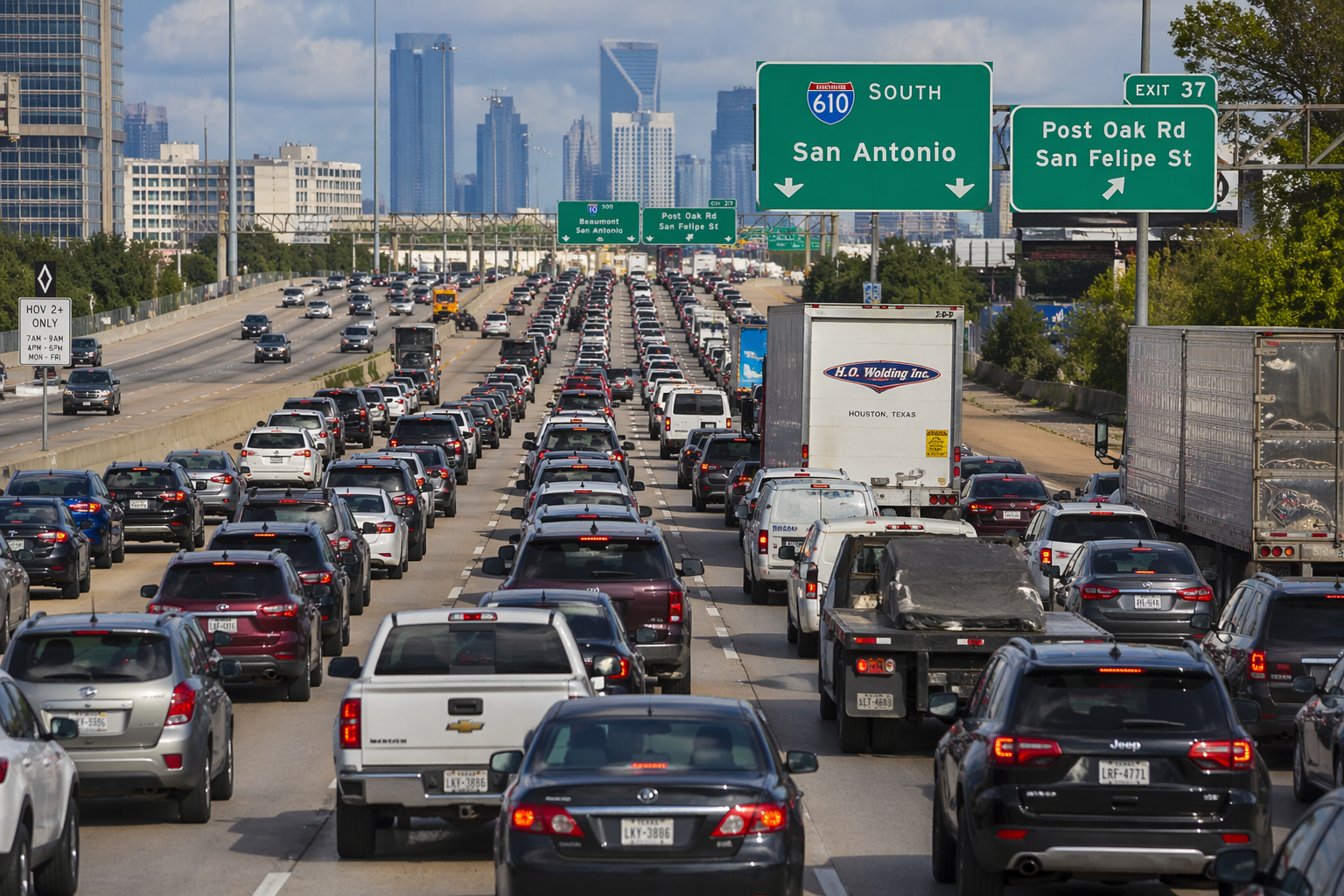
The U.S. Department of Transportation and the Federal Highway Administration (FHWA) have launched the Freedom to Drive initiative: an opportunity for states to collaborate with USDOT on tackling increasing congestion corridors across America. This national effort aims to save American families both time and money by focusing on maximizing roadway capacities, fast-tracking projects that alleviate congestion chokepoints, and leveraging American technology and private-sector partnerships.
“Under President Trump, we are working to deliver less congested roads and highways to give you a little bit more time at home with your family around the dinner table,” said U.S. Transportation Secretary Sean P. Duffy. “Part of ushering in a Golden Age of Travel means making it a little easier to get where you need to go. The Trump Administration is tackling congestion head on to eliminate endless traffic jams and ensure you spend less sitting wasting away in gridlock.”
“The Freedom to Drive initiative exemplifies the Trump Administration’s commitment to leveraging public and private sector collaboration to bring real relief to American families,” said Deputy Transportation Secretary Steven G. Bradbury. “By working hand-in-hand with states to tackle our toughest infrastructure challenges, we will eliminate the bottlenecks of the past and Get America Building Again!”
“Gridlock and congestion have no place in the Golden Age of Transportation,” said FHWA Administrator Sean McMaster. “The Trump Administration is calling on every Governor to join us in clearing the bottlenecks and cutting waste to save Americans both time and money. We want local solutions that serve all road users, instead of federal bureaucrats favoring one mode of travel over another.”
In his letter, Secretary Duffy emphasized the Administration’s commitment to moving away from “stop-and-go” policies and toward high-performance, high-efficiency solutions. The Secretary requests Governors identify two to five of their states’ worst congestion bottlenecks and outline actionable steps to address them.
To support these efforts, the FHWA has launched the Freedom to Drive website as a central resource for technical tools and congestion-relief strategies.
The Case for New Infrastructure to Reduce Traffic:
- America is home to 10 of the 25 most congested cities in the world, including Chicago and Los Angeles.
- In 2024, the average urban auto commuter spent 63 hours stuck in traffic. That equals $269 billion in lost productivity.
- Not only are Americans losing valuable time with their families and loved ones, but delays to commercial and freight activity also impacted the economy.
- This problem is not contained to major metropolitan cities, but rural areas also face disruptions due to crashes, severe weather, and recreational travel.
Rebuilding America’s aging highway infrastructure is estimated to cost nearly a trillion dollars. Leveraging private sector partnerships allows taxpayer dollars to go further while delivering new transportation infrastructure safely and efficiently according to DOT.
The original announcement can be found here.