
The Operation: What We Know

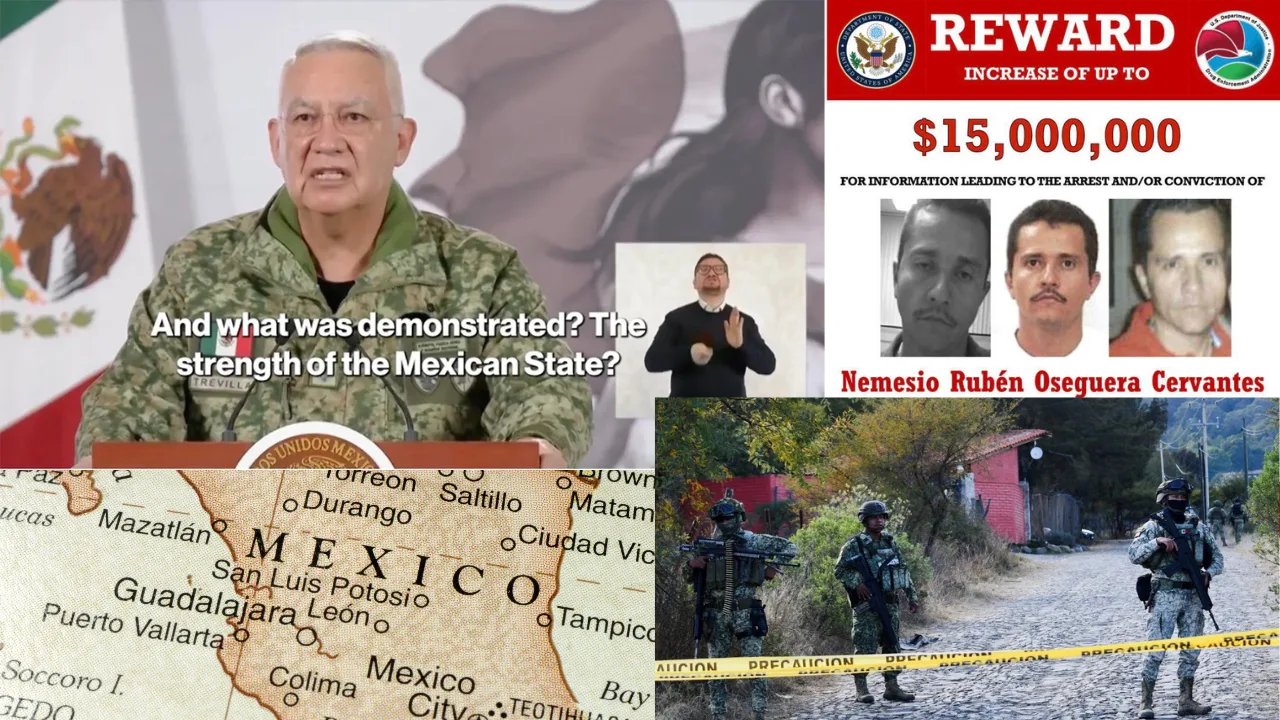
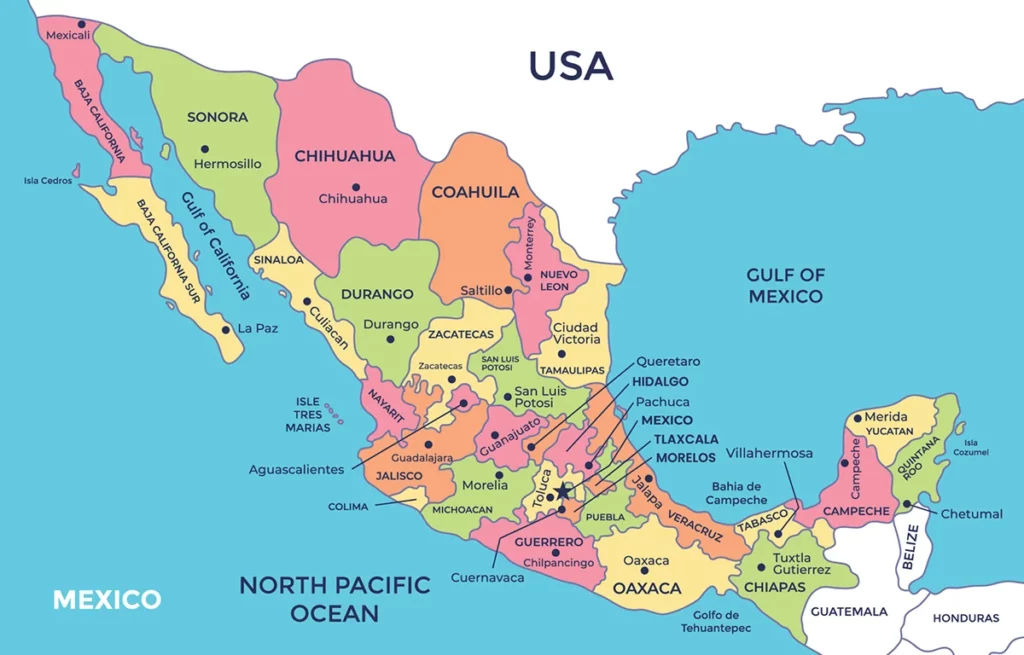
On Sunday, February 22, Mexican Army forces located Nemesio Rubén Oseguera Cervantes – known universally as “El Mencho” – at a secluded cabin in Tapalpa, a mountain town in the western state of Jalisco, roughly two hours southwest of Guadalajara. According to Mexican Secretary of National Defense General Ricardo Trevilla Trejo, intelligence tracking one of Oseguera’s romantic partners led forces to the site. When troops moved in, his bodyguards opened fire. Eight members of the Jalisco New Generation Cartel (CJNG) were killed in the military operation. Oseguera was wounded, captured in nearby woodlands, and placed on a helicopter with two bodyguards and a wounded soldier for transfer to Mexico City. Mexico’s Defense Secretariat said he died while being flown to Mexico City. Authorities then transported the bodies by Air Force plane to the capital.
The Mexican Defense Ministry confirmed the operation was conducted by the Special Forces of the Mexican Army, with support from the National Guard’s Immediate Reaction Special Force and the Air Force, and described it as a sovereign Mexican military mission. Mexican authorities also confirmed coordination with United States agencies, which provided complementary intelligence in the planning of the mission.

On the U.S. side, White House press secretary Karoline Leavitt said that the U.S. “provided intelligence support to the Mexican government in order to assist with an operation” in which Oseguera Cervantes was killed. The newly formed Joint Interagency Task Force-Counter Cartel – launched last month to map cartel networks on both sides of the border – played a role and Washington compiled a detailed target package, including information from U.S. law enforcement and intelligence, which was handed to Mexican authorities.
The haul of seized weapons is notable on its own: armored vehicles, rocket launchers capable of downing aircraft and destroying armored vehicles, and other arms were seized. In 2015, CJNG gunmen used a rocket-propelled grenade to shoot down a military helicopter in order to give Oseguera time to escape. That he was captured at all this time around represents a marked change in operational capacity on the Mexican government’s side.
The Immediate Aftermath: Coordinated Violence Across Mexico
The cartel’s response following El Mencho’s killing was swift, organized, and designed to demonstrate it could impose costs nationwide. Jalisco Governor Pablo Lemus Navarro activated a “code red” (a state of emergency protocol), suspended public transportation across Jalisco, and urged residents to remain in their homes. Mexico’s security agency said Sunday night there were 252 blockades reported throughout the country.

The human toll was significant. Twenty-five members of Mexico’s National Guard, a prison guard, and a person from the State Attorney General’s Office died in clashes in Jalisco. A civilian woman also died, as did approximately 30 cartel fighters. Seventy people were detained across seven states.
Guadalajara, which will host several FIFA World Cup matches later this year, was turned into a ghost town Sunday night as civilians hunkered down. Social media videos from Guadalajara and Puerto Vallarta showed smoke rose above beachfront hotels, tourists sprinted through the airport, and all taxi and ride-share services were suspended. Airlines canceling flights included Southwest, Alaska, United, Delta, Air Canada, WestJet, and Porter Airlines. The U.S. Embassy activated a 24/7 crisis hotline and urged Americans to shelter in place in multiple states, including tourist hubs like Cancun, Cozumel, and Puerto Vallarta.
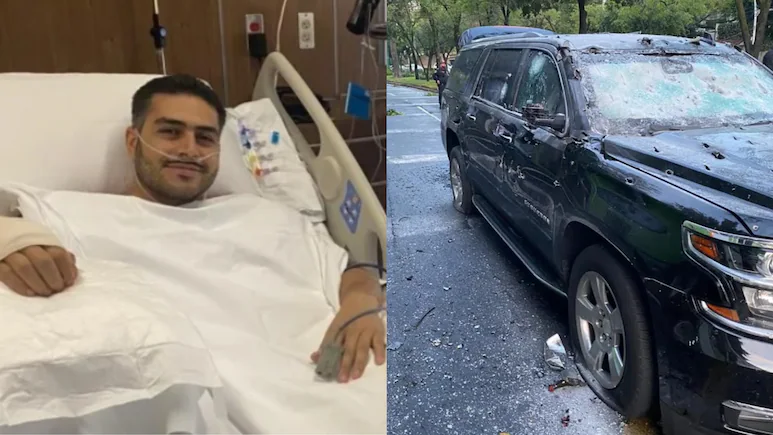
Mexican President Claudia Sheinbaum acknowledged the unrest while insisting the country was under control and returning to normalcy. Her Secretary of Security and Citizen Protection, Omar García Harfuch – who himself survived a CJNG assassination attempt in 2020 that killed two of his bodyguards – oversaw the operation and praised Mexican forces that “made it possible to significantly weaken an international criminal organization.”
“The Mexican government has undertaken a high-risk, high-visibility operation in targeting El Mencho,” said former Acting Administrator for the Drug Enforcement Administration (DEA) Robert W. Patterson. “Under sustained U.S. pressure to strike major cartel leadership, President Sheinbaum appears to have calculated that this was the moment to act, fully aware the resulting retaliatory violence will persist for some time.”
Regarding comparisons to the U.S. strikes on Caracas and capture of Venezuelan leader Nicolás Maduro, Patterson stated, “I struggle with the narrative analogizing this to recent Venezuelan actions. The contexts differ fundamentally: political environments, legal authorities, and operational objectives do not align in any meaningful way. This effort follows the more traditional pattern of Mexican authorities conducting operations independently while almost certainly drawing on foreign intelligence, generally from the United States.”
The Accusations and the Disputed Narrative
Several claims are circulating that deserve careful treatment.
“The U.S. was really behind it.” This is partially true and openly acknowledged. The U.S. provided intelligence; Mexico conducted the operation. Both governments have confirmed this publicly. The more contested question is the degree of U.S. involvement. Specifically, whether the detailed target package amounted to the U.S. effectively directing the mission while Mexico provided the boots on the ground. Neither government has denied significant U.S. intelligence involvement, so the real dispute is about framing and sovereignty optics, not the basic facts.
“El Mencho was killed to give Mexico political cover with Trump.” There is clear geopolitical context here that analysts themselves are citing openly. Vanda Felbab-Brown of the Brookings Institution described the killing as both a genuine tactical achievement and a demo of cooperation with the U.S. (based on U.S. intel) “to deflect U.S. MIL [military] actions in Mexico.” David Mora of the International Crisis Group was similarly direct: “In taking out El Mencho, Sheinbaum has demonstrated that cooperation and intelligence-sharing can produce the results that Trump desires, and that Mexican troops are equipped to take down high-value targets.” The Trump administration had been publicly pressuring Mexico for months and Sheinbaum had been under sustained pressure to show results. The timing serves her government’s diplomatic interests; that doesn’t mean the operation was fabricated, but the political calculus is real.
“He wasn’t really killed — this is a cover story.” This claim circulates after nearly every high-profile cartel operation. There is no credible evidence to support it here. Multiple senior Mexican officials have spoken on the record with specific operational details, the U.S. confirmed its intelligence role, and the CJNG itself responded with the kind of coordinated national violence that only makes sense if a genuine succession crisis is underway.
“Mexico is lying about the circumstances of his death.” The claim that he died “in custody” during an air transfer rather than in the firefight itself has drawn scrutiny. Mexico’s government is sensitive to accusations of extrajudicial killing; the phrase “died while being transferred” has precedent as official cover language. What is factually established: he was wounded in the operation, captured, and died before reaching a hospital. Whether the exact sequence of events is precisely as described is impossible to independently verify. This is a legitimate area of uncertainty, not conspiracy.
What This Means for Mexico
The death of El Mencho removes the single most wanted at-large drug lord in the Western Hemisphere. The U.S. State Department stated that CJNG had the “highest cocaine, heroin, and methamphetamine trafficking capacity in Mexico,” and had offered a reward of up to $15 million for information leading to El Mencho’s arrest. Analysts estimated his peak net worth at roughly $500 million.
But history is not kind to the theory that killing cartel leaders reduces violence or drug flows. Sheinbaum herself has previously criticized what she called the “kingpin strategy” – the approach of targeting leaders – noting that it tends to fracture organizations into competing factions that then fight bloodily for control. The death of El Chapo Guzmán’s allies, the fracturing of the Sinaloa Cartel after Ismael “El Mayo” Zambada’s arrest in 2024, and dozens of prior examples follow the same pattern: the immediate aftermath is more chaotic, not less.
Who takes control of the CJNG, or whether it splinters into factional bloodletting, will have a huge impact on drug trafficking across the Americas. His son, Ruben Oseguera-Gonzalex (“El Menchito”) is jailed in the United States, serving a sentence of life plus 30 years. His stepson, Juan Carlos Valencia (known as “El Pelón”), runs the cartel’s armed wing and has been identified as a de facto second-in-command, and his son-in-law, Julio Alberto Castillo Rodríguez (“El Chorro”), has also been designated a CJNG leader. Dr. Mahmut Cengiz and Eduardo Zeròn Garcia dive into this more deeply in Homeland Security Today’s article, “The Killing of El Mencho and the Future of Cártel Jalisco Nueva Generación.”
The Sinaloa Cartel – itself fractured and weakened by internal warfare since 2024 – is the obvious rival to watch. A war between a leaderless CJNG and a still-destabilized Sinaloa Cartel over fentanyl corridors and migration routes would not bode well for civilian populations across western and northern Mexico.
What This Means for the United States
The CJNG’s drug pipeline into the U.S. has been the primary source of concern in Washington for years. The DEA estimated in 2019 that CJNG was responsible for at least one-third of all drugs entering the U.S. from air and sea. The cartel is the dominant supplier of fentanyl (the synthetic opioid linked to the majority of overdose deaths in the U.S. in recent years) along with methamphetamine, cocaine, and heroin.
Removing El Mencho does not remove the CJNG’s infrastructure, its manufacturing networks, its corrupted officials, or its distribution chains inside the United States. As former DEA Acting Administrator Patterson explained: “In strategic terms, the impact on drug flows into the United States will likely be limited in the near to medium term. These organizations are structured to remain resilient to leadership decapitation, particularly at the distribution and logistics levels. We are more likely to see a period of intense internal realignment: new contenders emerging, factions testing one another, and rival groups probing for weakness. That almost always translates into increased in-country violence as different elements compete for succession and territory, even as the overall trafficking apparatus continues to function.
At the same time, the turbulence accompanying hierarchy re-creation can materially enhance the investigative process. Rival factions and stressed intermediaries become prone to operational mistakes, defections, and exploitable communications that open new entry points for law enforcement. Moreover, well-entrenched leadership typically devotes considerable effort to suppressing the gaps and seams that emerge in a fracture, controls which erode under stress and create further opportunities for investigators.”
For the Trump administration, the killing is a political win framed around its foreign terrorist organization (FTO) designation of the CJNG in February 2025 and its sustained pressure on Mexico. The administration has publicly threatened unilateral military action inside Mexico; this operation – conducted by Mexico and enabled by U.S. intelligence – is the model both governments appear to prefer as an alternative to that scenario.
The Playbook: What Cartels Do When Their Leader Is Killed
Sunday’s violence followed a pattern that has repeated itself across every major cartel decapitation in Mexico over the past two decades. It is not random. It serves specific purposes.
Burning vehicles and blocking highways is primarily a show of force directed at three audiences simultaneously: rival cartels (signaling the organization still has command-and-control capacity), the Mexican government (imposing costs to deter future operations), and the cartel’s own membership (reassuring soldiers and mid-level commanders that the organization is not collapsing). The scale and geographic coordination of Sunday’s response – 252 blockades across the country within hours – suggests the CJNG had pre-positioned resources and communication structures specifically for this contingency. That level of coordination does not happen spontaneously.
The 25 National Guard deaths, in particular, require attention. These were not random acts of chaos. Targeted killing of security forces is a deliberate signal: the organization can reach you and will, even after losing its top leader. It is designed to demoralize security forces, trigger hesitation in future operations, and establish leverage in any eventual negotiation with the government.
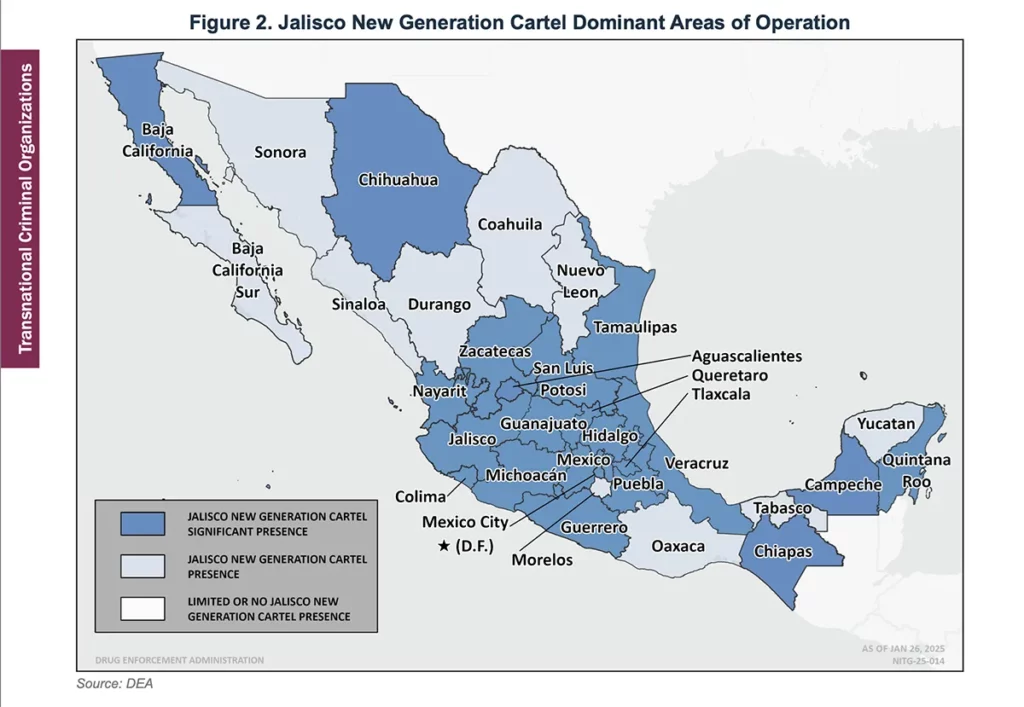
What comes next, assuming no rapid succession is established, is typically a period of months to years of internal fragmentation. Lieutenants who reported to Oseguera will jockey for control of specific plazas, trafficking routes, and criminal enterprises. Some will negotiate with rivals. Others will fight. The civilian population in Jalisco, Colima, Michoacán, Nayarit, and Guanajuato – already living with severe cartel violence – will bear the worst of it.
The Bottom Line
The death of El Mencho is a genuine and significant achievement, one that has eluded Mexican and U.S. law enforcement for more than a decade. It demonstrates real improvements in Mexico’s special forces capability and U.S.-Mexico intelligence cooperation. It also carries near-certain costs: a period of intensified violence as the CJNG undergoes succession trauma, potential exploitation by rival organizations, and no short-term reduction in drug flows into the United States.
Whether it represents a turning point or merely the next iteration of a pattern that has played out many times before – in Colombia with Pablo Escobar, and in Mexico with El Chapo, with the Zetas, with the Beltrán-Leyva organization – will depend on what Mexico and the U.S. do in the weeks and months that follow. Organizations built to survive their founders tend to do just that.