

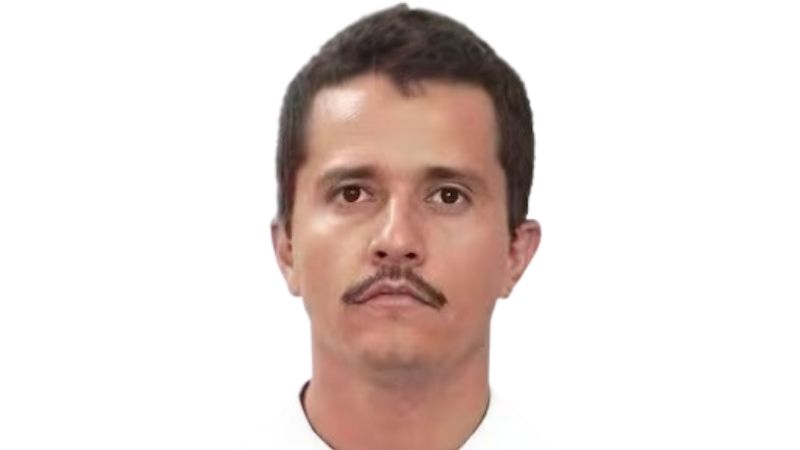
The killing of Nemesio Oseguera Cervantes, “El Mencho,” marks a crucial moment in Mexico’s ongoing battle with organized crime. On February 22, around 11:00 a.m., Mexican Army Special Forces, in cooperation with the National Guard, the National Intelligence Center, and federal prosecutors from the Specialized Prosecutor’s Office for Organized Crime, carried out a targeted operation in the mountainous area of Tapalpa, near the Jalisco–Nayarit border. Mexican authorities noted that the operation was supported by intelligence sharing from U.S. counterparts, emphasizing the increasingly binational nature of efforts against cartels. The rugged terrain, including highlands and dense forests within the Villa Purificación–Cuautla–Sierra de Amula corridor, was deliberately chosen; it has long served as a strategic sanctuary for the leader of the Cártel Jalisco Nueva Generación (CJNG).
The Sierra de Amula region, including the municipality of El Grullo, has consistently been cited in federal intelligence assessments as part of Oseguera Cervantes’ operational stronghold. The geography offers natural defensive advantages and proximity to logistical routes connecting Jalisco with Nayarit and Colima. The CJNG’s territorial consolidation in this area exemplifies its broader strategy of embedding leadership nodes within semi-rural, topographically defensible zones while maintaining outward-facing trafficking corridors.
The historical significance of the operation is highlighted by events on May 1, 2015, when Mexican Federal Police and prosecutors made a major effort to capture Oseguera Cervantes in Villa Purificación. During that operation, a Ministry of Defense EC725 Cougar helicopter was shot down by a rocket-propelled grenade, resulting in the deaths of nine federal personnel. The destruction of the aircraft marked a symbolic escalation: it showed the cartel’s access to military-grade weapons and its readiness to confront the state in overt, high-intensity clashes.
On the same day, the CJNG carried out a coordinated retaliatory campaign across Jalisco and neighboring states, including Colima, Guanajuato, Michoacán, and Nayarit. Authorities recorded about 39 simultaneous incidents involving roadblocks, arson attacks, and the destruction of vehicles and commercial buildings. The timing and geographic spread of these acts showed operational discipline and team cohesion. More importantly, they served as a deliberate display of coercive power intended to deter further incursions by federal forces.
Eleven years later, in the same region long recognized as his refuge, Oseguera Cervantes reportedly died after being captured and airlifted for medical treatment following injuries sustained in crossfire with federal forces. Official accounts state that six more alleged CJNG members were killed in the encounter, and three members of the armed forces were wounded. The confrontation, while tactically successful in neutralizing a high-value target, triggered an immediate and widespread wave of retaliatory violence.
Federal authorities reported approximately 250 highway blockades and violent incidents across multiple states, with some estimates indicating that up to nineteen states experienced disturbances during the peak of unrest. At least 25 National Guard members were reportedly killed in subsequent attacks attributed to retaliatory actions, along with a state prosecutor’s agent and a prison guard. Educational activities were suspended in several jurisdictions, including Puebla, and Jalisco was placed under code red. Although authorities claimed that the most intense phase of violence was contained within hours, the scale of mobilization revealed the organization’s hidden capacity for rapid, decentralized disruption.
Structurally, the CJNG is characterized by a largely vertical command hierarchy, different from the more decentralized structures of rival groups. According to the DEA reports, the CJNG operates in nearly 28 Mexican states and has a presence in over 40 countries worldwide. Its distribution networks span the United States, making it a major player in transnational drug supply chains. Its total assets are estimated at around $50 billion, with annual revenues from cocaine trafficking and large-scale methamphetamine production reaching billions of dollars. Besides narcotics, the organization has expanded into fuel theft (huachicol), extortion, human trafficking, money laundering, and timeshare fraud schemes, often working in coordination with its financial wing, Los Cuinis.
The CJNG’s origins lie in the fragmentation of the Milenio Cartel following the arrest of Óscar Orlando Nava Valencia. From this split, Oseguera Cervantes formed a faction with Abigael González Valencia and Erick Valencia Salazar, gradually asserting control over Jalisco and nearby Michoacán. A strategic focus on access to the ports of Manzanillo and Lázaro Cárdenas, key entry points for chemical precursors and transshipment routes, helped the cartel expand early on.
During Enrique Peña Nieto’s administration, the CJNG capitalized on the fragmentation caused by a high-value targeting strategy that had weakened, but not replaced, dominant criminal organizations. The dismantling of groups such as Los Zetas and the Knights Templar created territorial vacuums that the CJNG quickly exploited with violence. By 2013, its presence extended into Nayarit, Guerrero, and Veracruz, and between 2015 and 2017, it expanded further into Baja California, Estado de México, Puebla, Morelos, Quintana Roo, Tabasco, and Chiapas.
At the same time, the worldwide shift towards synthetic drugs reshaped illegal markets. Moving into methamphetamine and later fentanyl production decreased dependence on agricultural cycles and increased scalability. Controlling maritime entry points for precursors enabled the CJNG to vertically integrate production and distribution, boosting profit margins and expanding its international influence. By the end of the Peña Nieto administration, the organization had achieved a national presence, paramilitary mobilization capacity, and institutional resilience.
The lack of a formally appointed successor after Oseguera Cervantes’ death creates serious uncertainty. Possible contenders—such as Hugo González Mendoza Gaytán (“El Sapo”), Juan Carlos Valencia González (“El 03”), and Ricardo Ruiz Velasco (“R2”)—are associated with different operational areas. Unlike the succession process within the Sinaloa Cartel after Joaquín Guzmán Loera’s imprisonment, the CJNG lacks a publicly visible transition plan. This uncertainty increases the chance of factional conflict.
The international aspect further complicates the transition. The U.S. Department of State’s listing of major Mexican cartels as Foreign Terrorist Organizations has broadened the legal tools for sanctions, financial measures, and prosecution coordination. Since mid-2025, high-level military and naval channels between Mexico and the United States have reportedly increased intelligence sharing and operational planning. President Claudia Sheinbaum’s security stance indicates a more direct recognition of organized crime as a structural challenge rather than merely a law-enforcement problem.
Likely Consequences
The removal of Nemesio Oseguera Cervantes causes a period of internal instability within the CJNG. In hierarchically structured criminal organizations, the leader not only fulfills symbolic roles but also practical ones in dispute resolution, territorial control, and revenue allocation. His absence disrupts established lines of command and unofficial power balances. Mid-level commanders may take on more independence, leading to factional rivalries over key routes, income sources, and access to deep-rooted corruption networks. This phase is unlikely to cause immediate organizational collapse; instead, it will involve a reorganization of authority as members renegotiate internal hierarchies and operational focuses.
A second impact involves changes in territorial control. Strategic nodes, especially those linked to Pacific ports and inland synthetic drug production centers, may become sites of renewed conflict. Rival groups or internal factions are likely to test deterrence limits by gradually encroaching on outer municipalities rather than launching direct attacks on main strongholds. This probing behavior can break up territories that were previously under monopoly control, leading to scattered but cumulative violence. Municipalities once maintained through coercive dominance may revert to competitive criminal pluralism, raising local insecurity even if large-scale clashes are avoided.
Although leadership uncertainty might temporarily disrupt coordination between financial operators and enforcement units, the CJNG’s diversified revenue model, spanning synthetic drugs, extortion, fuel theft, and cross-border trafficking, indicates structural resilience. Large criminal enterprises usually institutionalize accounting, procurement, and logistical systems beyond the reach of any single individual. Short-term cash flow volatility is therefore possible, but systemic financial collapse remains unlikely.
Violence patterns may evolve in form rather than scale. Instead of highly visible, coordinated displays of force, future leadership might prefer low-profile tactics—such as targeted assassinations, selective intimidation of officials, and strategic corruption—that aim to maintain profitability while avoiding extensive state retaliation. At the same time, the operational outcome is likely to strengthen bilateral security cooperation between Mexico and the United States, enhancing intelligence sharing, financial tracing, and prosecutorial coordination. However, increased collaboration also raises political sensitivities, especially regarding sovereignty and public perception. How this diplomatic management is handled will determine whether operational gains lead to lasting institutional alignment.
The most significant implications are structural. Corruption systems embedded in municipal governance, law enforcement, and local politics remain in place unless comprehensive reforms are implemented. Removing leaders does not dismantle patronage networks that facilitate trafficking and shield operatives from accountability. Additionally, Mexico’s organized crime scene has demonstrated it can adapt and rebuild after leadership decapitations. As long as there is high demand for transnational crime, access to chemical precursors, weak local governance, and systemic corruption, these groups will have strong incentives to unify under new leadership. Ultimately, the outcome depends less on succession and more on whether the underlying structural conditions that helped CJNG rise are genuinely changed.
In this context, the death of Oseguera Cervantes represents a significant tactical victory with strategic ambiguity. Its long-term impact will depend less on removing a single leader than on whether state institutions can effectively consolidate territorial control, disrupt financial networks, and reform corrupt governance structures. Without these structural changes, adaptive reorganization—rather than systemic dismantlement—remains the more likely path within Mexico’s changing criminal landscape.