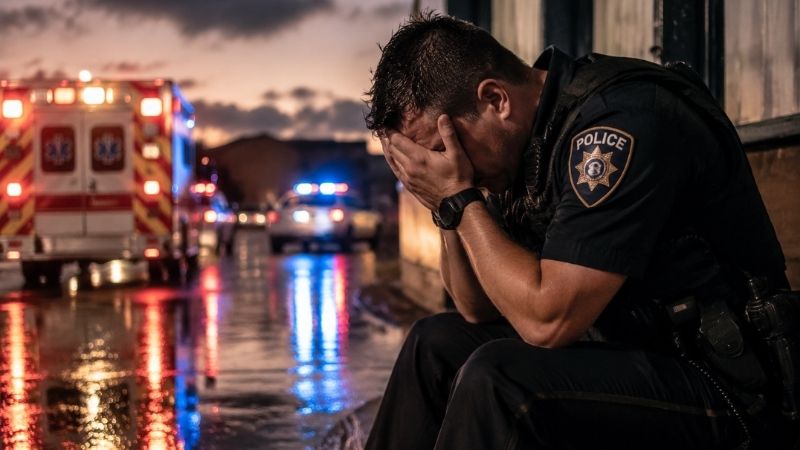
Due to the unique nature of their work, first responders are routinely exposed to traumatic situations and tremendous amounts of stress that can lead to a variety of mental health conditions including anxiety, depression, and PTSD. Numerous studies have highlighted that first responders have higher rates of these conditions compared to the general population. Even more concerning is the increased prevalence of suicide and suicidal ideation among first responders. The overwhelming amount of stress endured by first responders can also contribute to poor physical health, and studies have shown that first responders have higher rates of cancer, heart disease, and a lower life expectancy than non-first responders. For example, although life expectancy for the general population is 79, one study put police officers at only 57. Additionally, studies show responders often have strained family relationships due to their work, and many suffer from sleep disorders and substance abuse. However, despite all of this, stigma and other factors often prevent first responders from seeking help.
To better understand these issues and trends among New York State’s first responders, the New York State Division of Homeland Security and Emergency Services (DHSES) partnered with the Benjamin Center and the Institute for Disaster Mental Health at the State University of New York (SUNY) at New Paltz to conduct the first ever First Responder Mental Health Needs Assessment (MHNA). The assessment included an anonymous survey completed by over 6,000 responders and series of focus groups to further understand the challenges at hand. The assessment is one of the largest of its kind ever completed in the United States, and it yielded a variety of important findings. For example, the assessment revealed:
- Stress was experienced personally by more than two-thirds of first responders (68%), followed by burnout (59%) and anxiety (52%).
- A majority of first responders reported having experienced symptoms associated with the mental health condition depression (53%) and approximately four in ten first responders experienced symptoms associated with the mental health condition PTSD (38%).
- Thoughts of suicide were reported by 16% of first responders, which is four times higher than the general population in New York State. Notably, public safety dispatchers had the highest rates of suicidal ideation at 21%.
- A majority of responders reported stress had a negative impact on their homelife (80%), physical health (79%), social life (75%), family relationships (72%), and friendships (62%).
- More than 90% reported services such as individual therapy, couple and family therapy, and peer support groups would help improve first responder mental health, if they were free and easily accessible. Nearly 90% reported wellness activities would help as well.
- However, 80% reported stigma is a major barrier to seeking help, and 78% cited not recognizing the need for help as a barrier, along with 75% reporting the lack of mental health providers who understand the needs of first responders as a barrier. Additionally, 72% reported concerns about confidentiality.
- Toxic work culture was cited as a major challenge for the first responder field by approximately 8 in 10 first responders (79%).
Armed with this information, New York State is now better positioned to provide additional resources and services to help first responders. Notably, NYS DHSES recently named the agency’s first ever Chief Wellness Officer to lead and coordinate the agency’s wellness efforts for DHSES employees and the larger public safety community in New York. DHSES is also advancing wellness related training and assistance for responders, working to support and strengthen peer support networks, and helping to create training for mental health professionals wanting to work with first responders. The latter initiative is absolutely critical, as the MHNA identified a desperate need to increase the number of “culturally competent” mental health professionals that understand the unique challenges facing the responder community.
In addition to these efforts, more outreach and education is needed to break down the stigma and change the culture of silence in the responder community about mental health. In fact, every responder organization in New York (and beyond) should be exploring ways they can socialize and normalize first responder mental health. Additionally, public safety leaders must work to combat toxic work environments and instead create a culture of wellness within their agencies, to include supporting agency wellness programs. The numbers speak for themselves, and first responder agencies need to act proactively to mitigate the growing mental health crises and help ensure their employees are resilient.
Just like we invest in providing first responders the training, equipment, and tools necessary to do their jobs safely and effectively, wellness must be considered a necessary investment as well, because the responders themselves are our greatest asset. Investing time, energy, and resources into responder wellness can also help to support recruitment and retention (another crisis facing the responder community), because if we invest in our people, they are more likely to invest themselves in public service and protecting our communities. Research also shows happier employees are more productive and less likely to leave their job. Finally, despite a growing body of research on first responder mental health, more must be done to better understand the mental health issues facing responders and the most effective strategies to address these challenges, as we are just now starting to understand the scope and scale of the problem.