
The previous article in this series exposed a structural blind spot that modern institutions can no longer afford to ignore. Part IV demonstrated that oversight mechanisms built for deterministic systems—frameworks anchored in periodic compliance, static documentation, and binary security checklists—are fundamentally blind to the behavioral dynamics of machine learning. They cannot detect how inferential models reorganize workflows, redistribute operational signals, or reshape the environments they are deployed to manage. This diagnostic failure stems from a foundational misconception: institutions remain equipped to evaluate what a system does, but they are entirely unequipped to evaluate what a system changes.
In AI‑driven environments, the structural changes a model introduces matter far more than its statistical outputs. When an organization cannot see how an inferential model transforms the conditions around it, it loses visibility into the very architecture of its own operational stability. This final chapter addresses that institutional blind spot directly. It introduces a methodology designed to treat exposure not as a temporary malfunction, a cyber vulnerability, or a code deviation, but as an emergent structural property of AI‑driven architecture. This is a form of exposure that cannot be isolated within a single software component; it is a relational property that emerges exclusively from the continuous, non‑linear interaction between inferential models and the complex institutional environments they inhabit.
The diagram below visualizes exposure as an emergent structural field, where signal topology, temporal drift, behavioral delegation, and stress elasticity interact continuously without forming discrete modules or linear processes. It represents exposure as a relational property that arises from the evolving interface between inferential models and institutional environments.
STRUCTURAL EXPOSURE FIELD
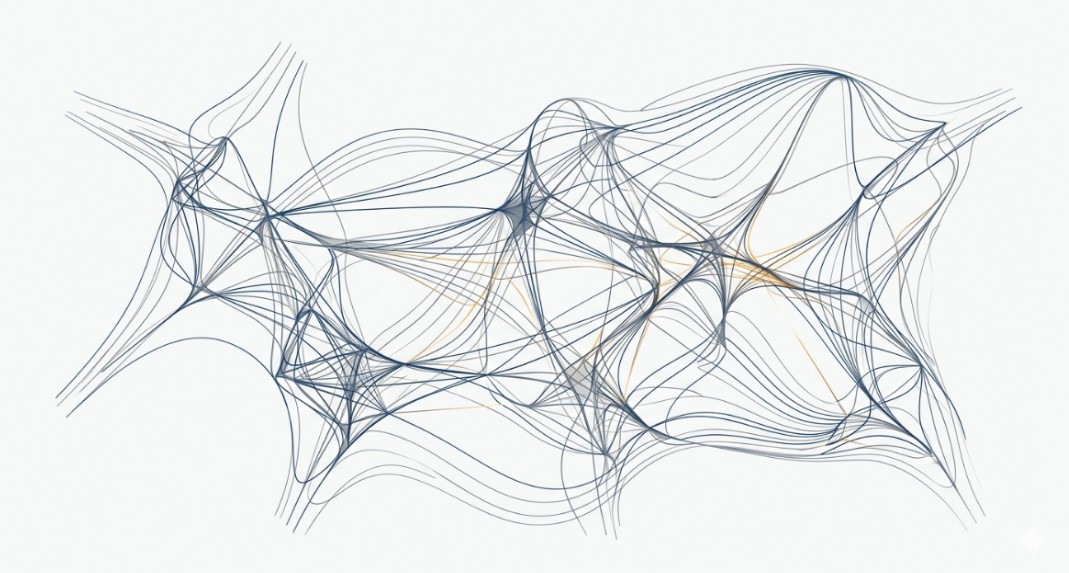
The Locus of Exposure: The Socio‑Technical Interface
Exposure in inferential systems does not arise from traditional engineering error, software bugs, or mechanical failure. It arises from adaptation and structural transformation. A neural network or probabilistic model that performs exactly as designed, achieving optimal accuracy scores within its training boundaries, can still silently dismantle the stability of the institution that hosts it. This occurs because the deployment of an inferential architecture is never a neutral insertion of a tool into a passive environment; it is an active intervention that rewires the host system.
The space where this rewiring occurs is not inside the model and not inside the institution. It is the socio‑technical interface between them. This interface is where mathematical inference meets human judgment, where algorithmic weighting meets organizational priority, where statistical drift meets operational routine. It is a dynamic, adaptive, constantly shifting zone in which neither the machine nor the institution fully controls the outcome. Exposure lives in that interface. It is not a property of code, nor a property of human error, but a property of the relationship between the two. And because that relationship evolves continuously, exposure cannot be captured through static point‑in‑time evaluations or rigid deterministic categories.
This redefinition exposes why legacy cybersecurity protocols and standard validation techniques fail to capture the problem. Traditional vulnerability assessments treat risk as an intrusion or an unauthorized breach of a perimeter—a localized exploit that can be patched with code. The socio‑technical interface, however, does not suffer from explicit breaches; it suffers from systemic assimilation. When a model redefines reality for the institution, it introduces an epistemological vulnerability. The risk is not that an external actor will break the system, but that the host institution will follow the system’s optimized calculations into a zone of unmapped operational fragility. Exposure emerges precisely in this redefinition.
The Architecture of Relevance and the Distortion of Signals
Every inferential system introduces its own architecture of relevance. It does not present reality as an unfiltered stream of facts; instead, it projects a probabilistic map that elevates certain signals, compresses others, and reorganizes internal data representations in ways that are mathematically coherent to the model but invisible to human operators. This structural reweighting of signals is a critical vulnerability because institutions depend on stable information hierarchies. Operational safety in sectors like national security, defense, and infrastructure protection relies on the assumption that a critical alarm will look like a critical alarm, and routine background noise will look like routine background noise.
When an inferential model is placed between the environment and the human decisor, it acts as a dynamic lens. If the model shifts those hierarchies—even slightly—it alters what the institution perceives as important, what it monitors, and what it ignores. A minor, unnoticed change in signal weighting can produce a catastrophic divergence in operational behavior down the line. Because these changes are cumulative and compounding, they can reshape entire workflows, blinding operators to creeping systemic vulnerabilities without ever triggering a single technical alert.
This distortion occurs because inferential systems operate within multidimensional latent spaces, compressing thousands of inputs into dynamic probabilistic weights. Human supervisors, conversely, operate within discrete, linear rulesets. When the model translates its internal representations into operational suggestions, it compresses the complexity of the data environment. If the underlying data distribution experiences non‑stationary drift, the model’s internal architecture of relevance adapts to maintain mathematical optimization, but it does so by altering the fundamental meaning of the signals. The institution continues to read the outputs through its traditional, static framework, unaware that the data foundation beneath those outputs has fundamentally shifted its alignment.
The Evolution of Institutional Dependencies
As inferential models integrate into workflows, they generate dense webs of new dependencies. These dependencies are not static; they evolve continuously and silently.
Some dependencies are technical. They emerge from data pipelines, preprocessing layers, and upstream sources that feed the model. A small shift in an external data stream can alter the model’s internal representation, triggering downstream effects that traditional IT asset mapping cannot trace. A component that once seemed peripheral becomes a hidden point of failure.
Other dependencies are procedural. As workflows adapt to the speed of automated inference, the timing and gating of decisions shift. Processes that once required deliberate human verification compress to match algorithmic throughput. The institution begins to optimize itself around the model’s rhythm, often without realizing it. The result is a gradual transfer of operational authority from humans to the machine.
Finally, dependencies become behavioral. As operators grow accustomed to the model’s reliability under nominal conditions, they begin to delegate their skepticism. Tacit knowledge erodes. Situational awareness narrows. The human becomes an executor of the model’s logic rather than an independent evaluator. This behavioral drift is one of the most dangerous forms of exposure because it is invisible until it is too late.
Exposure grows precisely within the evolution of these relationships. It thrives in the silent reconfiguration of who depends on what, when they depend on it, and why.
Time as a Structural Dimension
Time is the dimension that makes inferential exposure particularly difficult to detect. Institutional oversight is built on discrete intervals: quarterly audits, annual reviews, certification cycles. These mechanisms assume that systems remain stable between evaluations.
Inferential systems do not. They evolve continuously. They change as data changes, as conditions shift, as operators adapt. Exposure accumulates in the unmonitored gaps between evaluations. It mutates while no one is looking. It becomes visible only after it has already reshaped the environment.
This temporal mismatch guarantees that traditional governance is structurally late. To manage exposure, institutions must treat time not as a variable but as a structural dimension of risk. They must observe how the system evolves, not how it performs at a single moment.
Stress as the Revealer of Hidden Structures
The true nature of inferential exposure becomes visible under stress. It does not require a catastrophic event. It emerges in the ordinary turbulence of daily operations: ambiguous signals, partial data, unexpected patterns, rare anomalies.
Under stress, inferential systems reveal their hidden architectures of relevance. When forced to process data that deviates from training distributions, models reorganize signals, redistribute attention, and amplify or suppress patterns in ways that remain hidden during calm conditions. Stress does not show whether the model works; it shows how the model transforms the environment when reality diverges from expectations.
Exposure becomes visible in that transformation. It manifests in the way the combined human‑machine system stretches, distorts, or breaks under pressure.
Mapping Exposure: The Structural Diagnostic Pillars
To transition from a conceptual warning to an operational practice, exposure mapping must be anchored in structural diagnostic pillars. These pillars do not function as a checklist for algorithmic compliance; they form an analytical lens through which the institution can observe how its operational fabric is being rewritten by inferential integration.
The first pillar concerns the topology of signals. It captures how the inferential layer reweights, suppresses, or amplifies operational cues before they reach human supervisors. It reveals the shifting architecture of visibility and invisibility that governs institutional awareness.
The second pillar concerns temporal decoupling. It measures the structural lag between the continuous evolution of the model’s internal representations and the discrete intervals of institutional oversight. It exposes the temporal blind zone where exposure accumulates unnoticed, revealing how the system drifts away from the institution’s understanding.
The third pillar concerns behavioral delegation. It traces the erosion of tacit knowledge as operators adapt their routines around the model’s predictive anchor points. It shows how human judgment becomes progressively subordinated to algorithmic logic, altering the institution’s cognitive architecture.
The fourth pillar concerns stress elasticity. It reveals how non‑linear propagation cascades across interconnected layers when environmental conditions deviate from nominal baselines. It shows how small perturbations can escalate into systemic failures when the system’s internal coherence is strained.
Together, these pillars form the structural foundation of exposure mapping. They allow institutions to see how their operational reality is being reshaped—not by failure, but by adaptation.
Operational Scenarios Across Critical Sectors
The dynamics of exposure become clearer when observed across real operational environments.
In large‑scale energy grids, inferential models balance load, predict demand, and manage switching. Under environmental stress—such as a heatwave—models may adjust their internal thresholds to maintain stability scores, inadvertently suppressing peripheral sensor alerts. The first and second pillars reveal how this shift leaves certain substations vulnerable to cascading failure, exposing the temporal decoupling between model adaptation and institutional oversight.
In autonomous logistics networks, routing models optimize throughput under normal conditions. But during an emergency evacuation, data distributions shift abruptly. Operators who have delegated their tacit geographical knowledge to the model struggle to compensate. The third pillar reveals the depth of behavioral delegation, while the fourth shows how stress elasticity degrades when the human anchor is removed, amplifying congestion rather than alleviating it.
In industrial supply chains, inferential models assess material quality and predict equipment maintenance. A subtle change in upstream sourcing can distort the model’s internal representation while leaving accuracy metrics unchanged. The first and fourth pillars reveal how this hidden dependency allows micro‑defects to pass undetected, eroding structural safety margins.
These scenarios demonstrate that exposure is not a theoretical construct. It is a lived operational reality.
Conclusion: From Risk Mitigation to Structural Resilience
This series closes not with a warning, but with a method. Exposure cannot be eliminated, nor can it be controlled through the suppression of technology. It must be understood. And understanding is the prerequisite for building the next generation of governance architectures—ones capable of operating in environments where inferential systems are structural components of critical infrastructure.
The goal is not to control the model’s internal mathematics, but to see what the model changes. Only then can institutions move from risk mitigation to structural resilience. In complex, non‑stationary environments, eliminating risk is a mathematical illusion. Resilience means the ability to map and absorb algorithmic mutation in real time. It means building institutions that evolve with the systems they depend on.
In AI‑driven environments, exposure is not a threat to be suppressed. It is a structure to be mapped. And once mapped, it becomes the foundation for a new form of institutional stability—one that grows, adapts, and endures.