
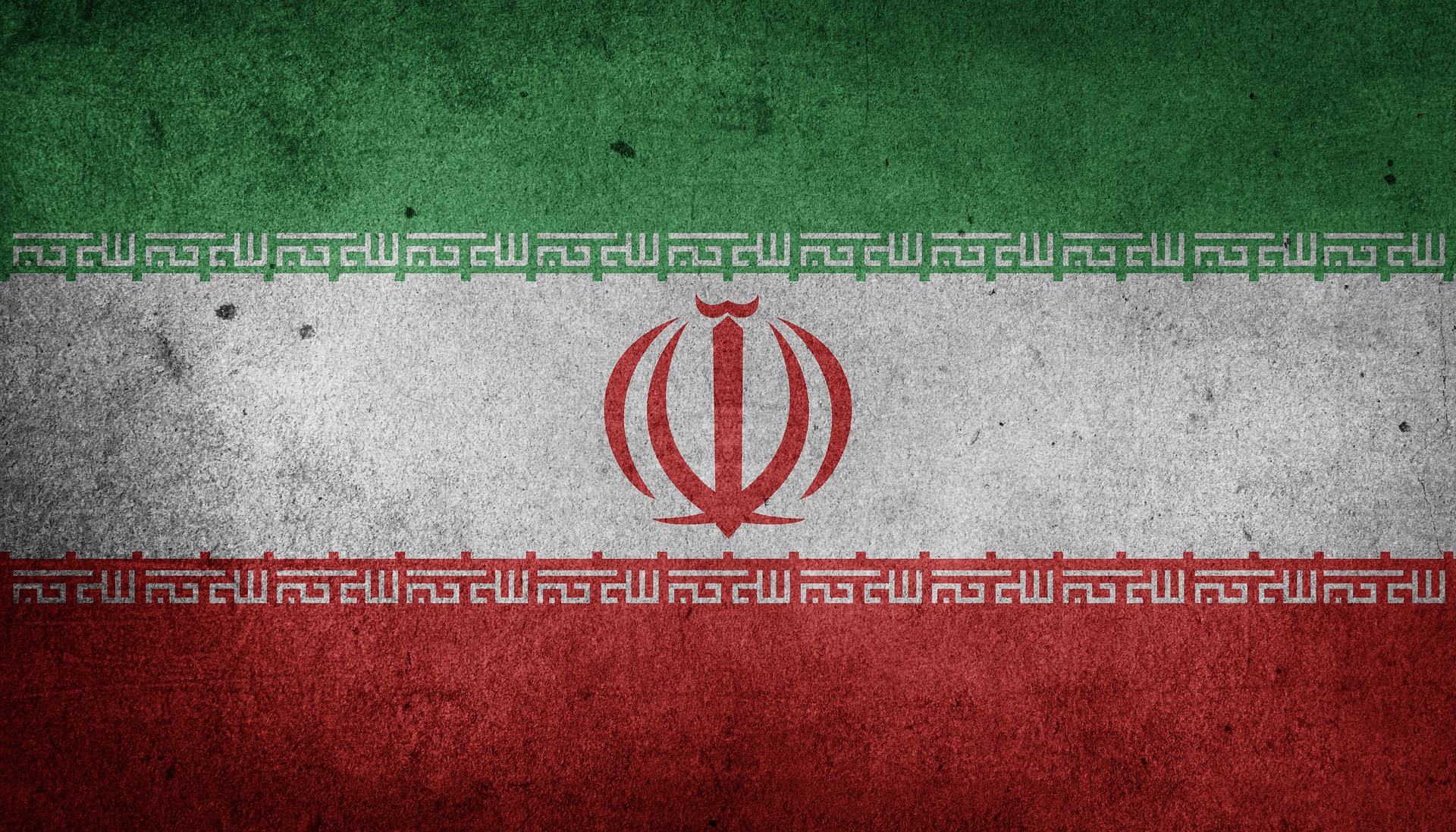
Iran as an “IRGC State”
Iran no longer functions as a traditional theocracy. While religious authority remains at the apex, the state’s operational core is now a securitized system dominated by the IRGC and the Supreme Leader’s office. Over the past decades—and even more visibly after the accelerated rise of Mojtaba Khamenei—the Islamic Revolutionary Guard Corps (IRGC) has consolidated itself as the regime’s true center of command. This evolution is not sudden; it reflects a long-term process in which military power, intelligence fusion, economic leverage, and social coercion have been integrated into a single operational system.
Within this structure, the IRGC directs the country’s primary coercive instruments, manages parallel economic networks, shapes foreign policy through expeditionary proxies, and sets the regime’s escalation posture. The Supreme Leader functions less as an autonomous decision-maker and more as a legitimizing node that stabilizes continuity and shields the apparatus from institutional scrutiny. The speed and choreography of the succession process are not political details—they are operational indicators of the IRGC’s dominance and its ability to impose decisions under crisis conditions.
This transformation matters for external security because an IRGC‑driven state operates according to military‑intelligence logic rather than political logic. Its threat calculus, escalation thresholds, and proxy deployment patterns reflect the priorities of a security organization that views external confrontation as a tool for internal survival and strategic depth. The result is a consistent pattern of threat behavior: asymmetric escalation, cyclical proxy activation, and a command‑and‑control model that externalizes risk to preserve internal cohesion.
How IRGC Command Logic Shapes External Threats
The IRGC’s approach to external operations is not an extension of Iranian foreign policy; it is the operational expression of a security organization that prioritizes regime survival over diplomatic outcomes. Its command logic is built around three principles that consistently shape Iran’s threat posture abroad: controlled escalation, proxy warfare, and asymmetric retaliation.
Controlled escalation allows the IRGC to apply pressure without triggering full-scale conflict. It relies on incremental actions—targeted strikes, maritime harassment, cyber intrusions—to probe adversary thresholds and adjust posture in real time. These operations impose costs while preserving ambiguity, deniability, and the ability to modulate intensity as conditions shift.
Proxy warfare remains the IRGC’s most effective instrument for projecting power. Through Hezbollah, Iraqi militias, the Houthis, and networks in Syria and beyond, the IRGC maintains an expeditionary ecosystem capable of striking regional and global targets without exposing the Iranian state to direct retaliation. These groups operate within a shared strategic framework but retain enough autonomy to complicate attribution, response planning, and escalation management.
Asymmetric retaliation is central to the IRGC’s deterrence model. When pressured, the organization responds through unconventional means—cyber operations, attacks on soft targets, threats to maritime chokepoints, and activation of diaspora intimidation networks. These actions shift risk onto adversaries while minimizing the regime’s exposure and preserving internal cohesion.
Together, these principles create a threat environment in which Iran’s external behavior is predictable in pattern but variable in execution. The IRGC’s command logic ensures that confrontation is managed, distributed, and deniable—allowing the regime to escalate without appearing to escalate, and to retreat without signaling weakness.
The IRGC’s Global Network
The IRGC’s external reach is sustained by a global network that blends militias, covert logistics channels, cyber units, and influence operations. This network is not a loose constellation of partners; it is an integrated ecosystem designed to extend operational depth, complicate attribution, and distribute risk across multiple jurisdictions. It translates the organization’s command logic into action across physical, financial, and digital domains.
Militias and expeditionary partners form the backbone of this system. Hezbollah in Lebanon, Iraqi Popular Mobilization Forces, the Houthis in Yemen, and militia networks in Syria provide layered strike options across the Middle East. These groups offer geographic reach, deniability, and the ability to escalate horizontally when direct confrontation would be costly or strategically limiting.
Covert logistics and financial channels enable the organization to sustain activity despite sanctions and monitoring. Smuggling routes, front companies, charitable foundations, and offshore intermediaries facilitate the movement of weapons, personnel, and funds. These channels also support procurement for missile, drone, and cyber programs, allowing the network to bypass formal financial systems and maintain operational continuity.
Cyber units extend the network into digital domains. Groups linked to the IRGC conduct espionage, disruptive attacks, and influence campaigns targeting government agencies, critical infrastructure, and private-sector entities. Cyber operations provide a low-cost, high-deniability tool that complements physical and proxy activities and expands operational reach beyond regional geography.
Influence and intimidation networks operate across diaspora communities. These networks monitor dissidents, shape narratives, and conduct pressure campaigns that blur the line between information activity and transnational repression. Their presence complicates host-nation security and creates persistent vulnerabilities for activists, institutions, and community organizations.
Together, these components form a global architecture that enables the organization to project power far beyond Iran’s borders. The network’s design ensures redundancy, deniability, and adaptability—characteristics that make it a resilient and multifaceted challenge for security services across multiple regions.
Operational Indicators to Watch
The IRGC’s external activity follows structured operational rhythms rather than spontaneous reactions. These rhythms are shaped by the organization’s command logic and by the global network that enables its reach. While the IRGC maintains deniability across many of its actions, its preparations and posture shifts often generate observable signals. Tracking these indicators across military, proxy, logistical, and informational domains can help anticipate changes in escalation dynamics and provide early warning of potential operations.
Leadership signals
Communications from senior IRGC commanders often precede operational adjustments. Changes in public messaging, coordinated statements across military and political channels, or unusual public appearances can indicate shifts in posture. These signals typically frame upcoming activity as defensive or retaliatory, even when the underlying intent is to alter the organization’s external operating tempo.
Mobilization patterns
Movements of aerospace, missile, or drone units can serve as early indicators of planned activity. Redeployments, increased training cycles, or heightened activity at known launch or storage sites often correlate with preparations for operations. In the maritime domain, changes in patrol patterns or harassment behavior in the Strait of Hormuz can signal the start of pressure campaigns or attempts to test adversary responses.
Proxy activation
Increases in operational tempo by groups such as Hezbollah, Iraqi militias, or the Houthis often reflect coordinated shifts rather than isolated local decisions. Synchronized messaging, parallel attacks, or simultaneous threats across multiple theaters can indicate a centrally directed effort to escalate horizontally while maintaining deniability.
Economic and logistical shifts
Changes in logistics and financial activity can reveal preparations for sustained operations. Increased use of smuggling routes, unusual financial transfers through front companies, or procurement spikes for missile, drone, or cyber components may signal upcoming activity. These patterns are particularly relevant during periods of heightened sanctions or external pressure.
Integrated assessment
Taken together, these indicators provide a structured framework for anticipating adjustments in external operations. While the organization maintains deniability, its operational rhythms are consistent enough to offer early warning when monitored across multiple domains, helping security services assess escalation dynamics before they manifest in overt actions.
Implications for U.S. Homeland Security and Partners
The IRGC’s structure, command logic, and global network have direct implications for U.S. homeland security and for partners across Europe and the Middle East. The organization’s ability to blend proxy operations, cyber activity, covert logistics, and transnational repression creates a multidimensional threat environment that challenges traditional security frameworks.
Threat vectors to the U.S. homeland
While the IRGC does not typically conduct direct attacks on U.S. soil, its activities generate several indirect but significant risks. Cyber units linked to the organization have targeted critical infrastructure, government agencies, and private-sector networks through ransomware, data theft, and disruptive operations that impose costs and demonstrate capability. Influence and intimidation networks operating within diaspora communities can also create vulnerabilities by targeting activists, institutions, and local organizations.
Risks to U.S. forces and regional partners
The IRGC’s proxy ecosystem poses persistent threats to U.S. personnel and facilities in Iraq, Syria, and the Gulf. Militia attacks, drone strikes, and coordinated harassment campaigns are often calibrated to test U.S. red lines without triggering large-scale retaliation. Regional partners—including Israel, Jordan, Saudi Arabia, and the UAE—face similar pressure through missile and drone activity, cyber operations, and proxy escalation designed to expand the organization’s operational reach.
Challenges for European and global partners
European states face growing exposure to IRGC-linked networks, particularly in cyber operations, illicit finance, and transnational repression. Front companies and intermediaries operating in Europe facilitate procurement and financial transfers, while intimidation networks target dissidents and community organizations. These activities complicate lawenforcement efforts and require sustained coordination across jurisdictions.
Operational and policy considerations
The IRGC’s hybrid model demands a cross-domain response. Cyber defense, counter-illicit finance, intelligence sharing, and protection of diaspora communities must be integrated into a unified framework. Monitoring proxy activation patterns, financial anomalies, and leadership signals can help anticipate escalation cycles. Policymakers face the challenge of balancing deterrence with the need to avoid triggering the escalation dynamics the organization seeks to manage.
Strategic outlook
As long as the IRGC remains central to Iran’s governing structure, its external behavior will continue to reflect the priorities of a security organization rather than a political system. This ensures that threat activity will remain persistent, adaptive, and opportunistic, requiring sustained vigilance from U.S. homeland security agencies and international partners.
Conclusion
Iran’s evolution into an IRGC-driven state reshapes how its external behavior is best understood and monitored. The organization’s command logic, global network, and operational rhythms reflect the priorities of a security apparatus that views confrontation as a tool for preserving internal control and expanding strategic depth. This produces a threat environment that is persistent, adaptive, and distributed across multiple domains.
For U.S. homeland security agencies and international partners, the challenge lies in recognizing that Iran’s external activity is not episodic or reactive, but the structured output of an integrated security system. Monitoring leadership signals, proxy activation patterns, logistical shifts, and cyber activity can provide early warning of escalation cycles that might otherwise appear sudden or unconnected.
As long as the IRGC remains central to Iran’s governing structure, its external operations will continue to follow the logic of a security organization rather than a political state. Understanding this distinction is essential for anticipating threat trajectories and for building coordinated responses capable of addressing a multifaceted and resilient threat environment.